


Disinformation Deepens Caucasus Discord as Bogus Reports Swirl
POLICY WIRE — Washington D.C., USA — The cauldron that’s the South Caucasus, perpetually simmering with historical grievances and contemporary power plays, just got a fresh splash of digital...

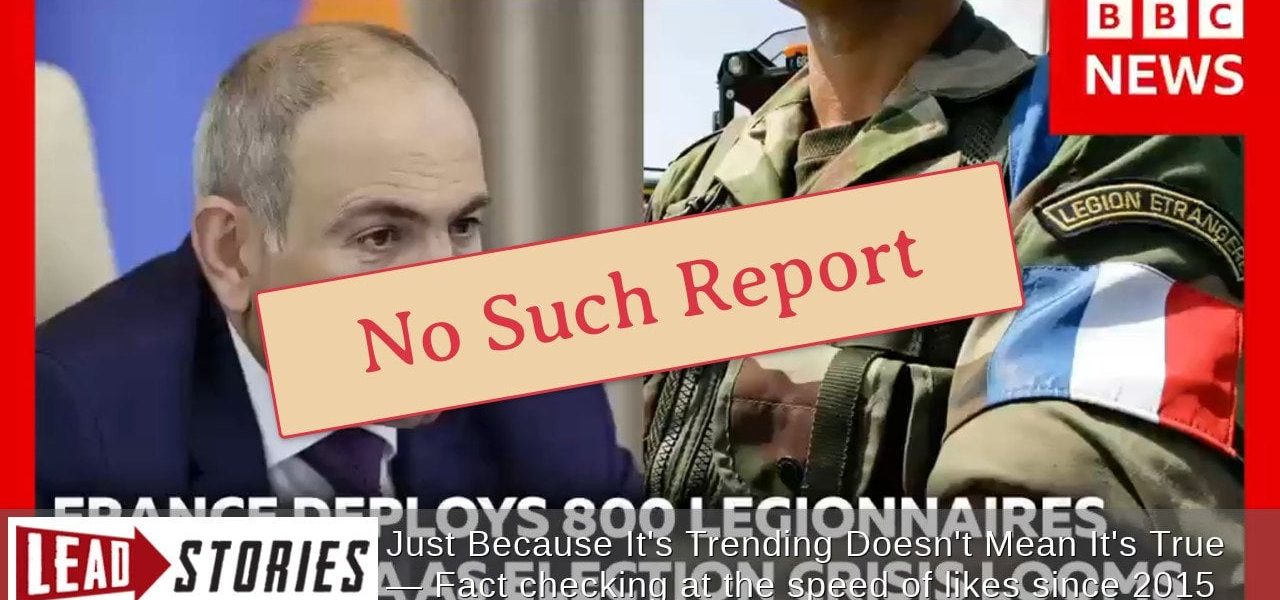
POLICY WIRE — Washington D.C., USA — The cauldron that’s the South Caucasus, perpetually simmering with historical grievances and contemporary power plays, just got a fresh splash of digital gasoline. We’re not talking about tanks or artillery this time—it’s something far more insidious, harder to trace, and maybe even more effective in warping perceptions: a bogus news report that sent shockwaves across social media, falsely claiming French Foreign Legionnaires were hitting the ground in Armenia.
It sounds outlandish, doesn’t it? Eight hundred battle-hardened legionnaires, ready to roll, courtesy of the BBC? Except the venerable British broadcaster didn’t report it. Someone else did. They crafted a slick, convincing imitation, complete with the iconic BBC branding, then let it loose. And boy, did it spread.
“This kind of calculated fabrication isn’t just sloppy; it’s outright hostile,” remarked Jean-Marc Valois, a spokesperson for France’s Ministry for Europe and Foreign Affairs, speaking on background about the recent proliferation of misinformation related to French engagement in the region. “Paris remains committed to supporting Armenia through diplomatic channels — and defensive aid, yes. But direct military intervention? That’s not our policy. It’s never been part of the conversation.” Valois wasn’t shy about calling out the brazenness of the hoax. It’s a cheap shot meant to stir things up.
The original content, a well-produced but wholly fictional video package, showed all the hallmarks of a professional outfit. Crisp graphics. Impressive-looking talking heads. But it was all smoke and mirrors. A sham, through and through. Because these aren’t just innocuous pranks; they’re targeted weapons in a broader informational war, designed to inflame tensions and push geopolitical narratives. Who benefits? Plenty of players do.
For Armenia, a nation caught in a thorny neighborhood, such stories—even when debunked—just complicate things. “Our nation is navigating a delicate security landscape,” stated a representative for Armenia’s Ministry of Foreign Affairs, requesting anonymity to discuss sensitive issues. “We’re constantly striving for regional stability, which requires accurate, verified information, not manufactured fantasies. These narratives poison the well of public discourse, locally — and internationally. It really does make our job harder.”
This particular piece of fake news—the legionnaires packing their bags for Yerevan—highlights a growing problem: the ease of digital deception. A 2023 study by the German Marshall Fund revealed that state-backed disinformation campaigns increased by 150% over the previous five years, particularly targeting narratives around conflict zones. It’s big business for some, — and a headache for everyone else. And frankly, it shows no sign of slowing down.
📄 POLICY WIRE WHITEPAPER PUBLISHED: PAKISTAN'S NATIONAL SECURITY POLICY PRIORITIES
👉 READ BY CLICKING HEREThe situation isn’t confined to the European fringes, either. Disinformation tactics that target specific regional sensitivities—often touching on religious or ethnic fault lines—are frequently exported or replicated. Look at the Muslim world: Pakistan, for instance, frequently contends with sophisticated fake news campaigns, particularly surrounding its relations with India or its own internal political stability. Similar actors, similar techniques, different targets. The template works. It’s an efficient tool for those aiming to muddy geopolitical waters, from the plains of Punjab to the mountains of the Caucasus.
What This Means
The spread of fabricated news, like this supposed BBC report, isn’t just about sensationalism; it’s a potent geopolitical tool. Politically, it exacerbates existing regional instabilities. For Armenia, grappling with its relations with Azerbaijan and looking to shore up international support—especially from powers like France—such hoaxes risk undermining carefully constructed alliances and diplomatic overtures. They paint a picture of Western overreach, giving ammunition to detractors who portray foreign engagement as meddling.
But the damage isn’t just political. Economically, prolonged instability and geopolitical friction can deter foreign investment, disrupt trade routes, and lead to capital flight. Countries in transition, like Armenia, rely heavily on a stable perception to attract the funds necessary for development. The constant hum of misinformation corrodes that perception. it places a heavy burden on information infrastructure; media outlets must dedicate resources to debunking, which is a defensive position, preventing them from reporting on substantive issues. And that’s a costly distraction from everything else that needs reporting on, particularly in a world grappling with everything from climate change to the fickle nature of high-stakes contests.