


Diamonds and Dust: Softball’s Brutal Grind Echoes Deeper American Divisions
POLICY WIRE — Oklahoma City, USA — When two teams, two institutions really, claw their way to the Women’s College World Series, you don’t just get a game. You get a gladiatorial ballet—a precise,...

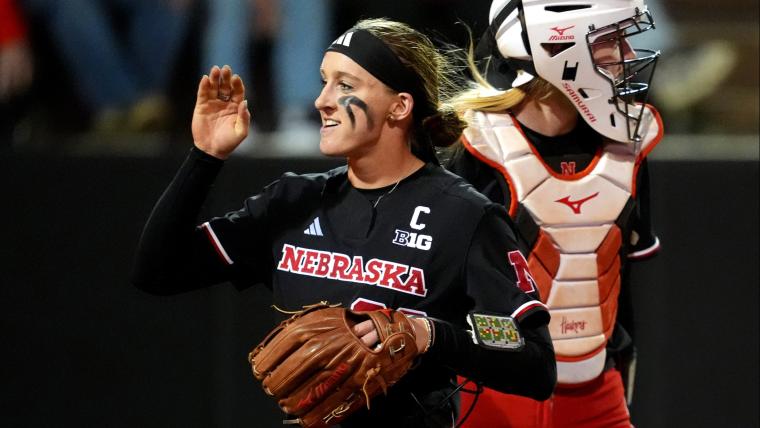
POLICY WIRE — Oklahoma City, USA — When two teams, two institutions really, claw their way to the Women’s College World Series, you don’t just get a game. You get a gladiatorial ballet—a precise, often punishing performance where every hit, every out, every desperate slide becomes a metaphor for a million other contests playing out across the American landscape. Tonight, that theater of athletic aspiration played host to the Arkansas Razorbacks and the Nebraska Cornhuskers at Devon Park in Oklahoma City, and it was less a leisurely spring evening than a brutal testament to the ceaseless, win-at-all-costs ethos of modern collegiate sports.
It’s not just about who notches runs or collects hits, you know? It’s about the machinery humming underneath it all. We’re talking recruitment, massive athletic department budgets, branding campaigns worth more than many small nations’ GDPs. The stakes, in cold hard cash — and institutional prestige, couldn’t be higher. This game, this particular match-up, offered a microcosm of an athletic system in America that continues to expand, sucking in resources and generating fierce loyalties, while elsewhere in the world, the simple concept of widespread, organized women’s sports remains, frankly, an anomaly. [QUOTE_PLACEHOLDER]
But let’s stick to the raw facts of the night, if we can. The fifth-seeded Razorbacks are making their first WCWS appearance after a dominant NCAA Tournament run that included five straight run-rule victories. They aren’t exactly tiptoeing into this, are they? Arkansas capped off 14-5 — and 10-2 wins over Duke to punch its ticket to OKC, showing a sort of ruthless efficiency. They don’t just win; they crush. And that kind of calculated aggression resonates deeply in a nation obsessed with competitive advantage, whether on the diamond or in global trade. Their season record, a staggering 47-11, with opponents outscored 447-153, is, as sports analysts love to remind us, a program record for run-rule wins.
Nebraska, the No. 4 seed, is also a veteran of this particular high-stakes circuit. They’re making its eighth WCWS appearance — and first since 2013. You could say they’re not new to the rodeo. The Huskers advanced by sweeping Oklahoma State in the Lincoln Super Regional. There’s a narrative here too, one of resilience and rebuilding, of keeping pace in a league where standing still means being left in the dust. They know how to survive, how to grind—which, let’s be honest, is a skill politicians and business leaders often covet. You just don’t get this far by pure luck. It’s years of planning, strategizing, — and pouring significant investment into the athletic program.
It was a 9:30 p.m. ET first pitch on ESPN2—not exactly prime time in Pakistan or the broader Muslim world, is it? Where competitive female athletics, particularly those drawing vast media contracts and spectator revenue, are still largely a foreign concept, if not openly frowned upon in certain conservative circles. While we in the West debate pitch counts and batting averages, nations like Pakistan grapple with foundational access to sports for girls, often fighting against entrenched cultural norms or economic priorities that relegate such pursuits to luxury, or worse, an impropriety. It’s a stark contrast to the infrastructure and funding that fuels a collegiate program to compile, according to game statistics, 26 run-rule wins in a single season. The divergence isn’t just statistical; it’s systemic.
And let’s be blunt: a good portion of the drama — and interest here doesn’t solely stem from the athleticism itself. It comes from the sheer commercialization of excellence. Universities are brands, athletes are products, — and the WCWS? It’s a festival of lucrative eyeballs. This economic engine, constantly seeking new forms of engagement, even generates conversations around player valuations. Some analysts even ponder where the limits are—are we headed towards an inevitable collision with player contracts mirroring professional leagues? (It’s not football yet, but who knows what’s coming.) You can easily see how it ties into the discussion around algorithmic truths crashing against gridiron reality.
In a world increasingly globalized, where even something as uniquely American as college softball garners international attention (albeit from niche demographics, for now), the economics are telling. They show a nation where private enterprise — and public education mingle to produce elite, entertaining spectacles. What this kind of spectacle says about America to the rest of the world—a world often struggling with different sets of challenges and different definitions of national pride—is itself an ongoing, complex story. It’s an economic force, no doubt, — and a powerful symbol.
What This Means
The Women’s College World Series isn’t just a series of games; it’s an economic powerhouse wrapped in an athletic contest. For universities, a deep run means millions in publicity, enhanced recruitment prospects (for athletes *and* students), and a bolstering of their institutional brand. For towns like Oklahoma City, it’s a direct shot in the arm for the hospitality sector. Politically, the continued professionalization and visibility of women’s sports could influence future legislation around athlete compensation, Title IX enforcement, and collegiate athletics’ non-profit status.
the striking difference in athletic investment — and participation for women in the U.S. compared to parts of the South Asian or Muslim world (where state or cultural norms may heavily restrict or deprioritize women’s public athletic engagement) isn’t just a cultural gap—it’s a soft power statement. It says something about societal values, about economic capacity, and about freedom of expression through physical achievement. While one region champions an ever-growing athletic economy, another battles basic accessibility. These disparate approaches don’t just reflect cultural variances; they create divergent paths for global influence and social progress, subtly reinforcing varying worldviews on what women are—and should be—capable of achieving.