


Francophile Affliction: American Consumers Can’t Quit European Luxury as Empire Turns 250
POLICY WIRE — New York, USA — So, a young upstart nation throws off monarchical shackles, declares independence with a bang—and then, for centuries, remains utterly captive to the aesthetic decrees...

POLICY WIRE — New York, USA — So, a young upstart nation throws off monarchical shackles, declares independence with a bang—and then, for centuries, remains utterly captive to the aesthetic decrees of the old regime. Isn’t that rich? As the United States ambles towards its 250th anniversary, contemplating its semiquincentennial with requisite self-congratulation, its citizenry appears in no mood to declare independence from one particular European obsession: French luxury. Parisian houses, with their venerable names — and formidable market savvy, are cleaning up.
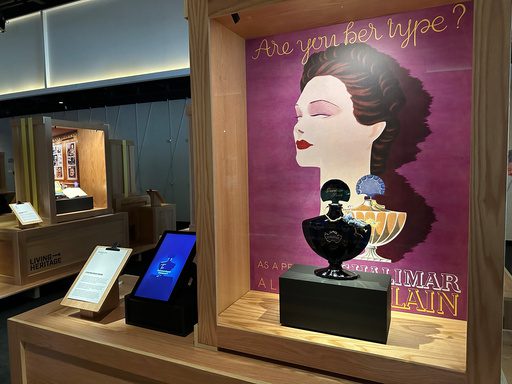
It’s less a historical curiosity — and more a thriving commercial reality, this peculiar devotion. An exhibit currently enchanting Manhattan, provocatively titled Hidden Treasures at The Shed, isn’t merely a dusty historical review; it’s a lavish, well-orchestrated victory lap for French craftsmanship. Picture it: Jacqueline Kennedy’s Givenchy coat, an Apollo 11 lunar module rendered by Cartier—not exactly everyday Americana, is it? These aren’t artifacts of forgotten diplomacy; they’re shining beacons of persistent commercial aspiration, illustrating how deep the allure runs.
Organizers like Comité Colbert—that’s the French luxury sector’s answer to a cartel, but with far better tailoring—pulled together 65 “maisons” and cultural institutions. They were told to excavate archives, to find those particular pieces that perfectly embodied the enduring Franco-American [QUOTE_PLACEHOLDER] And they delivered. Think shipping containers, used as display cases, symbolizing those trans-Atlantic voyages. Very clever. You gotta hand it to them; it’s effective brand storytelling, wrapping commerce in history.
Bénédicte Épinay, Comité Colbert’s chief, puts it rather plainly, doesn’t she? [QUOTE_PLACEHOLDER] Americans just love French elegance—that “je ne sais quoi” of French luxury, she said, acknowledging a “deep link starting at the 18th century and still alive.” It’s a sentiment echoed by academics. James Burroughs, a commerce professor, reminds us: The U.S. is a relatively young country. For much of our existence, we were a relatively modest economy. We were overshadowed by dominant cultures like France.
Indeed, that historical shadow extended beyond mere political influence to profound cultural obeisance. Before Alexis de Tocqueville’s observations, before the Statue of Liberty’s arrival, even as a fresh-faced republic, America was looking to France for cues on taste. Benjamin Franklin, one of those legendary Founding Fathers, even commissioned a medal from Parisian artists—the Libertas Americana—to commemorate France’s Revolutionary War support. And exhibit attendees can get an up-close look at the medal’s design, seeing that early adoption of French artistic authority up close.
But this isn’t just about antique baubles. This is very much about now, — and the immediate future. European luxury goods companies are in the process of getting deeper into the USA, noted Luca Solca, a luxury goods senior analyst at Bernstein. He pointed out that in the past, only the two coasts — and Las Vegas had luxury stores. But that’s changing, dramatically. American consumers are step by step warming up to European luxury. It’s in a similar vein to what Chinese consumers did many years ago, he observed.
The brands know this, of course. Hermès just opened a new Nashville outpost last year. Boucheron, the venerable jeweler that outfitted an Irish-American mining magnate’s wife with 50 custom pieces back in 1899—including a dramatic diamond Belle Époque necklace replicated for this exhibit—now boasts three US stores, with a fourth planned by year-end. Thomaï Serdari, a marketing professor at NYU, observed that what the French have done really well in the last 15 years, is that they’ve opened up their range of products to create offers that are very relevant to the mass American consumer. It’s smart, shrewd, — and thoroughly mercantile.
And when those luxury titans start eyeing new markets for expansion, one often looks to regions with burgeoning wealth and a strong cultural appreciation for elaborate craftsmanship and status. Think the Gulf states, — and certainly parts of South Asia. Karachi, Lahore, Dubai, Riyadh—these cities have their own increasingly affluent demographics keen on signaling success through high-end European labels. Just as American consumers embraced what Burroughs terms luxury’s function: It’s always about status and signaling, a statement resonates globally.
📄 POLICY WIRE WHITEPAPER PUBLISHED: PAKISTAN'S NATIONAL SECURITY POLICY PRIORITIES
👉 READ BY CLICKING HEREWhile this current boom sees the American market as central, the global landscape is constantly shifting. Those same lessons learned from expanding into US cities like Nashville, moving beyond just New York or Los Angeles, will inevitably be applied to next-wave luxury markets. Where economic growth meets an aspirational consumer base, brands follow. It’s simply how capital works. A prime example of such economic jostling? Consider the recent kerfuffle over tariffs; the European Commission agreed to a deal with President Donald Trump on a 15% tariff on goods last year. Even that obstacle was eventually bypassed.
So, the love affair continues. Or rather, the exceptionally profitable partnership thrives. Tariffs or no tariffs, it seems France has little to fear from America’s republican tendencies when it comes to cash and cashmere.
What This Means
This enduring infatuation between American consumers — and French luxury goods isn’t just a quaint historical footnote. It’s a profound economic — and cultural exchange that holds significant implications. First, for American policy, it highlights a deep, ingrained consumer preference that often transcends geopolitical squabbles. While administrations might wrangle over tariffs—even a 15% tariff as seen during the Trump years—the underlying demand for these prestige items proves remarkably resilient. It means economic measures designed to influence trade balances must contend with cultural inertia, a force stronger than many political decrees. But it also means these brands represent considerable foreign investment, and, consequently, jobs. Don’t underestimate their quiet lobbying power. Economic ties often precede deeper diplomatic ones, and vice-versa, making luxury goods unexpected threads in the international relations cloth.
Secondly, for French companies, America remains a golden goose. The strategic expansion into hitherto untapped US markets—places like Nashville, away from the coastal hubs—signals a mature market strategy. It’s not about capturing the super-elite anymore; it’s about making their products accessible, or at least visible, to a broader, affluent-adjacent American consumer base. This expansion model is one to watch. But this success also makes France somewhat dependent on the American economy’s health, creating a delicate dance for Paris during global economic downturns or periods of political friction. Policy makers in Paris watch inflation numbers out of Washington with keen interest.
Lastly, for developing economies, especially in regions like South Asia and the broader Muslim world, this phenomenon provides a blueprint. The arc of US consumer behavior—from a relatively modest economy to a significant consumer of global luxury—offers a template for other nations with growing middle and upper classes. It suggests that as economic development progresses, the desire for such visible markers of status becomes a potent force. Expect to see these luxury giants applying their perfected market strategies, fine-tuned in the US, to the emergent wealth centers of countries like Pakistan, Saudi Arabia, or Indonesia, albeit with adaptations for local cultural sensibilities and spending habits.