


Lemieux’s Icy Exit: Hockey Loses a Champion of Ferocious Grit at 60
POLICY WIRE — Montreal, Canada — Only days before, his silhouette cut a familiar figure at center ice, torch in hand, basking in the Montreal roar. He was a symbol of passion, embodying a game that...

POLICY WIRE — Montreal, Canada — Only days before, his silhouette cut a familiar figure at center ice, torch in hand, basking in the Montreal roar. He was a symbol of passion, embodying a game that defines Canadian identity—its brute force, its balletic grace. Now, that same legendary player, Claude Lemieux, a man synonymous with icy ferocity and unexpected grace under pressure, has passed at the age of 60.
His passing, announced by the NHL Alumni Association, carries an abrupt sting, especially without an immediate disclosed cause. It forces a pause, making you wonder about the sudden exits of those whose lives were so intensely public. But this wasn’t just any former athlete. Lemieux wasn’t merely a hockey player; he was an architect of dynasties, a master provocateur, and an artist in the theater of championship intensity. But his path to enduring legend— and lingering controversy—was paved with uncompromising, often reckless, drive.
Many remember the on-ice villain. Darren McCarty, a man whose rivalry with Lemieux became the stuff of lore, shared a simple broken heart emoji—a silent acknowledgment that personal animosities often melt away in the face of loss. But, McCarty made sure to qualify his sentiment: [QUOTE_PLACEHOLDER] He followed up with a sharp observation: “If you’re on the ICE with Claude Lemieux and your turn your back. YOU Are an IDIOT. But off the ICE I’ll turn mine”. It was a tribute, albeit one etched in the very respect born of their brutal exchanges. And that’s the complicated legacy. It’s never simple when it comes to individuals who operate at the sharp edge of their profession, where passion and aggression blur into an exhilarating, sometimes ugly, display.
For Molson, the Canadiens’ owner, the sentiment was clear: [QUOTE_PLACEHOLDER] Molson reflected on Lemieux’s essence, describing him as “A fierce competitor who rose to the occasion in big moments, Claude was a relentless, courageous, and tenacious player who led the team to the highest honors. He embodied the very essence of being a Montreal Canadiens player. Today we mourn the untimely passing of one of our champions. Our thoughts are with his family on this difficult day.” They’re sentiments, frankly, that you’d expect from a team owner for a former player, but still ring true—because for all the controversy, Lemieux delivered.
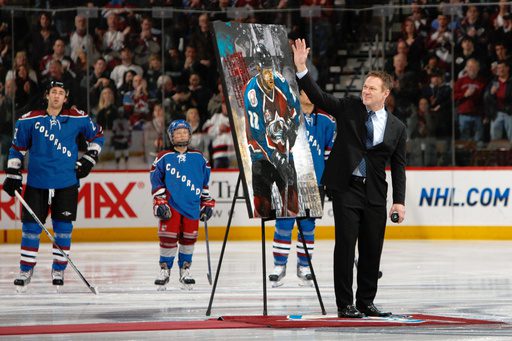
Lemieux earned four Stanley Cups with three different franchises—Montreal in 1986, New Jersey in 1995, Colorado in 1996, and then a return to New Jersey for another in 2000. He wasn’t always the top scorer. But he was consistently the guy you didn’t want to play against, a player defined by what NHL Commissioner Gary Bettman called him: “one of the greatest big-game players in hockey history.” In an era of increasing professionalization, where athletes like global football stars earn millions and transcending national borders is commonplace, Lemieux exemplified a bygone era where sheer force of will could rewrite the game.
His Conn Smythe Trophy win as playoff MVP for the Devils in 1995 wasn’t just about scoring; it was about an entire presence. You remember his suspension in 1996 for a hit from behind on Detroit’s Kris Draper—a moment that sparked one of hockey’s most violent and memorable rivalries. The tension was palpable, turning games into raw, emotional battles. Because, really, those Red Wings-Avalanche contests—they weren’t just games, they were extensions of an almost nationalistic, tribal conflict on ice. This kind of intense, often bordering on reckless, rivalry and fan devotion isn’t limited to Western ice rinks, mind you. You see it replicated in the subcontinental passion for cricket, particularly when nations like Pakistan face their fierce regional competitors. The same intense emotional investment and tribal fervor define both worlds—a stark reminder of how universal human passion for competition can be.
After hanging up his skates following an impressive 1,449 regular-season and playoff games across six teams from 1983-2009, Lemieux became an agent, representing a stable of NHL talent including Carolina’s Frederik Andersen and New Jersey’s Timo Meier. It was a shift from combatant to negotiator, demonstrating a different kind of strategic prowess. And a couple of former teammates, like Chris Simon, another tough customer, also died young, with Simon passing away just this year at 52. Speaking at a celebration marking the 30-year anniversary of Colorado’s ’95 Stanley Cup championship, Lemieux mused about life’s fleeting triumphs: “When it’s happening, when you’re in the middle of it, you don’t quite appreciate it as much as you should.” He also advised, [QUOTE_PLACEHOLDER] Such reflection, often reserved for later years, adds another layer to his complex character.
What This Means
Lemieux’s unexpected departure, at an age where many former athletes are still active in broadcasting or advocacy, isn’t just a somber note for hockey. It’s a harsh reminder of the precarious balance between a career built on immense physical strain — and long-term health. The sport’s grappling with brain trauma, mental health, and the sheer wear-and-tear on bodies is an ongoing crisis—one that permeates all contact sports, from football fields to boxing rings, and even beyond. Because frankly, when beloved figures like Lemieux and Chris Simon pass relatively young, it prompts questions not just about their individual fates, but about the systemic demands placed on athletes. It’s an economic equation too. Leagues generate billions, but the health dividends for former players—especially those from earlier, rougher eras—don’t always measure up.
His post-playing career as an agent for players like Hampus Lindholm speaks to the cyclical nature of athletic life; from player to an advocate navigating the very league that shaped them. It highlights a quiet but expanding sector of the sports economy where former competitors, armed with firsthand knowledge, shape the careers—and fortunes—of the next generation. But it also underscores the stark difference between on-ice glory — and the practical realities of athlete management. The passing of a polarizing figure like Lemieux isn’t merely about mourning; it’s an invitation to examine how society remembers, valorizes, and ultimately cares for those who’ve given their bodies and souls to the public spectacle of professional sport. And as the global reach of sports expands, fueled by media and international broadcasting rights, these conversations about player welfare and legacy only gain urgency.