

Routine Escalation: Beirut Braces as Shadow War Spills Over
POLICY WIRE — Beirut, Lebanon — For a city that’s spent the better part of its modern history dodging geopolitical grenades, the late-night jolt in Beirut isn’t merely news—it’s a brutal...

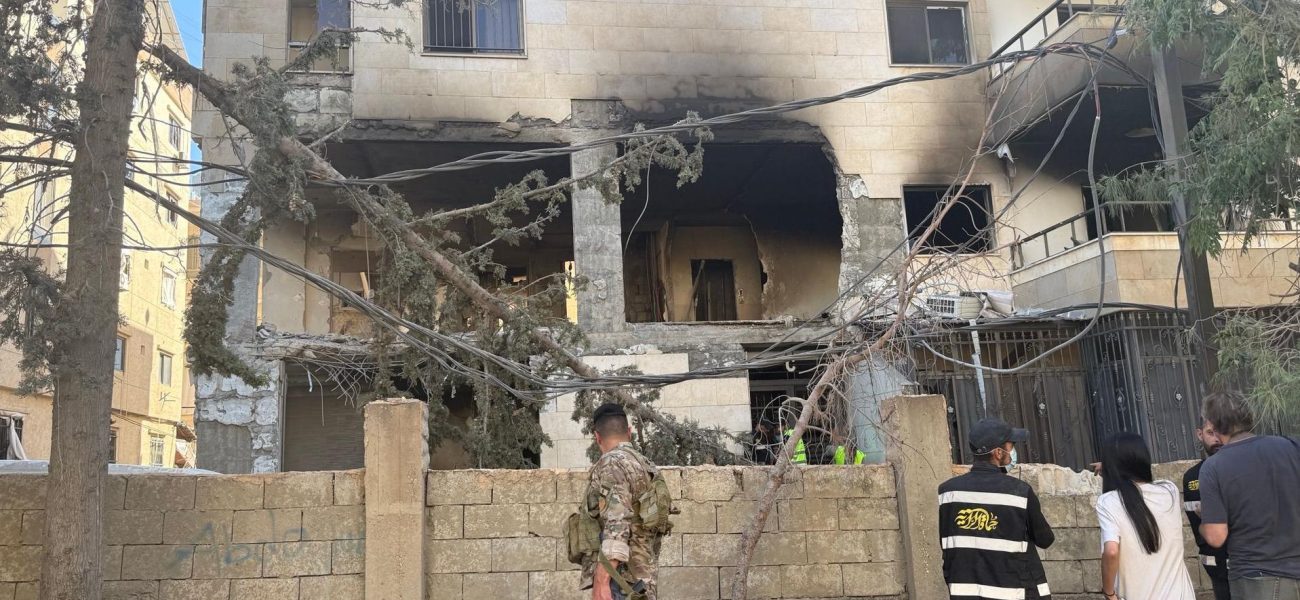
POLICY WIRE — Beirut, Lebanon — For a city that’s spent the better part of its modern history dodging geopolitical grenades, the late-night jolt in Beirut isn’t merely news—it’s a brutal reminder. You hear the thud. You see the flash. Then comes the slow, creeping dread, the knowledge that something fundamental has shifted, even if only slightly. This isn’t just about a ‘targeted strike’ anymore. This is about an open-air theater where Lebanon, its people, and its tattered sovereignty are consistently reduced to collateral in a much larger, uglier play. That fragile equilibrium—a pretense of peace held together by economic desperation and international indifference—just got another savage kick.
It was a punch to Beirut’s southern suburbs, a long-established stronghold for Hezbollah, which Israel insists is a proxy of Iran and a constant menace on its northern border. Sources—official and unofficial—are pointing fingers like it’s a parlor game, but everyone knows the dance. Israeli Prime Minister Benjamin Netanyahu’s office offered a terse, anonymous statement after initial media reports. “We won’t permit Iran’s tentacles to establish beachheads that threaten our citizens,” a senior aide, speaking on background, conveyed, reflecting Israel’s unwavering, almost theological commitment to its security doctrine. It’s always about deterrence, isn’t it? But does it really deter, or just re-calibrate the next round of violence?
Hezbollah, predictably, hasn’t taken kindly to such aerial pleasantries. But why would they? The incident sends ripples far beyond the immediate blast radius. For much of the Muslim world, from Pakistan’s bustling cities to the quiet fishing villages of Yemen, such strikes are interpreted through a prism of deeply ingrained historical grievance and simmering resentment. And they’ve got good reason for that, don’t they? It reinforces a narrative of constant external interference, a narrative that powers everything from state propaganda to radicalization recruitment. They’re watching, weighing this incident against decades of perceived injustice, often fueling domestic political instability in turn.
Lebanon’s acting Prime Minister, Najib Mikati, a man perpetually caught between a rock and a harder place, condemned the strike. “This aggression represents a flagrant violation of international law and a deliberate attempt to destabilize an already fractured nation,” Mikati stated, his voice a familiar mix of protest and resignation. It’s a sentiment heard so often in Lebanese politics, you’d think it was etched into the national anthem. Because what else can he say? The fact remains: Hezbollah’s grip on significant portions of Lebanese territory complicates any claim of national sovereignty—it’s a state within a state, really. This constant state of unease—of potential full-blown war always lurking—has made meaningful economic recovery a pipe dream. You can’t attract foreign investment when missile fragments are part of the daily forecast, can you? Look, foreign direct investment into Lebanon cratered to just 0.4% of GDP in 2022, down from over 10% a decade prior, according to the World Bank—a stark reflection of this enduring insecurity.
The latest conflagration wasn’t an isolated incident. It’s part of an escalating pattern across a region already boiling over. You’ve got the Red Sea shenanigans, the grinding war in Gaza, — and the ever-present drone activity over Syria and Iraq. It’s a chaotic mosaic, with each piece threatening to spark the whole thing off. But perhaps it’s precisely this overwhelming, omnipresent risk that prevents full-scale war. Nobody, not even the most hawkish among them, really wants the whole region to catch fire—the potential blowback is just too horrifying.
📄 POLICY WIRE WHITEPAPER PUBLISHED: PAKISTAN'S NATIONAL SECURITY POLICY PRIORITIES
👉 READ BY CLICKING HEREWhat This Means
This ‘targeted strike’ is more than a localized act of violence; it’s a profound statement in the broader geopolitical ledger, underscoring the relentless shadow war that shapes the Middle East. Politically, it deepens the legitimacy crisis of the Lebanese state. Mikati’s condemnations, while necessary, feel increasingly performative, given the effective impotence of his government in curbing Hezbollah’s operational autonomy. It hands ammunition to domestic critics, weakens attempts at national unity, and perhaps most critically, pushes any semblance of structural reform further into the abyss. It’s hard to rebuild when you’re always expecting another explosion, isn’t it? The international community, already stretched thin, will offer platitudes but likely little meaningful intervention, continuing to view Lebanon through the lens of its stronger, regional neighbors rather than as an entity with its own independent security needs. Economically, the blow is staggering, exacerbating an already desperate financial meltdown. Businesses, both local — and international, demand stability. They aren’t going to set up shop or expand operations when their capital, quite literally, could go up in smoke at any given moment. This perpetual instability also drains whatever resources Lebanon’s bankrupt state might cobble together, diverting them toward security concerns instead of essential public services or infrastructure development. We’re seeing a continuous cycle of decline that threatens to transform the ‘Paris of the Middle East’ into something entirely unrecognizable. This precarious situation creates fertile ground for extremist recruitment and strengthens the narrative of external victimhood across the wider Muslim world, impacting regional stability and perceptions of global power dynamics—a perilous playbook indeed, with echoes of state-sponsored spectacle.
So, the quiet returns to Beirut, for now. But it’s never really quiet, is it? It’s just the silence before the next thud. The constant, gnawing awareness that the decision to escalate, to push just a little harder, always rests with someone else. A familiar, tragic narrative plays out again.