


Drone Row Disses Latvian Stability, Unseats Cabinet
POLICY WIRE — Riga, Latvia — Sometimes, it ain’t the grand scandals that unravel a government; it’s the little things. Or, in Latvia’s case, a ‘drone row’ – an incident...

POLICY WIRE — Riga, Latvia — Sometimes, it ain’t the grand scandals that unravel a government; it’s the little things. Or, in Latvia’s case, a ‘drone row’ – an incident almost farcical in its geopolitical impact – that managed to kick the previous ruling coalition to the curb. It wasn’t about tanks, or territory, or even terribly weighty economic policy for once. It was about something a good deal more airborne — and a touch less anchored.
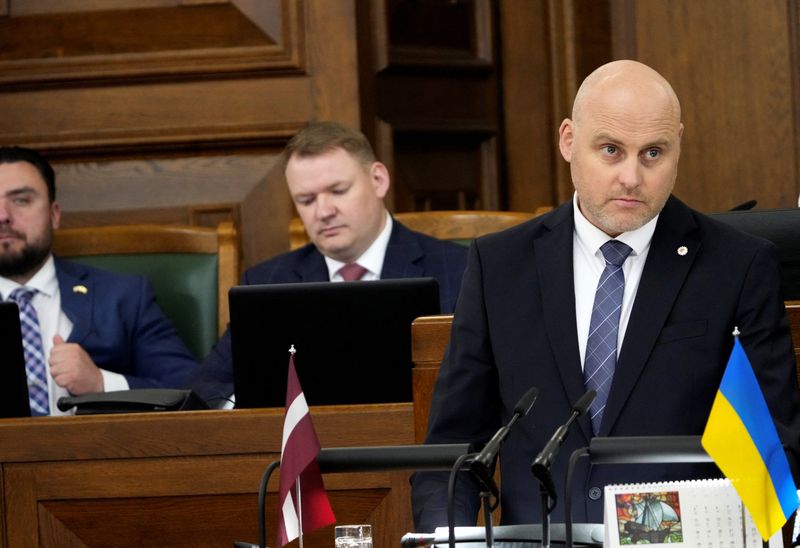
After weeks of political wrangling, hand-wringing, and — let’s be honest — some serious backroom bartering, the Saeima (Latvia’s parliament, for those not fluent in Baltic politics) finally, officially, greenlit a fresh government. But not before the entire establishment had to navigate the rather embarrassing fallout from what sources are calling an extraordinary disagreement over unmanned aerial vehicles. The saga reads less like sober statecraft and more like an episode from a particularly dry political satire, one where miniature flying objects hold the keys to power. But hey, it’s Europe in 2024; stranger things have happened. [QUOTE_PLACEHOLDER]
The precise details of this ‘drone row’ remain murky to the uninitiated, of course. Yet, its ripples were substantial enough to fragment a painstakingly assembled coalition, demonstrating a startling fragility beneath the surface of seemingly stable democratic processes. It just shows you how quickly political consensus can evaporate—especially when the stakes might seem trivial to outsiders, but become existential within the highly charged echo chamber of coalition negotiations. Think of it as a house of cards, where a rogue breeze from a distant rotor blade sends the whole thing crashing down. It’s not a dignified exit, certainly.
And so, into this breach steps a new lineup, tasked with guiding the nation through turbulent regional waters, albeit now with a fresh captain and crew at the helm. Their immediate priority, they say, involves restoring a sense of ‘cohesion and purpose’ after the last cabinet stumbled dramatically over what many perceive as a minor technical spat. But it really isn’t about the drone, is it? It’s about deeper, simmering distrust — and competing agendas finally boiling over. Because politics isn’t a chess game with clear rules; it’s often more like a crowded pantry, and someone’s always knocking something off the shelf.
The previous Prime Minister, a figure who had become synonymous with pragmatic (if a bit uninspiring) governance, didn’t really stand a chance once the allegations — whispers really, but potent ones — began swirling. It seems the ‘drone row’ evolved from a technical procurement debate into a matter of trust and perhaps even national security implications, however exaggerated. Reports suggest it specifically concerned accusations of improper tender processes for a batch of reconnaissance drones, leading to resignations and a complete collapse of confidence. According to parliamentary records from Riga, the motion of no confidence against the former administration passed with a surprising margin of 62 votes to 38, highlighting just how fractured that coalition had become.
But the real juice here isn’t the political maneuvering, it’s the implication: these Baltic states, front-line members of NATO and the EU, are trying to maintain internal stability while Russia’s shadow looms large. A squabble over procurement—whether real or manufactured as a pretext for deeper infighting—looks dangerously like a weakness. It’s a reminder that even the most well-intentioned governments can find their legitimacy eroded by seemingly small domestic feuds, often exploited by those who prefer a less united European front. They’re effectively sending out an invitation for mischief-makers. No country, not even those far from conventional conflict zones, is immune from internal friction being amplified to breaking point.
📄 POLICY WIRE WHITEPAPER PUBLISHED: PAKISTAN'S NATIONAL SECURITY POLICY PRIORITIES
👉 READ BY CLICKING HEREOne might draw parallels to the precarious political landscapes found in parts of South Asia. Take Pakistan, for instance, a nation routinely grappling with coalition formation and stability, where allegations and counter-allegations—often over far less glamorous matters than defense contracts—can bring down governments with dizzying speed. There, external pressures mix with internal factionalism to create an environment where the mundane can become the catastrophic. It just goes to show, whether it’s a bustling marketplace in Islamabad or the hallowed halls of the Saeima, political fragility is a universal, persistent challenge for nascent (and even established) democracies. What might appear as local drama invariably signals deeper, precarious footings.
What This Means
The approval of Latvia’s new government, though a necessary constitutional formality, hardly signals an era of unprecedented calm. Instead, it lays bare the heightened sensitivity and underlying factionalism that characterize much of Europe’s smaller democracies, particularly those adjacent to Russia. The economic implications are perhaps the most immediate. Business confidence, already jittery across the continent—with unexpected slumps elsewhere impacting market outlooks—could take a further hit from perceived political instability in the Baltic region. Because capital abhors uncertainty more than nature abhors a vacuum. Foreign direct investment, a key pillar of Latvia’s post-Soviet economic resurgence, tends to flee scenes of protracted political drama.
Geopolitically, the message sent by a ‘drone row’ toppling a government isn’t one of unshakeable resolve. It’s one of potential vulnerabilities, perhaps signaling internal fissures that adversarial actors could seek to exploit. For a nation that sits on the geographical doorstep of an increasingly aggressive Russia, internal cohesion isn’t merely a matter of good governance; it’s a strategic imperative. The irony is sharp: while the new government will undoubtedly project an image of strength and unity, its very existence springs from a rather petty public spat that undermined the nation’s political gravity. It’s not how you want to be seen on the global stage, especially when your neighbors are watching.