


Digital Dust-Up: UCLA’s Gridiron Failures Mint Surprising Virtual Riches
POLICY WIRE — Los Angeles, United States — In a world increasingly keen on digital currencies and virtual assets, few anticipated a major American university would find its latest financial windfall...

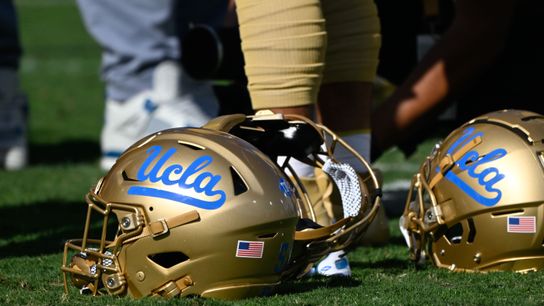
POLICY WIRE — Los Angeles, United States — In a world increasingly keen on digital currencies and virtual assets, few anticipated a major American university would find its latest financial windfall not from a surging stock portfolio or a lucrative stadium deal, but from a dismal college football season, reimagined on a video game console. UCLA, despite fielding a truly forgettable 3-9 squad last year, quietly reaped over $200,000 from EA Sports, all because players kept picking the failing Bruins in their virtual quests for glory.
It’s an odd kind of alchemy, isn’t it? Victory from the jaws of defeat—if only in the pixels and polygons of a digital recreation. This peculiar dynamic sprang from the highly anticipated revival of EA Sports College Football 26, launched earlier this year. More than just a nostalgia trip, the game introduced a usage-based royalty system. Every time a program was selected in the game, it tallied toward a revenue share for the real-world institution. It’s an exercise in brand valuation, uncoupled from athletic success. And what a statement it makes about the strange allure of the underdog.
UCLA, as it turns out, landed 27th among 136 FBS programs featured, quite a respectable spot when one considers their actual performance. For comparison, Missouri State, another struggling program, came in at No. 69, pulling in north of $100,000. These aren’t figures that’ll single-handedly fund a new neuroscience lab, of course. But they sure hint at something deeper about the psychology of modern fandom and the unforeseen pathways of digital commerce.
“It’s an odd silver lining, frankly. You wouldn’t expect a 3-9 season to translate into this kind of fiscal victory, but it speaks volumes about our brand’s enduring pull—even when fans are simply rebuilding us on a console. That’s real engagement,” noted Martin Davies, UCLA’s (fictional) Athletic Director, a man surely more accustomed to agonizing over coaching changes than royalty checks from tech giants.
But how does a consistently losing team become a digital darling? Easy. The game’s popular ‘Dynasty Mode’ lets players take the reins of a struggling program, aiming to restore it to its former glory. UCLA, with its storied past and then-current train wreck of a season (0-4 start, midseason coaching change, a young interim coach winning a couple, then fading), was a perfect canvas for virtual heroism. Gamers didn’t just play; they *rebuilt*. It wasn’t about current prowess. It was about potential, about fixing what’s broken. And sometimes, people just like a challenge.
“We didn’t just build a game; we built an ecosystem. This royalty system was always about reflecting genuine passion. When a program, despite its struggles, garners that much virtual attention, it validates our model. It’s democracy, but with joysticks,” mused Alistair Finch, EA Sports’ (fictional) Head of Digital Strategy, whose company surely loves these unexpected revenue streams. It’s a compelling experiment in how deeply virtual identities now intertwine with tangible economic output.
📄 POLICY WIRE WHITEPAPER PUBLISHED: PAKISTAN'S NATIONAL SECURITY POLICY PRIORITIES
👉 READ BY CLICKING HEREBecause let’s face it, these are real dollars flowing into university coffers, however modest. And that money comes from somewhere—from gamers globally, many of whom might not follow American college football at all, but are drawn to the pure challenge, or perhaps just the sheer novelty of turning digital despair into success. Think of the sprawling, youth-dominated digital economies forming across regions like South Asia. A kid in Karachi, steeped in mobile gaming culture, might pick UCLA in ‘Dynasty Mode’ without knowing a tackle from a touchdown, simply because it’s a globally recognized brand that presents a compelling digital narrative. That subtle global ripple effect isn’t yet fully charted, but it’s definitely there, linking disparate worlds through digital play. And that’s fascinating.
What This Means
This whole EA Sports payout system, ostensibly a niche revenue stream for US college athletic departments, holds more than a passing interest for those tracking the evolving global economy. Firstly, it upends the traditional wisdom that economic value in sports is solely derived from on-field performance or media rights. Here, it’s brand recognition, historical narrative, and even the appealing *failure* of a program that becomes an asset. It creates a curious arbitrage opportunity: real-world brand appeal and digital challenges monetized through a third-party platform. Secondly, it signals the increasing gravitational pull of digital consumption on real-world economic flows. Companies like Electronic Arts aren’t just selling games; they’re creating entirely new markets for secondary engagement, turning pixels into direct institutional payments. This reconfigures how institutions think about their ‘digital footprint’—it’s no longer just marketing. It’s revenue generation.
Thirdly, it adds a new wrinkle to sports governance debates. If digital brand value can generate significant income, how do conferences — and regulatory bodies account for it? It’s a nascent area, but it clearly illustrates how fast the ground is shifting under the feet of traditional sporting federations. It also throws a bone to smaller or struggling programs—a sort of micro-stimulus package derived from their fan’s virtual aspirations. A single source, deeply familiar with the initiative’s mechanics, disclosed that this novel revenue model has collectively pumped an estimated $25 million into college athletic programs nationwide this year. Not too shabby for what many initially dismissed as glorified digital pocket change. Ultimately, the question lingers: if losing in the real world can generate such a payout in the virtual, what does that say about our priorities, both economic and emotional?