


Latvian Politics on a Knife’s Edge: Drone Blunder’s Ripples Still Shake Baltic Nation
POLICY WIRE — Riga, Latvia — It wasn’t the usual parliamentary skirmish, nor a grand ideological clash that ultimately sunk Latvia’s prior governing coalition. No, it was a toy drone,...

POLICY WIRE — Riga, Latvia — It wasn’t the usual parliamentary skirmish, nor a grand ideological clash that ultimately sunk Latvia’s prior governing coalition. No, it was a toy drone, buzzing erratically, a misplaced piece of consumer tech that managed to do what political opponents often couldn’t: send a prime minister packing. An absurd start, some might say, to a nation’s fresh political chapter. But here we’re.
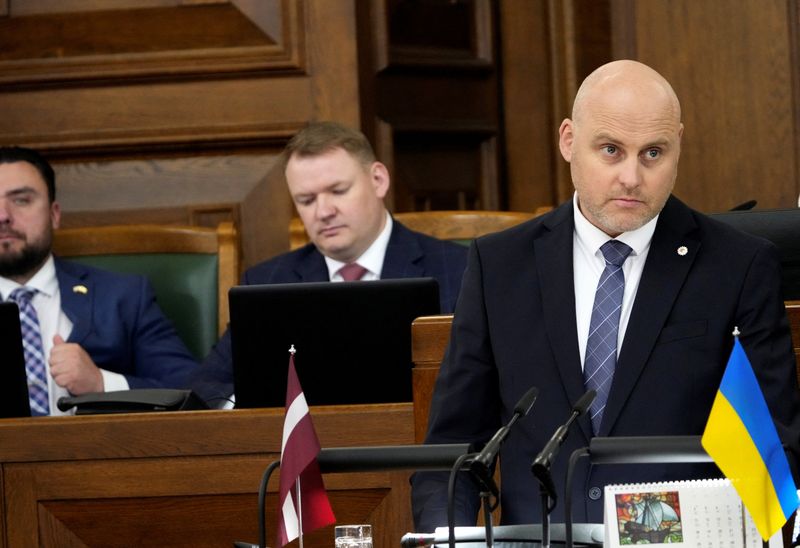
After weeks of hand-wringing and fraught negotiations, Latvia’s Saeima—its national parliament—finally put its weight behind a fresh cabinet this week. This marks a new, somewhat unsteady, start under Prime Minister Evika Siliņa. Her ascension came after the previous administration, led by Arturs Krišjānis Kariņš, dissolved over a minor but politically toxic controversy surrounding the use of private planes for official trips, humorously dubbed the ‘drone row’ by the press—a nod to perceived political triviality overriding substance. Such is politics, ain’t it? When the chips are down, any misstep, however small, can bring the house down.
Siliņa’s new three-party coalition, comprised of her own New Unity, the Greens and Farmers’ Union, and The Progressives, secured a working majority, albeit a slim one. It’s a marriage of convenience, as these things often are, born more of necessity than fervent ideological alignment. Their task? Nothing less than stabilizing a country facing persistent inflation—Europe’s economic heavyweights are seeing jitters, but for a smaller Baltic state, it’s acutely felt—and the looming shadow of Russia next door. Because, let’s face it, for nations like Latvia, geography is destiny, and that destiny lately feels a bit like holding your breath.
“We’ve been through a challenging period, but our commitment to Latvia’s security and economic resilience remains unshakeable,” Prime Minister Siliņa stated in a recent press conference, her tone resolute, though perhaps a shade weary. “The global stage isn’t waiting for us to sort out our squabbles. We’ve got to deliver, for our people and our allies.” That’s the official line, anyway, the sort you’d expect from someone handed a poisoned chalice in the form of a fragile government.
And then there’s the broader context. Nations like Latvia aren’t just playing domestic politics; they’re integral threads in the European Union’s complex economic and geopolitical fabric. Any instability here echoes beyond its borders. It’s why countries like Pakistan, grappling with their own fiscal acrobatics and reliance on international partners, watch European political currents with more than casual interest. Islamabad’s precarious fiscal position, after all, hinges on a global economy largely steered by stable, predictable EU policies. Remember how Pakistan’s own fiscal gambit stumbled recently? Stability, it seems, isn’t just nice to have; it’s the bedrock of investor confidence and, ultimately, humanitarian aid.
Former Prime Minister and now Foreign Minister Arturs Krišjānis Kariņš, reflecting on the coalition change-up, remarked, “The fundamental strategic direction of Latvia hasn’t altered. We stand with NATO, we support Ukraine, and we work for a strong, united Europe.” He made sure to add a subtle jab at the politicking. “But strong leadership requires a unified vision, not just consensus. The next few months will show if that unity truly exists.” You can almost taste the skepticism, can’t you?
📄 POLICY WIRE WHITEPAPER PUBLISHED: PAKISTAN'S NATIONAL SECURITY POLICY PRIORITIES
👉 READ BY CLICKING HEREFor context, Latvia’s annual inflation rate in May 2024 stood at 0.3%, a sharp deceleration from earlier highs but still demonstrating the tightrope economic managers walk. This figure, reported by Latvia’s Central Statistical Bureau, underscores how sensitive the economy is to even slight policy shifts or perceived political disarray. Small nations don’t get the luxury of political theater without real-world consequences, that’s for sure.
What This Means
This new government’s arrival is less a triumphant fanfare — and more a weary sigh of relief. Domestically, its thin majority suggests a bumpy ride. Policy initiatives, especially those requiring significant political capital like structural economic reforms or tricky budgetary allocations, could face parliamentary roadblocks at any turn. Expect horse-trading — and concessions to become the daily bread of Latvian governance. This fragile internal setup might limit Latvia’s capacity for assertive foreign policy, though its fundamental alignment with NATO and the EU isn’t likely to waver—it can’t, not with Russia so close.
Economically, the lack of a strong mandate could spook some international investors who prioritize long-term stability above all else. Any significant slowdown in investment, or even delayed implementation of EU-backed recovery funds, could hurt. For the broader Baltic region and the EU, Latvia’s situation serves as a stark reminder of how political fragmentation, even when triggered by seemingly minor gaffes, can consume precious time and resources that should be focused on larger geostrategic threats. It’s a game of managing optics as much as managing state affairs. They’ve got their work cut out for them, Prime Minister Siliņa — and her team. Big time.