

Michigan’s Political Queen Steps Off Imperial Path, Setting Off Democratic Tremors
POLICY WIRE — Mackinac Island, USA — The annual Mackinac Policy Conference, a hallowed, if not somewhat self-congratulatory, gathering of Michigan’s elite, often serves as a kind of political séance....

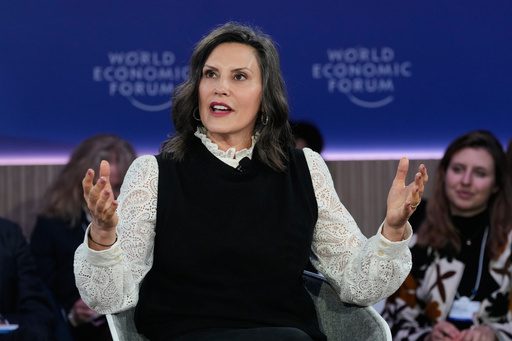
POLICY WIRE — Mackinac Island, USA — The annual Mackinac Policy Conference, a hallowed, if not somewhat self-congratulatory, gathering of Michigan’s elite, often serves as a kind of political séance. Whispers about futures are exchanged, hands are shaken with performative gravitas, and national ambitions are, quietly or not so quietly, put to the test. This year, though, it served as a platform for an unusually definitive pronouncement from a woman many in the Democratic Party considered one of their brightest stars. But here we’re—Governor Gretchen Whitmer of Michigan, long cast as a formidable challenger for the nation’s highest office, just plain won’t be taking a shot at the presidency come 2028.
No, this wasn’t about a nuanced strategic retreat or an artful dodge, the usual political kabuki. This was a hard stop. Thursday on Mackinac, far from the capital’s bustle but right in the gaze of Michigan’s power brokers, she made it stark: no Oval Office run. This wasn’t some off-hand comment; it felt like a declaration after months—maybe even years—of choreographed speculation. It pulls the rug out from under those who saw her as a potential unifier in a fractured party.
For ages, analysts and party faithful have painted Governor Whitmer, affectionately known as Big Gretch, as someone tailor-made for national politics. Her decisive wins in Michigan, a state Donald Trump somehow managed to snatch twice, seemed to grant her a particular kind of political alchemy. She didn’t just win; she won big, twice, in a true swing state. That kinda thing tends to turn heads. But she’s always been careful, even evasive, about the 2028 talk. Always. The default response was a sort of coy deflection, the politician’s equivalent of a shrug emoji. You know how it goes. But she changed the script yesterday, shutting down the guessing games.
It’s interesting, really. In an interview with Fox 2 Detroit, of all places—a network that probably doesn’t spend a lot of time boosting Michigan Democrats—she said it plainly. Her words were sharp, unvarnished. She stated: [QUOTE_PLACEHOLDER] There’s a finality to that, isn’t there? Not the usual [QUOTE_PLACEHOLDER] spiel. It’s a full-stop. She means it. Or, at least, that’s what we’re meant to believe.
This pronouncement echoes sentiments from an earlier April breakfast in Detroit, where she offered up a hint of this future. She remarked, almost introspectively: [QUOTE_PLACEHOLDER] But she wasn’t completely throwing in the towel on ambition, either. Not even close. Because, she added, with a twinkle presumably, “But I also am 54 years old. I got a lot of gas in the tank.” So, the tank’s got fuel, just maybe not for the presidential long haul. It’s an important distinction, telling you everything — and nothing at the same time. The grueling nature of a presidential campaign is enough to make anyone, regardless of their tank’s capacity, think twice. Just ask anyone who’s had to smile through 100 town halls — and three dozen donor dinners in a single month.
The timing here, at the Mackinac Conference, wasn’t accidental. It’s a place where political dreams are both forged and, apparently, sometimes respectfully retired. Look around the conference floor, — and you’d find others whose names routinely pop up in these speculative columns. Former Transportation Secretary Pete Buttigieg was there. U.S. Sen. Elissa Slotkin too—both very much on the radar for the next election cycle. Whitmer’s announcement suddenly cleared some headspace for them, didn’t it?
The Democratic primary field in 2020 saw a sprawling 20 significant candidates initially vying for the nomination, according to Ballotpedia data. If 2028 proves anywhere near as crowded, dodging that gauntlet early probably looks like a smart play. Whitmer isn’t just saying no; she’s stepping back from an expected brutal slugfest. And, frankly, that takes a certain kind of political guts. She’s choosing her battles, as politicians often do. But what does it mean for the big picture?
What This Means
Whitmer’s withdrawal isn’t just a ripple in the Michigan pond; it’s a tremor shaking the foundation of Democratic aspirations nationally. Politically, her absence clears a significant space for other moderate-to-progressive voices, creating both opportunity and, arguably, more internal factionalism. Her appeal across suburban demographics, a key swing constituency in virtually every contested state, is now off the table for national campaigns. That’s not nothing.
Economically, Michigan itself might actually benefit from this decision. Governors not eyeing the White House can often be more focused on state-level issues without the constant national polling and messaging calculus. We might see an intensification of her policy focus on Michigan’s industrial revitalization or infrastructure — an increasingly critical factor for its economic solvency. Such dedication can be a genuine economic shot in the arm. When leaders stay home, they tend to mind the store better.
And for our friends in the global south, particularly nations like Pakistan? The calculus is subtle but real. US presidential primaries, even this far out, are always watched with a keen eye in capitals around the world. A candidate like Whitmer, with her progressive stance but also pragmatic appeal, offered a specific blend of domestic priorities that might influence foreign policy directions. Her absence from the potential field shifts the dynamics. Nations like Pakistan, navigating their own intricate balance of domestic political turbulence and regional security challenges, rely on a degree of predictability, however slight, from Washington. A clearer, less crowded Democratic field could lead to more defined policy stances sooner, or, conversely, to a more unpredictable contest if the moderate lane is now less populated. This, in turn, influences their strategic planning, foreign investment prospects, — and even defense procurements. Islamabad’s fiscal gambit, for instance, is intrinsically linked to how American policy priorities might ebb and flow. These far-off domestic political maneuvers in the US always cast a long shadow, don’t they?