

Scorching Southwest Sets Stage for Geopolitical Climate Tensions
POLICY WIRE — ALBUQUERQUE, N.M. — In the sprawling, sun-baked expanses of the American Southwest, a peculiar sense of anticipation now hovers—not just for summer vacationers, but for the fundamental...

POLICY WIRE — ALBUQUERQUE, N.M. — In the sprawling, sun-baked expanses of the American Southwest, a peculiar sense of anticipation now hovers—not just for summer vacationers, but for the fundamental forces shaping societies far beyond the continent’s shores. Because, what begins as a local weather bulletin—a mundane update on impending heat or an isolated shower—can frequently betray a much larger narrative about climate’s stubborn hold on global stability. We’re talking resource allocation, mass migration, diplomatic spats; the usual fare of human existence, you know?
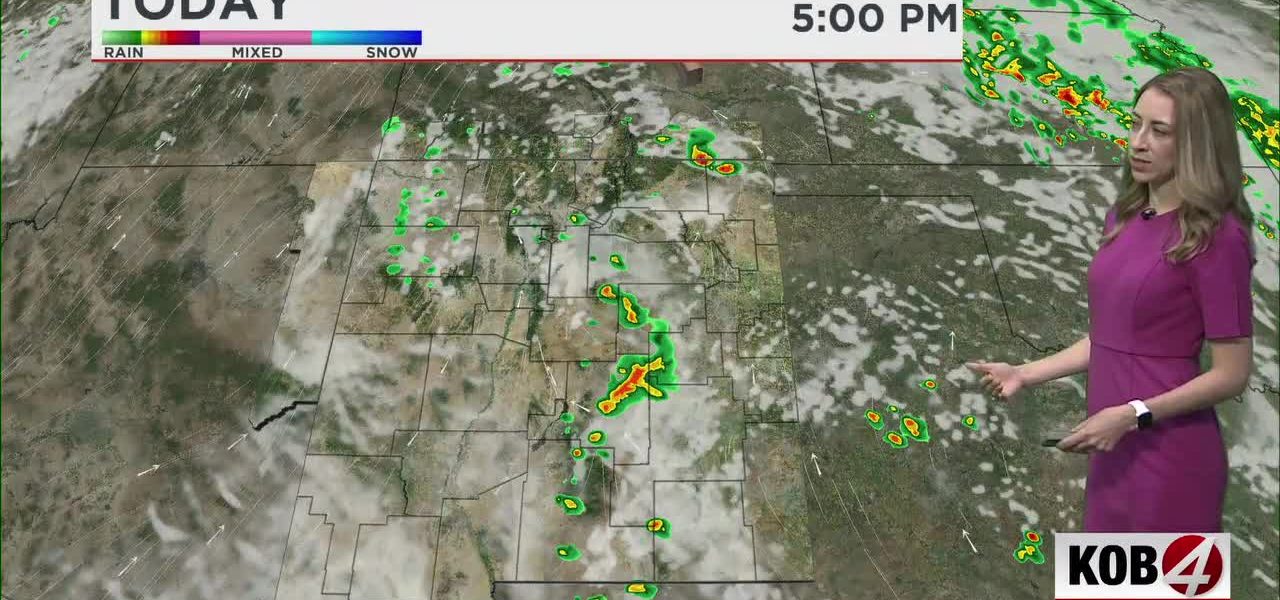
Down in Albuquerque, for instance, a fleeting meteorological relief had just teased the parched earth. A few days of rain now have us above average for rainfall in May but that trend won’t last forever.
So says the official word. It’s a statement that, in its dry factual delivery, somehow captures the fleeting nature of what water has become: a commodity, a blessing, a casus belli for much of the world. And honestly, it isn’t hyperbole. Global climate models, once the esoteric playground of academics, now dictate the strategic positioning of nations and the daily grind of billions. [QUOTE_PLACEHOLDER]
New Mexico, in a microcosm, shows this uneasy equilibrium. The brief reprieve of wet days offered what one meteorologist termed very beneficial rains taking shape over a good majority of the state, with lower rain chances on the board for central and western areas
—a kind of pre-game for the region’s much-lauded monsoon. But the mercury’s steady climb ensures any lingering hope for sustained moderation quickly evaporates. We’re closing out May and getting into June with temperatures warming up but some showers and storms may pop up Thursday in New Mexico
, we’re told. An unpredictable dance of extremes, that’s what it’s.
It sounds familiar, doesn’t it? That fragile dance between too little and too much, often just weeks apart, isn’t unique to the sagebrush and red rock mesas. Across the world, billions hinge their livelihoods, their very survival, on the precise timing and amplitude of atmospheric phenomena. Pakistan, a nation perched on the precarious edge of climate vulnerability, knows this choreography intimately. Its annual monsoon isn’t just a weather event; it’s the heartbeat of its agrarian economy, dictating everything from wheat yields to hydroelectric output.
In fact, recent data from the Pakistan Meteorological Department reveals a startling truth: the average onset of monsoon rains has shifted by approximately 10 days over the last two decades, a statistically significant deviation with profound consequences for agriculture and water management. That’s a huge problem. You can’t just tell a farmer whose life has been passed down for generations to ‘adjust’. They’re looking at decades of traditional knowledge—all of it now effectively thrown out of sync. Political ramifications? Oh, you bet. Disrupted crop cycles, food price spikes, mass rural-to-urban migration, cross-border water disputes—it’s all on the table, an unfortunate buffet of bad news.
The situation in New Mexico, albeit on a different scale and with differing societal structures, reflects this global vulnerability. The local meteorologist here observes The last couple of days were almost that preview of monsoon season
, and that it’s 17 days from today is the start of monsoon season
. Such precise calculations might offer some comfort—a countdown, a quantifiable expectation—but experience suggests the monsoon is increasingly less of a given and more of a gamble. Monsoon goes from June 15 to Sept. 30
, offering a fixed window but no guarantee of its benevolence. When we don’t get what we expect, that’s where the trouble usually begins, isn’t it?
📄 POLICY WIRE WHITEPAPER PUBLISHED: PAKISTAN'S NATIONAL SECURITY POLICY PRIORITIES
👉 READ BY CLICKING HERELook, the Southwest is staring down Red flag warnings are in place for some other places
, a phrase that sends shivers through anyone who’s watched an inferno chew through thousands of acres, but for many other nations, a failed monsoon is an equivalent red flag, signaling widespread hunger or even violent upheaval. You start connecting the dots, you see how interconnected things are, even if they don’t seem like it on the surface. That local Albuquerque forecast? It’s not just for Albuquerque. It’s for all of us.
What This Means
The increasingly erratic patterns of seasonal weather, exemplified by the mixed signals emanating from New Mexico’s pre-monsoon forecasts, represent a far deeper geopolitical anxiety. For countries like Pakistan and its neighbors across South Asia, deviations in the annual monsoon cycle are not mere inconveniences; they’re direct threats to food security, economic stability, and, indeed, national sovereignty. A reliable monsoon ensures crops, powers hydroelectric dams, and replenishes groundwater tables—all non-negotiable elements for a population of over 220 million people that’s still heavily reliant on agriculture.
The shifting climate is fueling a vicious cycle: diminished freshwater resources lead to greater dependency on shared rivers (think Indus and its tributaries), which can, and often do, ignite tensions between upstream and downstream nations. Consider India — and Pakistan, where water has been a flashpoint for decades. When the ‘gift’ of the heavens becomes unpredictable, the ‘gifts’ of political cooperation quickly wane. And for these nations, already contending with myriad internal challenges and regional instabilities, climate-induced migration or food riots add explosive new variables to an already volatile equation.
So, when you hear about temperatures warming up in New Mexico, think bigger. Think about the global supply chains for everything from food to textiles that depend on the stability of water-stressed regions. The ability to forecast and, more importantly, adapt to these changes is now a core tenet of effective governance—and an urgent requirement for avoiding catastrophic humanitarian and geopolitical outcomes. It’s no longer just meteorology, it’s statecraft. The cost of failure? Well, we simply can’t afford it. We truly can’t.