


Munich’s Reckoning: A New Front in the War Against Oblivion Opens on German Soil
POLICY WIRE — Munich, Germany — You know, there’s a city, a grand old European city, that once upon a time served as the very cradle—or perhaps the poisoned chalice—for one of history’s most ghastly...

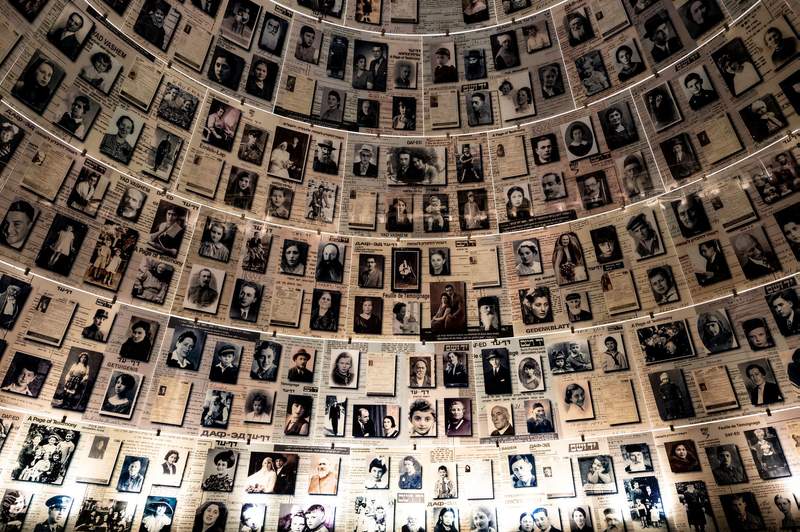
POLICY WIRE — Munich, Germany — You know, there’s a city, a grand old European city, that once upon a time served as the very cradle—or perhaps the poisoned chalice—for one of history’s most ghastly political experiments. And no, we’re not talking about some quaint historical footnote; we’re talking about Munich, where the brown shirts marched and speeches echoed a future built on hatred. So, it’s perhaps fitting, with a heavy dose of historical irony, that the Yad Vashem Holocaust memorial is now planting a new educational outpost right here. It’s not just another museum, is it? It’s a deliberate, calculated strike against amnesia.
This isn’t about simply adding another plaque to the historical ledger. It’s a profound declaration, an assertion that memory isn’t static, especially in a world where foundational truths are often challenged or, worse, ignored entirely. Because, frankly, some corners of the globe have become awfully cozy with forgetting, or even actively distorting, the horrors of the 20th century. Yad Vashem’s move isn’t just symbolic; it’s a strategic push to keep the ugly, uncomfortable lessons front and center, particularly in a region still wrestling with the long shadows of its own past.
“We’re not just preserving memory; we’re arming future generations with the knowledge to recognize warning signs, the insidious creeping of intolerance,” said Dani Dayan, Chairman of Yad Vashem, during a recent discussion about global education initiatives. “It’s about conscience, isn’t it? It’s about making sure that ‘never again’ isn’t just a slogan, but an active, breathing imperative.” He’s got a point. You look around, you see the trends. It’s getting tougher out there to hold onto the narratives that demand introspection.
Germany, for its part, has consistently, albeit sometimes painstakingly, sought to confront its history head-on. But that commitment isn’t uniformly reflected everywhere. And that’s where an initiative like this becomes, well, incredibly important. This educational center in Munich aims to equip teachers, students, and civic leaders with the tools to teach the Holocaust in an nuanced, accurate way. It’s about providing the primary source material, the undeniable evidence, against the whisper campaigns and outright denials that seem to gain traction in fragmented media landscapes.
But how does this resonate beyond Europe’s borders? Think about it: in parts of the Muslim world, and specifically South Asia—nations like Pakistan—historical narratives often prioritize local struggles, post-colonial grievances, or the complexities of regional conflicts. The Holocaust, for many, remains a distant, European tragedy, occasionally filtered through an anti-Zionist lens that muddies the waters of pure historical understanding. The challenge for institutions like Yad Vashem isn’t just educating former perpetrators or their descendants; it’s extending that moral clarity to populations whose frames of reference are, shall we say, different. It’s about finding common ground in the universal experience of suffering, while not flattening distinct historical contexts.
“Germany accepts its indelible responsibility. This center—here, in this very city—is another critical brick in our national commitment to never letting such darkness flourish again,” declared Bavarian Culture Minister Markus Blume, underlining the federal state’s role in supporting such initiatives. His words, delivered with a somber sincerity, carry the weight of a nation’s continuing struggle for atonement and vigilance. But even with official backing, the work is never finished. A recent study on digital literacy and historical awareness indicated that misinformation campaigns easily bypass traditional educational gatekeepers, a sobering fact.
📄 POLICY WIRE WHITEPAPER PUBLISHED: PAKISTAN'S NATIONAL SECURITY POLICY PRIORITIES
👉 READ BY CLICKING HEREWhat This Means
The establishment of this new center isn’t merely an administrative act; it’s a profound strategic recalibration in the ongoing global effort to preserve Holocaust memory. Politically, it signals Germany’s unwavering commitment to confront its past, positioning itself as a leader in Holocaust education, rather than merely a recipient of it. It’s also a response to the rising tide of anti-Semitism and Holocaust denial that has become worryingly pervasive, amplified by digital platforms. Economically, while not a direct financial boon, such institutions indirectly foster a society built on shared democratic values and a commitment to human rights—attributes that attract stable investment and global partnerships. There’s a quiet dividend in being a nation that openly grapples with its demons. this effort is particularly critical as living survivors dwindle. According to the Claims Conference, fewer than 245,000 Holocaust survivors remained worldwide as of January 2024, a stark reminder that the eyewitness generation is quickly fading. Their stories must be transferred effectively.
For regions like South Asia, this initiative offers a subtle challenge. It underscores the universal nature of crimes against humanity, forcing a dialogue on how different historical traumas are remembered and taught. Can the lessons from the Holocaust inform conversations about sectarian violence or mass displacements elsewhere? Can it foster a broader empathy? It’s a tough ask, given entrenched political postures and historical grievances that often prevent a clear-eyed view of any suffering outside their immediate context. But you know, understanding the sheer scale of human and financial resources dedicated to securing narratives, even in contexts seemingly disparate, provides a valuable lesson in policy priorities.
But the real significance isn’t just in government policy or funding; it’s in the quiet hum of classrooms and lecture halls. It’s in the teachers and students engaging with materials that force them to look squarely at what humanity is capable of, both good and unbelievably, irrevocably evil. And that, friends, is the perpetual battle that this new Munich center aims to fight, one classroom, one mind at a time. Because forgetting, in this case, isn’t just an accident; it’s a moral failing.