


America’s Corner Office Gets Richer: Elite Compensation Surges Amidst Common Worker Strain
POLICY WIRE — New York, USA — For the rank-and-file, 2025 often felt like a slow grind— another year of pinched wallets, where a modest raise battled the stubborn ghost of past...

POLICY WIRE — New York, USA — For the rank-and-file, 2025 often felt like a slow grind— another year of pinched wallets, where a modest raise battled the stubborn ghost of past inflation. Many workers had to cut corners to make ends meet and run up credit card debt to pay for everyday necessities, despite their own 4.7% salary bumps. Then there’s the C-suite, operating in what feels like a wholly separate economic universe.
While average employees stretched thin, the typical CEO compensation package rose nearly 6% in 2025 to $17.7 million. That’s a jump, not a leap, for the average corner-office occupant, certainly. But it’s also a sum most people would need several lifetimes to earn. Company boards, it seems, were happy to reward their top executives for bigger profits and higher stock prices, and gave them incentives to stick around and make even more money for shareholders. Call it good business; many just call it astonishing.
This escalating disparity isn’t a new story, but the numbers keep getting more pronounced. At half the companies in AP’s survey, it would take the worker at the middle of the company’s pay scale 200 years to make what the CEO did in one. That’s up from 192 years in last year’s survey. Companies have been required to disclose this so-called pay ratio since 2018. But disclosure hasn’t exactly slowed the gravy train.
Consider Coca-Cola. Its CEO earned nearly 1,739 times the median pay of $17,947 for its workers. And at the retailer TJX Cos., the chief executive makes about 1,774 times what a worker making the company’s median pay does. Sarah Anderson, who directs the Global Economy Project at the progressive Institute for Policy Studies, noted in an email that there are ballot initiative campaigns in San Francisco and Los Angeles to raise taxes on companies with sizable gaps between CEO and worker pay. It’s hard to imagine those campaigns winning easily, but you can see their point. Ms. Anderson cut right to it: [QUOTE_PLACEHOLDER].
Executive pay packages aren’t just a simple salary and bonus anymore; those old school components make up only a small percentage for the modern CEO. Boards tie compensation to performance—often stock awards that vest over years, contingent on metrics like a higher stock price or market value. Because, why not give someone with millions more millions if they meet targets, right?
And shareholders, supposedly the ultimate watchdogs? They get a say on pay through votes at annual meetings, but the votes are non-binding. Most pay plans pass with overwhelming support, with the average “yes” vote at companies in this year’s survey around 90%. That suggests either widespread contentment, or perhaps, a certain apathy when shareholders already hold the long end of the stick.
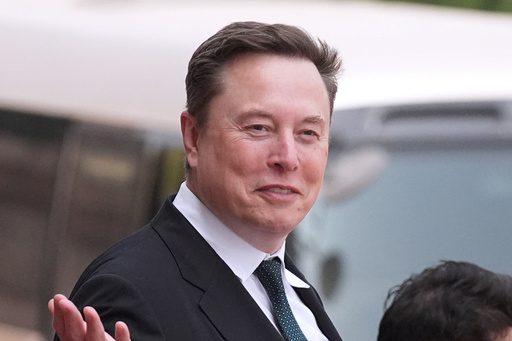
The outliers, of course, really make you pause. Elon Musk, CEO of Tesla, received compensation valued at $132.3 billion, all in the form of stock awards. To actually get the shares, Musk must meet ambitious targets over the next 10 years for the company’s market value and Tesla’s electric vehicles, as well as his futuristic goals of developing a fleet of robotaxis and an army of humanoid robots. That’s quite a to-do list, even for a centibillionaire. Shankh Mitra of Welltower got the second-largest package: $821.1 million, also mostly stock awards, after his firm’s stock price tripled. Then there’s Hock Tan at Broadcom, whose $205.3 million package ties directly to his ability to greatly increase the revenue Broadcom generates from artificial intelligence. It’s an interesting move; [QUOTE_PLACEHOLDER], according to Kelly Malafis, founding partner at Compensation Advisory Partners.
📄 POLICY WIRE WHITEPAPER PUBLISHED: PAKISTAN'S NATIONAL SECURITY POLICY PRIORITIES
👉 READ BY CLICKING HEREBut the biggest pay package among women CEOs surveyed — a paltry sum compared to some male counterparts — went to Jane Fraser of Citigroup, valued at $95.8 million. She got a one-time award for overseeing a wholesale reorganization of Citi into a leaner company, including laying off thousands of workers. So, trimming the workforce, it seems, can really pay off for those at the top. The median compensation for women CEOs actually fell 2.6% to $18.1 million, compared to a 6.4% increase for their male counterparts to $17.7 billion.
What This Means
This perpetual upswing in executive pay, especially when contrasted with stagnating or modestly increasing wages for most workers, presents a simmering political challenge. In an election year, such figures are ready-made fodder for populists railing against corporate greed, a narrative that resonates deeply across the socio-economic spectrum.
Politically, it feeds the broader discourse around economic fairness. Are companies truly distributing value fairly, or is the wealth disproportionately consolidating at the top? It’s not a stretch to imagine such figures influencing voter behavior, pushing policy proposals like increased corporate taxes or more stringent regulations on executive compensation. Because, let’s face it, public opinion isn’t usually on the side of multi-million dollar bonuses when families are struggling to fill their gas tanks or grocery carts. Economically, this concentration of wealth means less discretionary income circulating at the broader consumer level. It potentially dampens aggregate demand — and can exacerbate wealth inequality, which in turn breeds social unrest. It’s a feedback loop, you see.
The implications aren’t confined to American shores either. In regions like South Asia, particularly countries such as Pakistan, discussions around wealth distribution, corporate transparency, and governance are critical, albeit often taking different forms. There, economic disparities can fuel more volatile political instability. For Western companies with operations in these markets, perceived greed at home might complicate their ethical standing abroad, impacting labor relations or even investor sentiment if they’re seen as exporting low-wage models while enriching their executives. The Labor Department stated that overall, wages — and benefits netted by private-sector workers in the U.S. rose 3.4% through 2025. This pales in comparison, often serving as a grim counterpoint to the dizzying sums disclosed in annual reports.
The pursuit of AI as a metric for executive compensation, as seen with Broadcom, also introduces a new wrinkle. As AI technology evolves, its integration into various industries might dramatically shift labor markets. How executive rewards are tied to these seismic shifts — and whether the benefits trickle down — will become a defining economic and political question in the coming decade. You can learn more about how technological advancements often reshape global markets and economic paradigms, for instance, by reviewing Eli Lilly’s $20 Billion Wager on the future of pharma, or examining how local economic developments, like Mumbai’s new luxe enclave, highlight similar disparities on a more localized scale. These aren’t isolated incidents; they’re all interconnected threads in a very complex global economic fabric. For now, the executive class continues its comfortable ascent, leaving everyone else to wonder when, or if, the view from the top might ever change.