


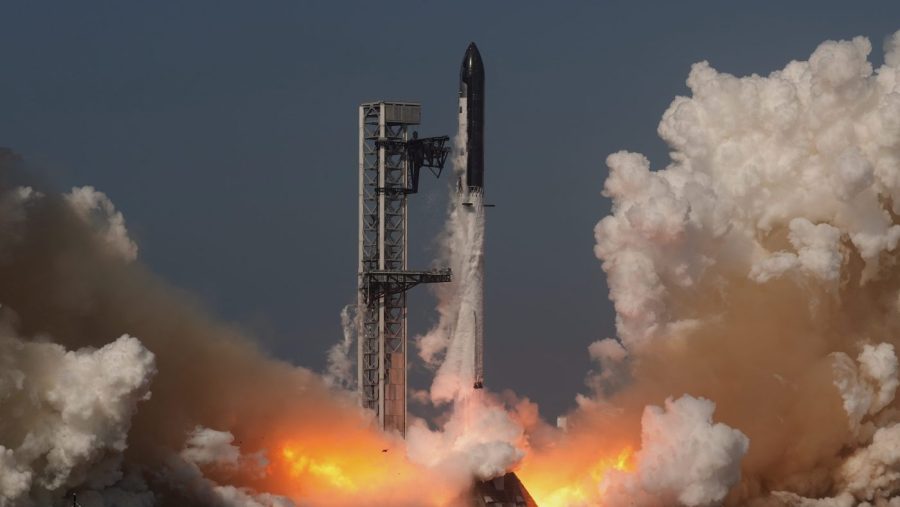
Cosmic Ambitions Grounded: SpaceX Starship Mishap Spurs Scrutiny, Echoes in Emerging Space Nations
POLICY WIRE — Washington, D.C. — It wasn’t the fiery cataclysm broadcast around the world, not this time. No, the recent issue wasn’t the kind of spectacular explosion that tends to...

POLICY WIRE — Washington, D.C. — It wasn’t the fiery cataclysm broadcast around the world, not this time. No, the recent issue wasn’t the kind of spectacular explosion that tends to garner immediate, breathless headlines across social feeds and traditional wire services alike. This was a subtler failure, a controlled descent gone sideways for a Starship booster during what was meant to be a routine post-test deorbit burn—and precisely because it lacked pyrotechnic drama, the incident speaks volumes about the mounting pressures on commercial space flight, igniting a far more penetrating investigation into Elon Musk’s ever-ambitious SpaceX.
It’s funny, isn’t it, how the smallest wobble in the machine can provoke the deepest introspection? The company, renowned for its audacious push into reusable rockets and interplanetary travel, finds itself squarely in the crosshairs of regulators after this uncommanded roll during the booster’s return phase. But this wasn’t just a technical glitch—it was a jarring reminder that space isn’t quite as domesticated as some titans of industry might want us to believe. It’s a vast, indifferent void, — and every hiccup sends ripples beyond just the balance sheets of Texas. [QUOTE_PLACEHOLDER]
Sources familiar with the matter suggest that the anomaly, though ultimately contained without collateral damage, wasn’t an isolated incident—a fact that’s certainly got the attention of federal aviation authorities. You see, the F.A.A., which issues launch licenses and generally keeps an eye on aerospace operations, has reportedly issued a formal directive, obliging SpaceX to conduct a comprehensive probe into the recent Starship booster mishap. And they aren’t playing around. This isn’t just about tweaking a bit of code; it’s about the reliability framework for humanity’s hopeful escape from Earth, or at least our ability to put really big stuff into orbit. They’re demanding detailed telemetry data, manufacturing logs, — and an exhaustive procedural review. It’s an inconvenient spotlight, to say the least, especially when grand pronouncements about Mars colonisation are always on the table.
But the real juice here, the hidden agenda item for everyone watching, concerns a familiar spectre: investor confidence. Starship’s long-term viability hinges on a cadence of successful, increasingly routine flights. And with billions of private capital—and considerable government contracts—bankrolled on its promise, a series of seemingly minor setbacks could trigger significant unease among shareholders and partners. A new analysis from the consultancy firm SpaceWorks revealed that confidence in new launch systems typically drops by over 15% following an unexplained in-flight anomaly, a data point that underscores the immediate financial sensitivity. That’s a serious dip, regardless of how visionary the CEO’s tweets might be.
Because, honestly, who wouldn’t be concerned? This sort of development inevitably resonates far beyond the Cape or Starbase. Consider nations like Pakistan, which harbors its own space ambitions, albeit on a dramatically different scale. They’re meticulously building their national space program, SPARRCO, eyeing everything from indigenous satellite launches to perhaps even manned missions way down the line. What they watch, what every aspiring spacefaring nation watches, isn’t just the glorious lifts-offs—it’s also the investigations. It’s about discerning whether the established players, those with multi-decade head starts and seemingly limitless resources, can truly manage the brute-force complexities of rocketry without recurring stumbles. How dependable is the entire ecosystem, they’ve got to be asking? They’re assessing the systemic robustness of such endeavors, gauging what kind of R&D expenditure and risk mitigation is genuinely required—and whether future international collaborations (or perhaps even affordable ride-share opportunities on giant rockets) remain realistic or recede into the realm of speculative fiction. They’re not just interested in whether SpaceX succeeds; they’re interested in *how* they recover from setbacks, because it dictates the art of the possible for every nation with an eye on the stars, from the Indian Space Research Organisation (ISRO) to tiny developing economies just dipping their toes in cosmic waters. The integrity of the global space supply chain, as it were, depends on these very public struggles.
📄 POLICY WIRE WHITEPAPER PUBLISHED: PAKISTAN'S NATIONAL SECURITY POLICY PRIORITIES
👉 READ BY CLICKING HEREWhat This Means
This incident, far from being just a technical hiccup for a rocket, spotlights the intricate interplay of innovation, regulation, and international aspiration in the burgeoning commercial space sector. Politically, the F.A.A.’s assertive posture indicates a hardening regulatory environment. Gone are the days when Silicon Valley-style disruption was tolerated with benign neglect in a field as safety-critical as orbital mechanics. We’re seeing a shift, an insistence on mature oversight that could slow innovation, yes, but also buttress long-term reliability. And frankly, this might not be bad for the overall industry.
Economically, the impact extends beyond SpaceX’s immediate market cap. Prolonged investigations or further incidents could trigger higher insurance premiums across the board for space launches, affecting anyone looking to put a payload into orbit. It could also force a reassessment of public-private partnerships, potentially pushing more risk onto private companies and tightening the purse strings from government clients. Emerging economies, many of which look to commercial providers for more affordable access to space (whether for internet constellations or earth observation), will be keenly observing. A reliable, affordable launch market is crucial for their developmental plans, and any perceived instability introduces an element of doubt. It’s a high-stakes poker game, where a single booster’s uncommanded roll isn’t just an engineering puzzle; it’s a tremor in the very foundations of the coming space economy, forcing everyone to rethink their hand.