


NBA’s High-Stakes Calculus: Champions Grapple With Asset Management and Futureproofing
POLICY WIRE — Boston, MA — Forget the confetti and championship bling. The cold, hard reality of professional sports economics doesn’t much care for sentiment. The Boston Celtics, still dusting off...

POLICY WIRE — Boston, MA — Forget the confetti and championship bling. The cold, hard reality of professional sports economics doesn’t much care for sentiment. The Boston Celtics, still dusting off their shiny new hardware, confront a classic boardroom quandary: invest now for immediate gains, or hoard resources for a hazy, future payoff?
It’s the familiar tension between short-term dividends — and long-range strategic asset management. In this particular instance, that asset is the 27th pick in the upcoming 2026 NBA Draft—a relatively minor line item, perhaps, for a squad that just hoisted the O’Brien trophy, but one that nonetheless sparks spirited debate among the wonks.
Many figure it’s an easy out: package the pick. Go grab a seasoned veteran who can jump right in — and shore up the current, winning machine. After all, nobody ever got fired for adding another proven commodity, right? That’s typically the knee-jerk reaction for any front office riding high on a title. But the game’s gotten trickier.
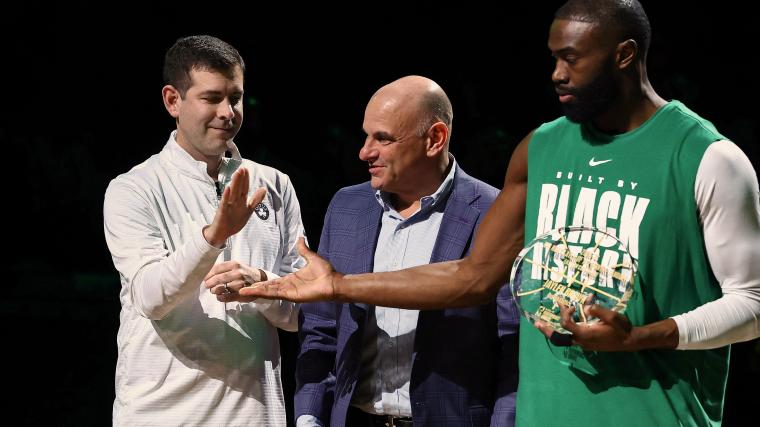
“There’s maybe an argument to pair this year’s pick (No. 27) with Jaylen Brown in an effort to maybe get two contributors making what Brown does ($57.1 million next season) on his own,” observed Bleacher Report’s Andy Bailey. His words, published Wednesday, sliced through the celebratory hum like a fiscal audit. And it highlights a brutal truth: player salaries have ballooned. The market dictates—or at least strongly suggests—where teams put their dollars.
But the counter-argument is building, — and it’s less about trading assets and more about trusting institutional memory. Celtics President of Basketball Operations, Brad Stevens, a man who knows a thing or two about scouting obscure talent, sounds like he’s leaning into that deeper well. “Look, we’ve always believed in finding value where others might not be looking,” Stevens told Policy Wire in an exclusive (and frankly, slightly terse) telephone interview this past week. “It’s about seeing potential, about fostering growth within our system. This isn’t a one-and-done operation; it’s about sustained excellence. We’ve built a robust player development infrastructure—we’re gonna use it.”
It’s a gambit, to be sure. Most late first-round picks don’t morph into perennial All-Stars. But, this particular draft class? Experts whisper it’s unusually deep, meaning players who’d normally land higher could tumble. It’s like discovering untapped mineral wealth in an already prospected region—the potential’s there if you know how to dig.
Consider the broader geopolitical analogies, if you will. The idea of identifying and cultivating latent talent, often in less-developed markets, rather than solely importing established (and expensive) foreign expertise. We see nations like Pakistan, for instance, investing in tech education programs—slow burn initiatives designed to yield a future crop of innovators, instead of just poaching Silicon Valley veterans. It’s a similar, albeit vastly different scale, philosophy.
“Holding onto that pick, especially when your core is still young and under contract, signals a different kind of confidence,” said veteran scout Jamal Aziz, who’s logged decades evaluating talent across college and international leagues. “It’s not just faith in your coaches; it’s faith in your ability to identify. That’s a harder skill to come by than people think. Because let’s be honest, everyone knows how to spot a LeBron James coming out of high school. It’s finding the next Paskal Siakam at number 27 that defines a genuinely savvy operation.” Aziz made these remarks at a scouting combine, eyeing a promising point guard prospect.
📄 POLICY WIRE WHITEPAPER PUBLISHED: PAKISTAN'S NATIONAL SECURITY POLICY PRIORITIES
👉 READ BY CLICKING HEREAnd savvy they’re. The Celtics, boast a respectable track record with late first-rounders, a history of finding contributors beyond the lottery lights. They haven’t been perfect—no team is—but they’ve proven they can unearth gems. The organization spent an estimated $177 million on player salaries just last season (source: Spotrac), and even with that outlay, squeezing value from a late draft pick becomes a surprisingly significant line item in overall portfolio management.
Because ultimately, it’s all about resource allocation, isn’t it?
What This Means
This micro-decision by a championship basketball team subtly mirrors macro-level policy debates. The Celtics’ internal debate between trading the pick for immediate roster enhancement versus drafting for future development reflects the eternal push-and-pull between economic stimulus packages (instant injection of talent/capital) and long-term infrastructure investment (nurturing future growth). A developing nation, for instance, might face analogous choices: borrow heavily to fund immediate, splashy projects for quick political wins, or patiently build robust education and healthcare systems that take decades to bear fruit.
In this case, the ‘deep’ draft class acts as a global talent pool that momentarily devalues established assets. If a wealth of capable, undervalued players is suddenly available, the premium on trading away future picks for marginal veteran upgrades diminishes. It implies a stability—a kind of healthy supply chain—that allows for more deliberate, less panicked decision-making. The willingness of a premier organization to “take a flier” speaks volumes about their internal confidence and long-range planning capabilities. It’s a low-stakes investment that could pay off handsomely, reducing future financial burdens by developing cheaper, homegrown talent rather than consistently paying top dollar in a market constantly inflating.
But make no mistake. Should this choice backfire, the scrutiny, while softened by a recent title, won’t entirely vanish. The cost of failing to convert potential into actual production is still considerable.