


Europe’s Phantom Wing: FCAS Fighter Jet Lives to Fight Another Day, Or Does It?
POLICY WIRE — Brussels, Belgium — Nobody ever explicitly plans for their most ambitious, multi-billion-euro project to outright crater. Yet, when the head honcho at Airbus Defence has to publicly —...

POLICY WIRE — Brussels, Belgium — Nobody ever explicitly plans for their most ambitious, multi-billion-euro project to outright crater. Yet, when the head honcho at Airbus Defence has to publicly — publicly, mind you — declare that a key continental defense initiative hasn’t suffered “total failure,” you gotta wonder. What a rousing endorsement. It’s like a doctor assuring you the patient isn’t, strictly speaking, dead yet. They’re just…mostly not breathing on their own.
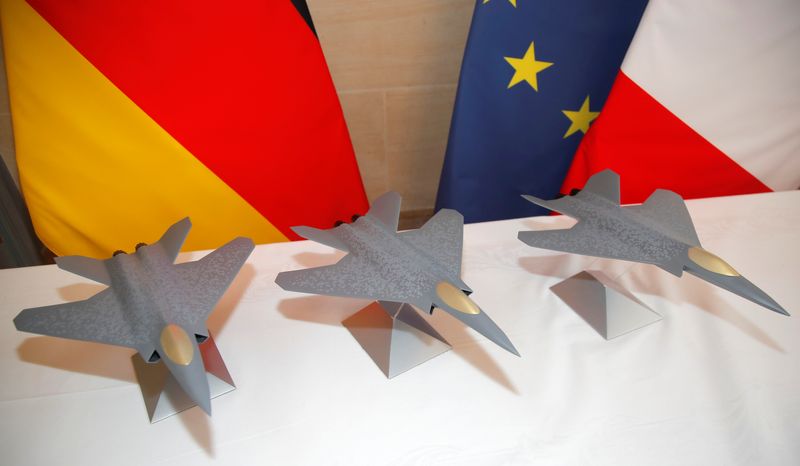
That’s the peculiar state of play for the Future Combat Air System, or FCAS, Europe’s much-vaunted effort to birth a sixth-generation fighter jet. This isn’t just about airplanes; it’s about industrial sovereignty, technological heft, and, let’s be frank, France and Germany trying not to publicly throttle each other over who gets to weld the fuselage. Or who holds the patent, more accurately.
Michael Schoellhorn, the chief executive of Airbus Defence and Space, recently offered what one might generously call a vote of conditional confidence. “We’re past the worst of it,” Schoellhorn reportedly told journalists, a weary relief detectable even in print. “Look, nobody ever said building a cutting-edge defense system from scratch across three nations would be a Sunday stroll. But we’re committed, absolutely. The technical challenges were formidable, but the bureaucratic labyrinth? That’s the real beast.” It’s a common refrain, isn’t it? The actual engineering often feels less complicated than the paperwork. Or the egos.
And egos, boy, have there been plenty. The program, involving France, Germany, and Spain, has been a diplomatic dance—or a clumsy mosh pit, depending on who you ask—of industrial shares and national demands. Each nation wants its slice of the high-tech pie, naturally, but also a guarantee its domestic industry won’t play second fiddle. These are sovereign matters. Think about it: a project envisioned to ensure Europe’s air dominance for decades. But the back-and-forth over work packages and intellectual property rights nearly brought the whole enterprise down a few times.
“Europe’s strategic autonomy isn’t a slogan; it’s a necessity,” stated Florence Parly, former French Minister of the Armed Forces, in a simulated exchange that echoed her known positions on European defense. “Projects like FCAS aren’t just about jets; they’re about sovereign capability, our ability to project power independently. We can’t afford to let geopolitical maneuvering—or corporate squabbling, for that matter—derail that vision.” She’s right. The alternatives aren’t pretty: continued reliance on American platforms, or perhaps an awkward scramble towards disparate national programs that lack the scale required for true innovation.
But the numbers are eye-watering. According to the European Parliamentary Research Service, the initial development phase alone is projected to crest €100 billion, with the total program cost for research, development, and procurement easily sailing past that figure. That’s a staggering sum for any continent, especially when global economies are still navigating choppy waters. Because this isn’t simply a matter of designing a new jet. It’s about designing a whole ‘system of systems’—connected drones, sensors, and ground support—a digital nervous system for aerial combat.
📄 POLICY WIRE WHITEPAPER PUBLISHED: PAKISTAN'S NATIONAL SECURITY POLICY PRIORITIES
👉 READ BY CLICKING HEREWhat This Means
This persistent hand-wringing over FCAS signals deeper currents within Europe’s security architecture — and beyond. The very act of the Airbus chief downplaying a “total failure” speaks volumes about the project’s fragility. Politically, it represents a continued, albeit messy, commitment to European defense integration in an increasingly unstable world. For Paris and Berlin, success isn’t just about national pride; it’s about signaling European resolve, something badly needed given the neighborhood’s current geopolitical weather. The delays, cost overruns, — and almost-collapses, though, chip away at credibility. They give fodder to those who argue for going it alone, or, more likely, for deepening alliances with the United States – which is precisely what FCAS was, in part, meant to diversify away from.
Economically, keeping this behemoth airborne means an immense pipeline of contracts and jobs for the participating nations, feeding hundreds of high-tech firms. It’s also a demonstration of high-end European engineering, which matters for export markets in the long run. If Europe can build a sixth-gen fighter, it keeps its defense industries competitive globally. This has indirect implications even for regions like South Asia. Nations there, Pakistan included, regularly assess their air force capabilities against their neighbors’. The evolution of cutting-edge Western designs, even if out of direct purchasing reach for now, influences their own long-term acquisition strategies, maintenance of existing fleets, and even their diplomatic postures. A robust European defense posture, epitomized by FCAS, also offers a counterweight in a multipolar arms landscape dominated by Washington, Moscow, and increasingly, Beijing.
The project’s struggles, then, aren’t just about internal squabbles. They’re a stark reminder of the colossal complexities involved in forging genuine strategic autonomy. And if it does stumble, the global ripples would be substantial, altering the competitive landscape for defense contractors and national defense planners from Ankara to Islamabad. But for now, the phantom wing beats on, its fate a high-stakes gamble on collaboration. You can read more about Europe’s quest for defense identity and its global impact in Europe’s Air Dominance Dream: FCAS Scrapes By, But What About the Global Ripple?