


Grand Old Game, New Money: Ganguly Laments Shifting Sands of Indian Cricket Talent
POLICY WIRE — Kolkata, India — It’s not often you hear an elder statesman of Indian cricket, a man whose very name evokes an era of unyielding grit and fierce pride, openly wrestle with the future....

POLICY WIRE — Kolkata, India — It’s not often you hear an elder statesman of Indian cricket, a man whose very name evokes an era of unyielding grit and fierce pride, openly wrestle with the future. But there he was, Sourav Ganguly, ‘Dada’ to millions, leaning into the harsh light of modern sports economics—and, well, confessing his worries. It wasn’t about a looming World Cup or a political squabble within the board. No, the prince of Kolkata was weighing the very soul of the game, one promising teenager at a time.
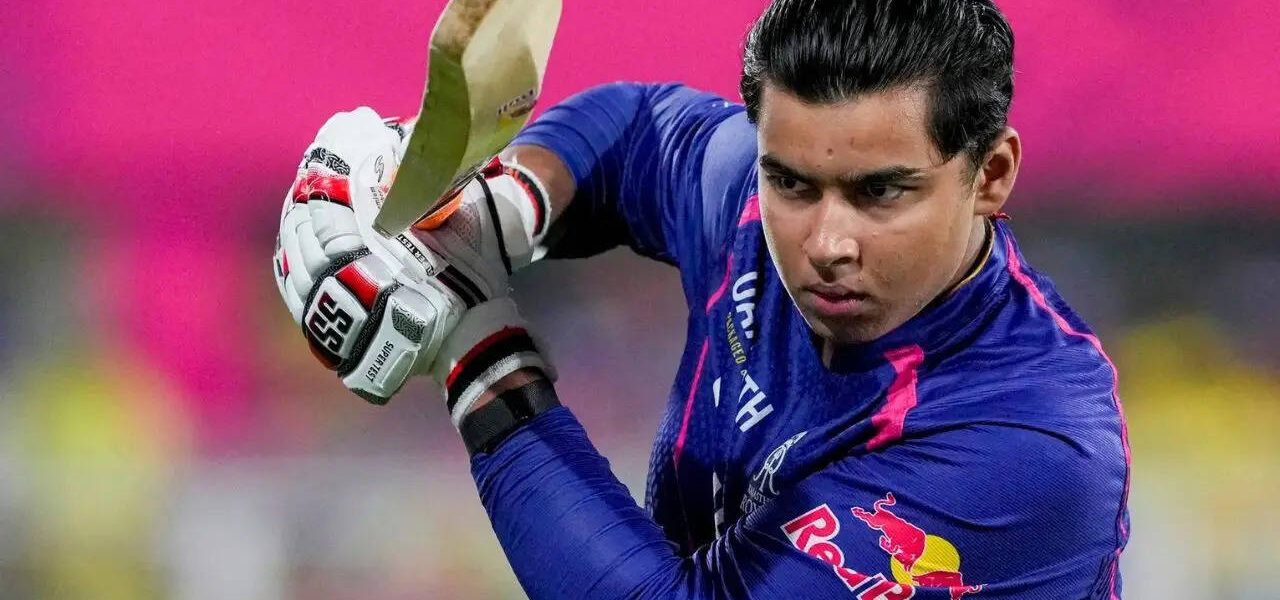
His recent remarks, less a sermon and more a sigh, zeroed in on Vaibhav Sooryavanshi, a wunderkind with a bat who’s got everyone buzzing. You’d think Ganguly, always one to back raw talent, would be clamoring for his immediate ascent. But, he isn’t. “In T20s, he should be included right away,” Ganguly offered, his words clipped, reflecting perhaps a weary pragmatism. “But not in Test cricket. He has to score more runs in first-class cricket to get a place. But at the moment he’s just too talented.” A nod, then a shake of the head. It’s quite the paradox, isn’t it?
And that’s the rub, isn’t it? The sheer, almost ludicrous, talent of a 15-year-old batting with such poise—it screams T20 riches, not the grind of multi-day matches. It raises questions about whether the old paths to glory—the endless overs, the slow-burn narratives of Ranji Trophy heroics—are losing their luster in an age of instant gratification and fat paychecks. Because let’s be real, the T20 circuit, especially India’s Premier League, isn’t just big; it’s a behemoth, swallowing aspirations whole.
This isn’t just about one kid, though. It’s a reflection of a wider trend sweeping across South Asia, where cricket reigns supreme but its formats are locked in a silent, high-stakes battle. Youngsters, whether in Karachi or Colombo, Dhaka or Dharamshala, eye the lucrative T20 leagues first. They see the glamour, the endorsements, the freedom. It’s a faster route to fame and fortune than enduring four-day matches under a sweltering sun for comparatively meager returns. A recent survey by the International Cricket Council revealed that over 70% of emerging male cricketers across top-tier cricketing nations (India, Pakistan, Australia, England) prioritize playing T20 franchise cricket over Test matches if given an exclusive choice early in their careers. The numbers don’t lie, do they?
Even Rishabh Pant, a veritable whirlwind in Test cricket, finds himself in Ganguly’s crosshairs for his T20 struggles. “His Test match batting is world class. He’s still finding it tough to adapt to T20 cricket,” Ganguly noted, adding a sharp aside about captaincy being a “burden on everyone.” It’s a subtle dig, maybe, at the sheer expectation placed on these young titans—they’re supposed to excel at everything, across all formats, and lead their country, all while negotiating personal empires.
This evolving landscape isn’t lost on the powers that be, either. Rohit Singh, a seasoned selector for the Board of Control for Cricket in India (BCCI), acknowledged the tightrope walk. “We can’t ignore the instant gratification T20 offers these lads. It’s their livelihoods, often their families’ too,” Singh told Policy Wire, emphasizing the economic realities. “But for a truly storied career, the grind of first-class is non-negotiable. It’s where character’s forged.” The policy-makers are grappling with this too, trying to retain the sanctity of the five-day game while riding the T20 tidal wave.
📄 POLICY WIRE WHITEPAPER PUBLISHED: PAKISTAN'S NATIONAL SECURITY POLICY PRIORITIES
👉 READ BY CLICKING HEREBut then, there’s Ganguly, the traditionalist, admitting the inevitable. He, alongside contemporaries like Dravid — and Tendulkar, never imagined T20 would grow into this beast. “We learned our cricket in a different era,” he reminisced. “Things keep changing in life, nothing is static.” And players change, their ambitions shaped by what the game now offers, what it demands. T20 cricket is here, it’s not going anywhere—and it’s rewriting the rules of ascension, fast. Young talent, from Chennai to Chittagong, will have to balance the pursuit of rapid fame with the quiet discipline of classic play. Or maybe, just maybe, the classics will simply have to wait.
What This Means
The tension articulated by cricketing legends like Sourav Ganguly isn’t merely about sport; it reflects a broader policy dilemma facing nations heavily invested in popular culture industries. Economically, the unchecked growth of T20 leagues—especially India’s IPL, a multi-billion dollar enterprise—creates significant pressure on traditional sports structures. This phenomenon isn’t unique to cricket; it mirrors debates in football, basketball, and even academia, where short-term, high-reward ventures compete with longer-term, often less glamorous, developmental pathways.
For South Asia, the implications are particularly acute. Pakistan, despite its rich cricketing heritage and strong fan base, can’t compete with the financial might of the IPL, forcing its players into a global freelance market that often prioritizes T20. This financial asymmetry could, over time, create a two-tiered system for talent development—one driven by immense wealth and global visibility in India, and another struggling to maintain competitive integrity with more modest resources in neighboring nations. This imbalance has political undertones, too, as sporting dominance can translate into soft power and regional influence. Ensuring the purity of Test cricket, therefore, becomes a quasi-political act, a defense against the total commercialization of a national identity-forming institution. Policy makers face a delicate balancing act: celebrating newfound economic opportunities while preserving traditional sporting values that define the regional narrative.