


Dodgers’ Cold Calculus: Prospect Becomes Pawn in Ruthless Pursuit of Pitching Apex
POLICY WIRE — Los Angeles, USA — Even the most gilded institutions, the ones swimming in enough talent to staff a small nation, find themselves locked in a perennial, high-stakes game of triage....

POLICY WIRE — Los Angeles, USA — Even the most gilded institutions, the ones swimming in enough talent to staff a small nation, find themselves locked in a perennial, high-stakes game of triage. It’s a brutal reality, often concealed beneath the gloss of championship trophies and multi-million dollar contracts: every cog is ultimately expendable when measured against the ultimate prize. The Los Angeles Dodgers, those titans of West Coast baseball, exemplify this axiom, relentlessly pruning their roster, even at its flourishing fringes, all for the fleeting promise of an unassailable advantage. What’s one more rising star if another, brighter constellation piece is just a deal away?
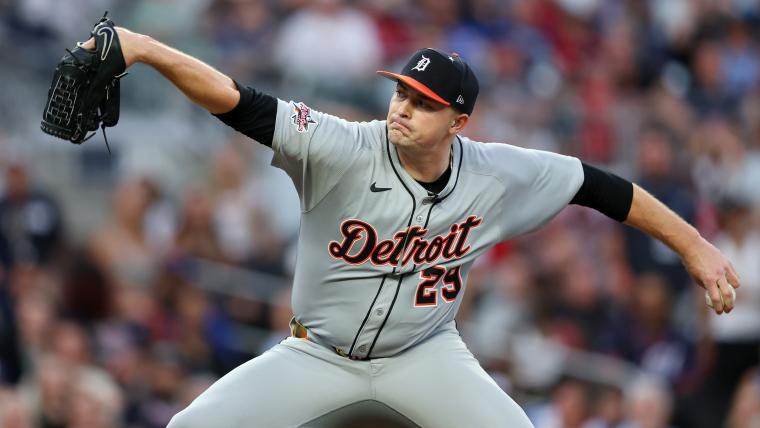
Their sights are now reportedly fixed on Detroit Tigers’ ace, Tarik Skubal, a hurler widely, and quite accurately, dubbed the game’s best starter. He’s the kind of arms-race acquisition that defines dynasties, the missing puzzle piece that turns a very good team into an almost invincible juggernaut. But even for a club as deep-pocketed and prospect-rich as the Dodgers, such a prize comes with a tariff, paid not in cash alone, but in human potential. The whispered name for that particular bill, it appears, is River Ryan.
Ryan, a pitcher of considerable skill, has already tasted the big leagues – brief, tantalizing sips of glory, posting a 1.33 ERA across four major league starts. Down in Triple-A, he’s been absolutely electric this season, a 2.81 ERA complemented by 21 strikeouts over a mere 16.0 innings, metrics that scream future contributor. And yet, he finds himself on the chopping block, a casualty of the Dodgers’ insatiable hunger. Because they’ve simply got too many other good pitchers, don’t they? That’s their ‘problem,’ an embarrassment of riches many franchises – say, those trying to scrape by in markets struggling with their own economic realities – could only dream of.
It’s the starkest reminder that in the grand theatre of elite sports, individual achievement, however stellar, frequently takes a backseat to strategic agglomeration. Andrew Friedman, the Dodgers’ unflappable President of Baseball Operations, isn’t one for sentiment. “Our mandate isn’t just to win,” Friedman told Policy Wire, his voice a level drone during a recent public appearance. “It’s to sustain a competitive edge that’s virtually insurmountable. If that requires difficult choices regarding talent that’s valued elsewhere, then those choices become an operational necessity, not an emotional deliberation.”
And so, Ryan, 27, finds himself a prime example of surplus value – too good to languish, not quite indispensable enough to retain when a bigger fish swims by. It’s the cruel mathematics of modern professional sports, a mirror, some might argue, to global economic forces. Smaller markets, or nations, for that matter, develop their nascent talent, nurture it, often watching as the larger, wealthier entities inevitably poach their most valuable assets. It’s an age-old story, from tech talent draining from South Asia to football stars leaving African leagues for European giants. Pakistan, for instance, grapples with an alarming rate of highly skilled individuals seeking opportunities abroad, with over 760,000 citizens emigrating in the first eight months of 2023, according to a report by The Express Tribune citing Bureau of Emigration and Overseas Employment data. It’s the same underlying mechanism: where capital congregates, talent follows, or is forcefully acquired.
📄 POLICY WIRE WHITEPAPER PUBLISHED: PAKISTAN'S NATIONAL SECURITY POLICY PRIORITIES
👉 READ BY CLICKING HEREChristopher Kline, an analyst from The Sporting News, rightly noted that Ryan’s undeniable talent should ease Detroit’s qualms. Skubal himself wasn’t an early bloomer, proving that patience can yield spectacular dividends. But the Tigers’ General Manager, Scott Harris, knows this game well. “You don’t part with an arm like Skubal for anything less than significant, long-term impact,” Harris explained, cautiously eyeing the trade market. “And if ‘significant’ means acquiring a piece who’s MLB-ready today and possesses Ryan’s trajectory, then yes, it’s a conversation worth having. We’re not in the business of holding onto yesterday’s promise; we’re building for tomorrow’s sustained success.”
The Dodgers aren’t simply adding a pitcher; they’re reinforcing a fortress. They’ve assembled a farm system so deep it routinely spawns major league-ready players whom they can then package for proven stars, turning what for others would be agonizing sacrifices into calculated chess moves. They aren’t trading a prospect because they’ve to; they’re trading him because they can. It’s a display of market dominance, an organization weaponizing its wealth — and scouting prowess. They’re making the market work for them, carving out an even larger share of the talent pie. But this kind of continuous roster churn, this brutal efficiency, breeds its own kind of legend. Players know that for every Ohtani, there’s a Ryan, waiting in the wings to be offered up.
What This Means
This potential trade isn’t merely about baseball; it’s a masterclass in strategic asset allocation within a hyper-competitive ecosystem. Politically, it mirrors the power dynamics seen on the international stage: resource-rich entities (the Dodgers) leveraging their deep reserves (their farm system) to acquire scarcity (Skubal’s elite performance), thereby widening the chasm between themselves and competitors. Economically, it showcases the relentless pursuit of optimal efficiency, where even high-performing individuals (Ryan) are viewed as tradable commodities, their value contingent on the ever-shifting landscape of organizational needs and perceived market opportunities. It highlights how ‘human capital’ becomes just that – capital – subject to the same cold, rational calculations as any other economic variable. For fans, it’s thrilling. For the players involved, it’s often a blunt lesson in the transience of loyalty when weighed against the absolute imperative of winning, a dynamic familiar to anyone observing the flow of talent across national borders or corporate structures. The unseen reserves are always calculating, after all, and baseball, it’s clear, is no different from global diplomacy in that regard.