


Heat Shield or Band-Aid? India’s Climate Payouts Spark New Economic Debate
POLICY WIRE — Ahmedabad, India — The mercury climbs, the air shimmers, and millions in South Asia — from Delhi to Lahore — usually face an impossible bind: risk collapse working under a...

POLICY WIRE — Ahmedabad, India — The mercury climbs, the air shimmers, and millions in South Asia — from Delhi to Lahore — usually face an impossible bind: risk collapse working under a scorching sun or simply lose a day’s meager wage. It’s a silent, annual calamity. But a quiet experiment in India might just be offering a peculiar kind of reprieve, turning the act of staying home into a calculable, insured event.
It’s not some grand government handout or international aid initiative, mind you. Instead, it’s a cold, hard actuarial proposition—a bet against the climate. An insurance product, designed for the world’s most vulnerable. And frankly, it’s about time we looked at these pragmatic, if perhaps unsentimental, solutions to a looming crisis. Traditional safety nets? They’re just not built for this kind of persistent, pervasive environmental assault.
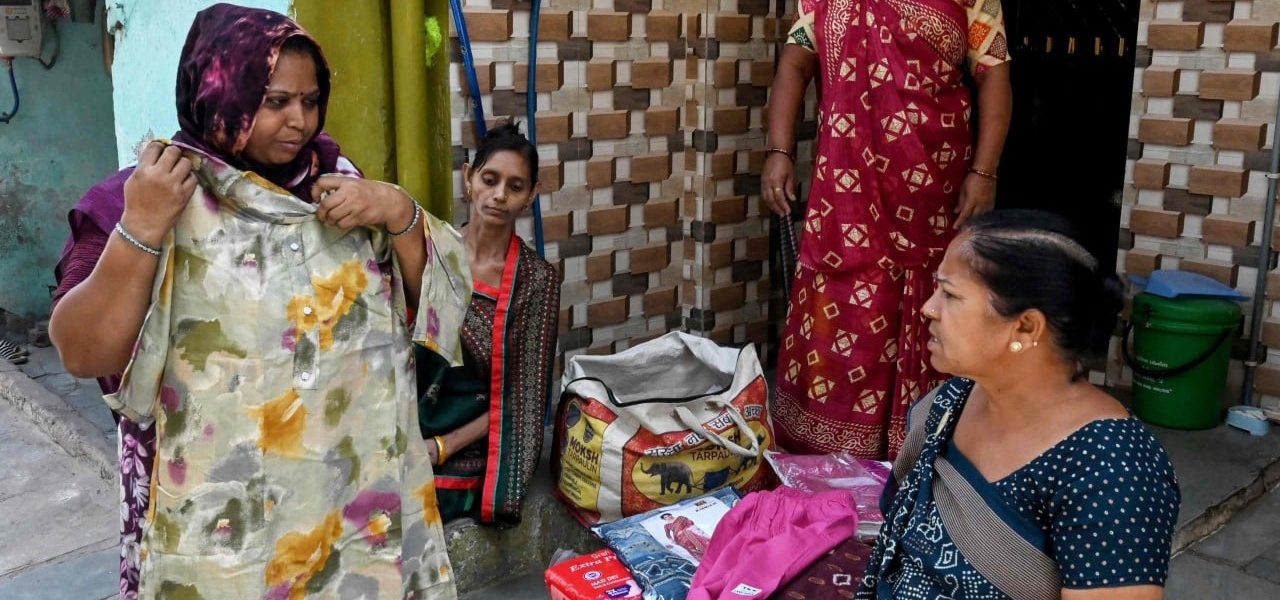
Lata Solanki, a clothes seller whose livelihood depends on hawking her wares door-to-door, embodies the problem. Her struggle isn’t unique. Clothes seller Lata Solanki used to face a devastating choice when India’s summer heat hit dangerous levels: risk her health going door-to-door for sales, or lose her income? It’s the daily reality for countless millions in a region where informal labor keeps entire economies humming. When the sun bears down, often fatally, they’re left utterly exposed.
But now, the script is flipping, ever so slightly. Solanki, 42, is no longer entirely at the mercy of the elements. But now the 42-year-old is part of an insurance scheme that pays out when temperatures hit a threshold, so she can stay home without jeopardising her finances. This isn’t just about personal relief; it’s a profound statement on how markets are beginning to grapple with climate change’s tangible, immediate human cost.
The innovation here isn’t just a simple payment system. It’s built on a concept few outside specialist circles bother with: a “parametric” model. Think of it less like health insurance that pays after a diagnosis — and more like an automated weather trigger. The “parametric” model pays out automatically when specific triggers are breached, in Solanki’s case after two consecutive days at 43.72 degrees Celsius. That’s 110 degrees Fahrenheit, by the way. No claims adjuster, no haggling. Just raw, unfeeling data. When the thermometer hits that brutal point, a digital wire hums, — and money appears. It’s efficient, brutal in its simplicity, and perhaps, our clearest sign yet that climate impacts are now an unignorable line item in the balance sheet.
This isn’t some quaint regional curiosity. Consider Pakistan, just across the border, suffering from some of the globe’s most erratic and violent weather patterns. From devastating floods that displaced millions, leaving colossal economic damage, to its own annual, lethal heatwaves, the informal labor sector faces identical, if not worse, predicaments. Karachi, Lahore, Dhaka — these are all cities teeming with daily wage earners, constantly walking the tightrope between survival and scorching collapse. While the spotlight often shines on high-stakes geopolitical dramas in the Muslim world, the silent, existential threat of climate change to its most vulnerable populations often gets ignored. But it shouldn’t. And why? Because human lives, human dignity, — and economic stability are intertwined.
The program, though a bright spark, highlights a stark reality: governments in regions like South Asia often struggle with the sheer scale of the problem. Public services are stretched thin, social safety nets are often fragmented or non-existent for the vast informal economy. So, private, market-based solutions, however partial, step into the breach. For someone like Solanki, it means she gets to live another day without risking everything she’s got. That’s a powerful incentive. But the scale of climate risk demands more than just insurance payouts. It demands fundamental shifts in infrastructure, urban planning, and — yes — global climate policy. We’re talking about basic livability, not luxury.
📄 POLICY WIRE WHITEPAPER PUBLISHED: PAKISTAN'S NATIONAL SECURITY POLICY PRIORITIES
👉 READ BY CLICKING HEREThe question remains: is this a truly sustainable solution, or just a sophisticated tourniquet? Insurance schemes, however ingenious, don’t actually reduce temperatures. They merely redistribute a sliver of the economic pain. It’s a mitigation strategy, sure, but the underlying climate breakdown persists. But let’s not discount the tangible impact on individuals right now. You can’t eat rhetoric, after all.
What This Means
This parametric insurance initiative in India serves as a stark policy bellwether for climate adaptation, particularly in regions grappling with immense informal economies. Politically, it signals a quiet acknowledgement that traditional state mechanisms are often inadequate to shield the most vulnerable from direct climate impacts. When governments can’t—or won’t—fully absorb these shocks through social welfare programs, the private sector steps in, framing climate resilience as an insurable risk. It pushes governments to rethink their roles; should they facilitate these market solutions, subsidize them, or actively legislate more robust public protections? And, it exposes the massive gap in state accountability for the economic disenfranchisement of populations due to climate change. Because if private entities are creating these safety nets, where does governmental responsibility end?
Economically, it introduces a novel mechanism for mitigating economic dislocation. For a staggering 80% of India’s workforce—comprising the informal sector—this isn’t merely academic; it’s life-altering. Parametric payouts offer a predictable, efficient safety valve for individual livelihoods, allowing millions to avoid debilitating losses from increasingly frequent extreme weather events. This boosts local economic resilience — and prevents cascading poverty. However, the system’s effectiveness depends on its affordability — and scalability, particularly for the poorest workers. such initiatives, if replicated, create new insurance markets directly tied to climate metrics, prompting a recalibration of financial risk models globally. Policy-wise, it pushes for broader discussions on climate equity: who pays for adaptation, and can these market-based instruments truly replace the need for larger-scale systemic changes, or are they just kicking the can down the road? The very need for this type of insurance highlights California’s wildfire insurance reckoning: a global bellwether for climate economics, demonstrating that climate challenges don’t respect borders, impacting every socioeconomic stratum in unexpected ways.
Finally, the scheme tacitly acknowledges that climate change isn’t a distant threat—it’s here, it’s now, and it’s devastating incomes in some of the world’s most populous and critical economies. And frankly, that means every policymaker needs to be asking what they’re doing for *their* citizens when the inevitable heat wave, or flood, or drought, comes calling.