


The Brutal Calculus of Professional Survival: A Red Sox Veteran’s Unvarnished Plea
POLICY WIRE — Boston, USA — Ignore the latest baseball scores for a beat. Forget the win-loss columns. What happens when your very livelihood, the career you’ve meticulously built — the...

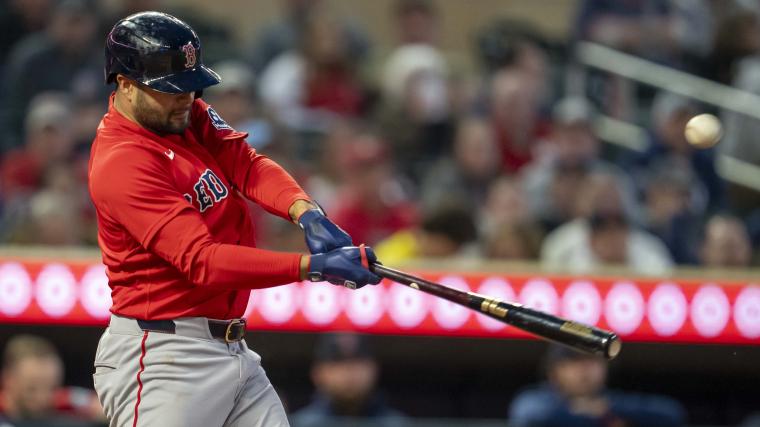
POLICY WIRE — Boston, USA — Ignore the latest baseball scores for a beat. Forget the win-loss columns. What happens when your very livelihood, the career you’ve meticulously built — the one demanding every shred of your physical and mental grit — hangs by a frayed thread? This isn’t some abstract macroeconomic quandary, but the visceral reality expressed — no, proclaimed — by Isiah Kiner-Falefa, a utilityman now in the employ of the venerable Boston Red Sox.
It was only Tuesday, and the hallowed grounds of Fenway Park had just hosted another grim loss, the team’s fourth straight. A casual observer might focus on the scoreline, or maybe the curious anomaly of three home runs — one off Kiner-Falefa’s own bat, mind you — not translating into a victory. But the story, really, was buried deeper, beneath the ‘sporting’ veneer: it was the stark confession of a man staring down the barrel of an expiration date. An emotional transparency you don’t always get from millionaire athletes. But here we’re.
Kiner-Falefa, at 31, isn’t exactly ancient, but in professional baseball terms, he’s reached that age when your future gets, shall we say, heavily scrutinized. The Red Sox, a franchise notoriously unsteady recently, have struggled to overcome their sluggish start. And it seems Kiner-Falefa, among others, became “a victim of that.” His playing time got “cut.” He wasn’t “even playing at all.” Then, post-game, he offered a raw, unvarnished insight into his recent headspace — a sentiment that could just as easily come from a middle manager facing downsizing in Karachi, or a textile worker whose plant faces <a href=[QUOTE_PLACEHOLDER]>fiercer competition</a> from global markets. It’s about professional survival, plain — and simple.
He laid it out: “Fighting for my career, fighting for my life, scrapping for every at-bat I can get.” He understands, he added, that he’s “getting older and my playing time has been cut.” A stark economic reality in any sector — the churn of talent, the prioritization of younger, cheaper alternatives, the often brutal calculus of performance and potential. You get it.
What a moment — an almost poetic — when someone in such a public, high-stakes domain bares that particular anxiety. Because it isn’t unique to baseball, is it? Not by a long shot. Think about it: how many individuals in Lahore, grappling with a tightening job market, might utter a similar lament, just swapping ‘at-bat’ for ‘client pitch’ or ‘government tender’? The stakes, for their families — and futures, are every bit as high, sometimes higher.
His performance recently has, mercifully, reflected this desperation. He’s “started to turn things around recently” with seven hits in his last 13 at-bats, bumping his batting average up to .278 and his OPS to .720. Both figures, according to unofficial MLB statistics often quoted by sports journalists like those at NESN, would represent career highs if he can actually “maintain them.” You’ve gotta produce when it matters most, when the axe hangs heaviest. And Kiner-Falefa? He is. “Fortunately,” the wire noted, “he’s started capitalizing on his opportunities lately.” An almost casual phrasing for what’s, for him, a matter of professional life and death.
But the Red Sox — an institution that once symbolized baseball permanence — offer “not much stability this season.” This precarity, both personal and organizational, speaks volumes. It’s not just about one player; it’s a symptom of broader trends where traditional employment models face constant upheaval. One minute, you’re a celebrated performer; the next, you’re “fighting for my life.” That’s a jarring reality check for anyone who equates career longevity solely with past achievements.
What This Means
This isn’t just a baseball story; it’s a microcosm of the modern labor market, and frankly, a sharp reminder for policymakers everywhere. Isiah Kiner-Falefa’s candid reflection highlights the deep psychological and economic anxiety embedded in industries — not just sports — where experience is constantly pitted against fresh talent, and institutional loyalty feels increasingly tenuous. For global policymakers, this isn’t trivial. It’s about human capital, an organization’s often — and sometimes unwisely — discarded intellectual property, and the very real human cost of corporate instability. When seasoned workers, be they athletes or accountants, fear their shelf life has diminished, the wider economy suffers. Worker morale drops, innovation can falter, — and societal trust in ‘fairness’ wanes. It mirrors similar debates in economies like Pakistan’s, where economic reforms often confront the stark reality of workforce displacement and the urgent need for robust retraining or social safety nets. This isn’t about socialism, it’s about optimizing a human economy: what policy frameworks genuinely value experienced hands while also nurturing new ones? The answers are, well, complicated. But they sure aren’t found by ignoring the struggle.