


Silent Heat, Rising Panic: South Asia’s Water Endgame Looms
POLICY WIRE — Islamabad, Pakistan — For all the frenzied headlines splashed across digital newsfeeds—the geopolitical skirmishes, the fluctuating market indices, the perpetual social media drama—the...

POLICY WIRE — Islamabad, Pakistan — For all the frenzied headlines splashed across digital newsfeeds—the geopolitical skirmishes, the fluctuating market indices, the perpetual social media drama—the gravest existential threat often operates with the chilling subtlety of a slow-moving tide. But this year, that tide’s turned into a tsunami of heat, largely unseen, unheard, by much of the world. It’s got South Asia in its grip, a region accustomed to extremes, yet finding itself pushed to breaking point.
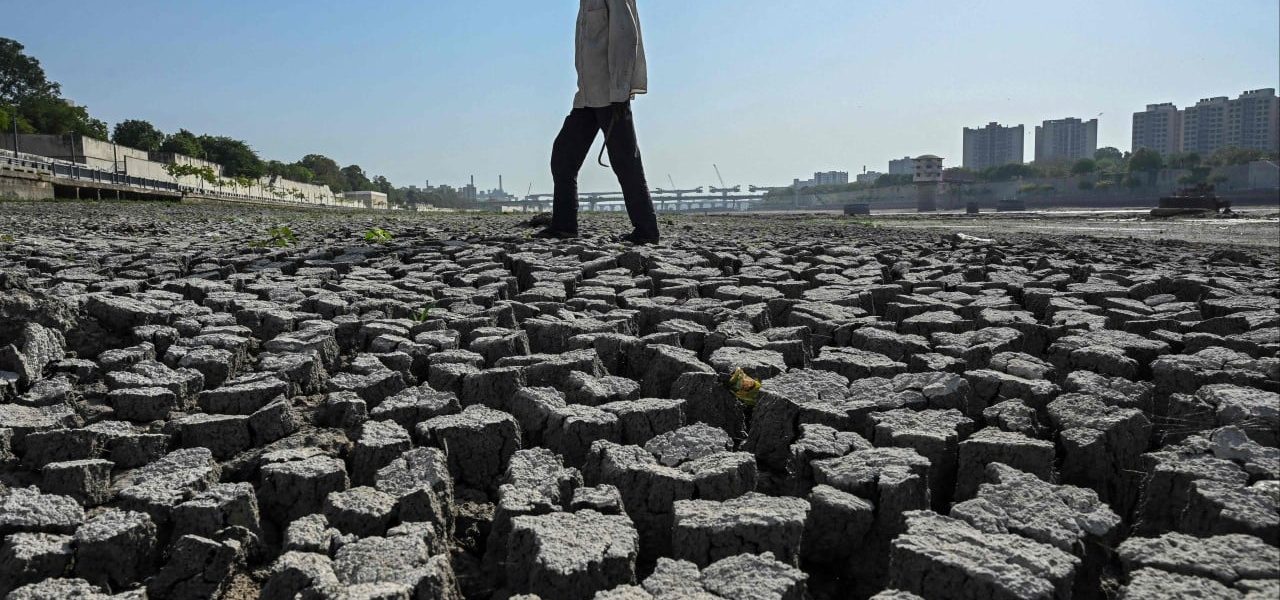
It wasn’t just a regular season shift; Summer hit South Asia early this year. Folks in Lahore, Mumbai, Kathmandu, they’ve been sweating since March, not April, an unwelcome harbinger of what was to come. April saw above average temperatures, yes, but those numbers, abstract on a spreadsheet, translated into blistering concrete, parched throats, and wilting crops. The mercury is expected to reach unbearable highs this month, a prognosis that reads less like a weather report and more like an impending disaster warning. [QUOTE_PLACEHOLDER]
And here’s the kicker, the scientific phraseology that cloaks a nightmare scenario: We’re also bracing for a ‘super El Nino’. Not just any El Nino, mind you, but a ‘super’ one. What that portends isn’t merely hot days. It’s a fundamental disruption, a tectonic shift in climatic norms. Experts are using phrases like a combination of increased heatwaves and highly variable weather patterns are expected to push urban zones, agricultural systems and public health to their limits. Limits, for a region that’s home to a quarter of the world’s population, don’t just mean inconvenience; they mean catastrophe.
Because let’s be frank, when you’re talking about South Asia, especially parts of Pakistan, India and Nepal, water isn’t a commodity; it’s lifeblood. The very survival of agricultural systems—which employ a massive chunk of the population—hinges on the annual monsoon. A bad monsoon, historically, has meant famine. A series of bad monsoons, exacerbated by punishing heat, points towards something far more dire. And we’re not talking about some abstract future. Forecasts indicate this year, the region is likely to receive below average monsoon rainfall.
Pakistan, with its already precarious water infrastructure and reliance on the Indus River system fed by glacial melt and monsoons, finds itself in an especially tight spot. A warmer climate accelerates glacial melt in the short term, swelling rivers, but it sets the stage for a long-term deficit as these ice reservoirs disappear. The simultaneous prediction of poor monsoons compounds the problem exponentially. We’re not just looking at a few dry wells; we’re looking at widespread water insecurity, affecting everything from drinking water supplies to electricity generation (hydropower’s a big deal here, folks). It’s a compounding crisis, each element feeding the next—more heat, less rain, more evaporation, less access, more suffering.
Agricultural yields will shrink, certainly. That hits rural communities first — and hardest, prompting internal migration toward already overcrowded cities. And then you’ve got public health—disease outbreaks thrive in water-scarce, high-temperature environments. Diarrheal diseases, cholera, dengue—they become silent, rapid-fire killers. The implications are staggering, almost too vast to fully comprehend from behind a desk.
Consider this: a 2023 study by the World Resources Institute revealed that Pakistan ranks among the 10 most water-stressed countries globally. That’s a grim reality, amplified by these current climatic projections. It isn’t just an environmental problem; it’s a national security issue, a fundamental challenge to stability. Because water, or the lack thereof, rarely stops at the border. You see its impact on a country’s economic roadmap too—something we’ve observed in neighboring nations as India quietly reshapes Asia’s economic map, partly by trying to secure resources, sometimes at a human cost. But how do you reshape an economy when its fundamental resource is drying up?
What This Means
The convergence of extreme heat and diminished monsoon rainfall signals a protracted, multi-faceted crisis for South Asia, particularly for its already vulnerable populations and strained governmental systems. Economically, agricultural output, a cornerstone of regional GDP, will see significant contraction. Food security will plummet, driving up prices — and fueling inflation, hitting the poor hardest. This isn’t just about commodity markets; it’s about individual families being priced out of basic sustenance. Politically, the struggle over diminishing water resources will intensify both intra-state and inter-state tensions—think localized skirmishes over irrigation access, or renewed diplomatic sparring over cross-border river allocations. Water scarcity is a known catalyst for internal displacement and, consequently, increased pressure on urban infrastructure and social services, fostering potential instability. Public health systems, already battling routine challenges, will buckle under the weight of heat-related illnesses and water-borne diseases, straining meager healthcare budgets. The situation isn’t a forecast; it’s an unfolding reality requiring immediate, concerted, and financially hefty responses, not merely piecemeal gestures. Or else, what remains won’t just be an environmental crisis, but a full-blown societal unraveling, plain — and simple.
It’s about prioritization. For too long, water management—or its neglect—has been a secondary concern, an issue for technocrats and engineers, not prime ministers and presidents. But as the planet dials up the heat, literally, that calculation becomes untenable. The immediate future for hundreds of millions in the subcontinent, especially in Muslim-majority nations like Pakistan and Bangladesh, now hinges less on geopolitics and more on geology and meteorology—specifically, whether they’ll have enough water to simply endure.