
Shadows Beneath the Waves: Mines Threaten Vital Russian Port, Global Trade on Edge
POLICY WIRE — St. Petersburg, Russia — The placid waters of the Baltic, typically a busy thoroughfare for essential Russian crude and other commodities, have quietly given way to something far more...

POLICY WIRE — St. Petersburg, Russia — The placid waters of the Baltic, typically a busy thoroughfare for essential Russian crude and other commodities, have quietly given way to something far more sinister. It wasn’t the usual logistical snarl that caused a recent tremor, but a far older, deadlier specter: naval mines. The implications stretch far beyond Russia’s immediate coastline, painting a grim forecast for global maritime security—a stark, unpleasant reality for those who assumed conflict could remain neatly contained within land borders.
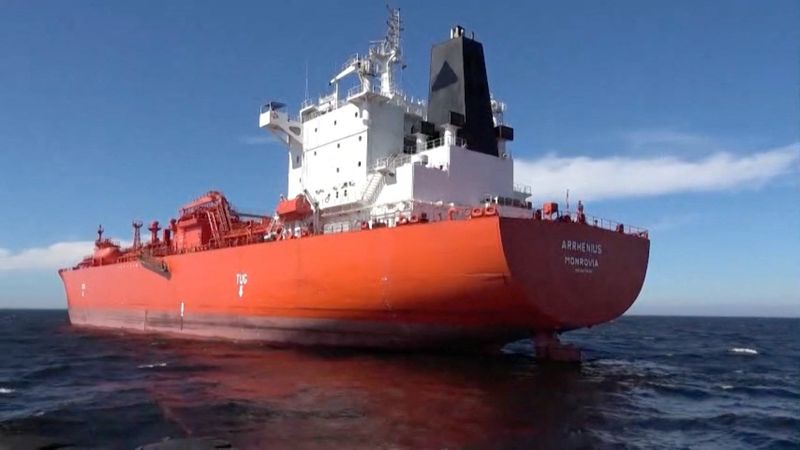
Reports filtering through — sparse, deliberate, and undeniably unnerving — suggest the discovery of magnetic mines on a tanker at the bustling Ust-Luga port. A single claim, really, yet it unravels a quiet truth about modern warfare’s relentless expansion. We’re not talking about some quaint historical artifact, but modern ordnance designed to maim or cripple colossal vessels, capable of disrupting energy flows and twisting economic certainties into knots. It’s a sobering thought, particularly for nations far removed from the immediate theater of conflict, whose economies often hinge on the unfettered passage of goods across these very seas.
This isn’t an isolated incident—it’s just the latest unnerving bulletin from a region increasingly turning into a chess board for silent, deadly plays. But it isn’t always the spectacular blasts that rewrite policy; sometimes it’s the quiet discovery, the palpable tension of something narrowly averted. Because once you find one, you wonder about the others, don’t you? And the insurance premiums. And the diverted routes.
Russia, of course, has remained tight-lipped on attributing blame, focusing instead on the swiftness of their counter-mine efforts. State media outlets carried statements from authorities that merely acknowledged the discovery, with one official asserting, [QUOTE_PLACEHOLDER]. No detailed reports about the vessel, its flag, or origin have been widely circulated. The official line implies a level of operational security, or perhaps, a deliberate obfuscation to manage escalating tensions. But it doesn’t quiet the whispers among maritime analysts.
For a moment, picture the sheer volume: roughly 90% of global trade is transported by sea, according to the United Nations Conference on Trade and Development (UNCTAD). The Ust-Luga port isn’t some backwater dock; it’s one of Russia’s key hubs on the Baltic Sea, essential for its oil and gas exports to Europe and beyond. The idea that such a crucial artery could be compromised—that a commercial tanker could be unknowingly ferrying destruction—sends a shiver down the spine of anyone remotely involved in supply chain logistics. It certainly changes the math on profit margins for oil traders.
And then there’s the broader ripple, far past the icy reaches of the Baltic. Think of countries like Pakistan, heavily reliant on imported energy and raw materials to fuel its industry and feed its population. The volatility of global energy prices, exacerbated by disruptions in major shipping lanes, can wreak havoc on an already fragile economy. Increased shipping costs, higher insurance premiums for vessels traversing supposedly safe international waters, the threat of delays, or even catastrophic incidents — they don’t just register as abstract numbers in a commodities market. They hit dinner tables. They squeeze nascent industries. They force difficult choices for policymakers who’ve got enough on their plate, navigating domestic challenges while watching geopolitical fault lines stretch wider.
The entire Muslim world, with its diverse array of developing and developed economies, is intimately tied to the ebb and flow of global trade. From the Strait of Hormuz to the Suez Canal, vital maritime chokepoints become hyper-sensitive. Even a localized incident in the Baltic raises the stakes for every nation with a coastline, especially those in regions where economic stability is a delicate balancing act. These unseen threats don’t discriminate. They don’t respect national borders or trade agreements. They just float, waiting.
What This Means
This unsettling development isn’t just a naval incident; it’s a cold, hard indicator of shifting geopolitical dynamics. It implies a significant escalation in unconventional warfare tactics, moving the conflict beyond traditional battlefields and into the domain of international shipping—a grey zone where the lines of responsibility blur. The immediate implications for Russia are obvious: increased costs for maritime security, heightened scrutiny of its commercial fleet, and an ever-present fear of similar sabotage or accidental encounters with these underwater booby traps. This, predictably, makes the cost of doing business with Russia go up, complicating efforts to circumvent sanctions.
More broadly, it elevates the risk profile for all maritime activity. It compels major shipping companies to re-evaluate their security protocols, potentially leading to longer transit times due to more rigorous checks, and steeper insurance rates, which ultimately get passed down to consumers. Global supply chains, still reeling from post-pandemic disruptions, certainly don’t need another layer of complexity—or danger. But, they’re getting it.
Politically, the incident adds another log to the smoldering fire of accusations — and counter-accusations. While no direct blame has been officially leveled, the implicit message is clear: Russia views its economic lifelines as targets, which feeds its narrative of existential threat and justifies more aggressive postures. It also begs the question of where such devices originated. The episode serves as a chilling reminder that unseen dangers can emerge anywhere, anytime, impacting nations that thought they were safely insulated. One has to wonder how much these quiet acts of sabotage chip away at the already strained framework of international trust and cooperation, particularly with incidents like Russia’s previous mine claims in the Baltic remaining hotly contested. It’s a game of chicken, played with explosives, — and everyone’s a potential passenger on the wrong ship.