


Europe’s Early Summer Awakening: Record Heat Unveils Climate Vulnerability, Casualties Mount
POLICY WIRE — LONDON, UK — A collective sigh of relief usually follows the spring chill in Europe, a grateful acceptance of longer days and mild sunshine. Not this year. Instead, what arrived was a...

POLICY WIRE — LONDON, UK — A collective sigh of relief usually follows the spring chill in Europe, a grateful acceptance of longer days and mild sunshine. Not this year. Instead, what arrived was a brutal preview of climate’s accelerating temper tantrum, one that’s ripping through infrastructure and claiming lives well before summer officially clocks in.
It wasn’t the mercury initially topping familiar summer peaks that grabbed attention. Nope. It was the frantic scramble, the unexpected dread, the sheer unpreparedness of societies used to a more predictable cadence. Across Western Europe, systems designed for moderation buckled under temperatures that would feel familiar—even refreshing—to much of the Subcontinent’s populace in high summer.
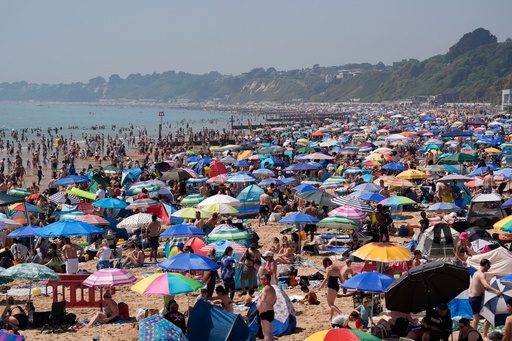
Take London, a city often defined by its grey skies. Last Tuesday, it became a furnace. At Kew Gardens, Britain’s Met Office weather service confirmed an astonishing 35.1 degrees Celsius (95.2 degrees Fahrenheit) was recorded. This wasn’t just hot; it blew past a long-standing record from 1922 — and 1944. And that mark itself had been set just the day before when the capital registered a balmy 34.8 C (94.6 F).
That’s what’s got folks worried, you see. It’s the swift, dizzying succession of broken records. Not just in Britain either. Across the Channel, France saw its own thermometer readings climb to a blistering 36 C (97 F) in the southwest. And a rare occurrence for both nations? Nights that refused to cool down. London had a “tropical night,” where the temperature didn’t dip below 20 C (68 F). French cities followed suit. But because much of Europe just isn’t built for this, what began as a novelty quickly spiraled into peril.
This early heat wave hit before the usual annual summer window for lifeguards. So, people, trying to find some blessed relief, flocked to rivers, lakes, and coastal areas, sometimes with tragic consequences. You’d think people’d be cautious, but sometimes heat clouds judgment, or maybe it’s just the lure of cool water overriding common sense. Authorities confirmed at least four teenagers died in apparent drownings in U.K. lakes and reservoirs. Across the southwest English coast, a 60-year-old man died in the sea, too.
On France’s Atlantic seaboard, magnificent beaches that can be deceptively treacherous with powerful riptides reported a [QUOTE_PLACEHOLDER] Two more drowning deaths struck popular resorts in the Gironde region on just one Sunday alone. French government spokesperson Maud Bregeon spoke of reports of at least seven deaths potentially related to high temperatures, including five drownings. And the others? Two deaths in sports competitions, a chilling detail. Sophie Brocas, a top regional administrator, pleaded with beachgoers “to exercise the utmost caution.” You’d hope they would, wouldn’t you?
Because this isn’t normal. Météo-France described a “heat dome,” a high-pressure front keeping the scorching air bottled up, pushing temperatures more than 10 degrees Celsius above what’s usual for this time of year. Spain wasn’t spared either. Rubén del Campo, spokesperson for their weather service, noted, “We find ourselves with temperatures we normally see in the middle of the summer now in the month of May.” Seville, no stranger to heat, already hit 38 C (100 F). Even Rome was expecting 32 C (89.6 F).
The academic crowd? They’re less surprised, more exasperated. Peter Thorne, director of the ICARUS Climate Research Centre, put it plainly: [QUOTE_PLACEHOLDER] He then adds, with a touch of blunt honesty, [QUOTE_PLACEHOLDER]
For commuters in London, it meant sweltering in subway carriages devoid of air conditioning, as trains to and from busy Waterloo station sputtered due to reports of smoke on the tracks. Not good, especially when you’re baking underground. Over in Scotland, firefighters worked through the night tackling a grass fire that made Arthur’s Seat in Edinburgh smoke like a dragon’s breath. And for vulnerable populations, like older people, an amber health alert was issued for much of the U.K., warning of potential risks.
It’s interesting, really, to watch European nations grapple with heat that many in South Asia — from the plains of Punjab to the megacities of Bangladesh — have navigated for generations, albeit often with far less infrastructural support or social safety nets. Countries like Pakistan and Bangladesh, they’ve long endured intense summer heat, and frankly, its dire consequences for human health and daily life, as detailed in reports like Silent Catastrophe: Bangladesh’s Forgotten Kids in a Measles Nightmare. While their homes and cities might often lack extensive air conditioning by European standards, there’s a historical, almost generational, acclimatization and a distinct, localized knowledge about coping strategies. This stark contrast makes Europe’s current struggle particularly sharp; it’s a harsh awakening to vulnerabilities that were once considered foreign.
What This Means
This early heatwave isn’t just an unfortunate weather anomaly; it’s a dress rehearsal for an increasingly hot future, one that carries significant political and economic ramifications. Politically, we’re seeing governments—from local councils to national agencies—struggle to adapt, issue effective warnings, and protect citizens when systems fail. The strain on public services, particularly emergency responders — and healthcare, becomes almost immediate. It forces conversations about infrastructure investment in places not historically accustomed to prolonged, extreme heat, and it makes climate change an immediate, kitchen-table issue, not some distant academic debate.
Economically, the impact is multi-faceted. Agricultural yields are at risk. Energy grids are pushed to their limits, potentially leading to costly outages or higher demand for electricity, which translates into pricier bills. Tourism, a massive sector in parts of Spain and France, might face shifts as comfort levels drop for summer visitors, though one could argue that hot countries still attract plenty. But perhaps more subtly, productivity drops when folks are sweltering; you can’t work as effectively, physically or mentally, in those kinds of conditions. Property values in previously temperate zones might even begin to fluctuate based on perceived climate resilience. And when cities need to upgrade transport systems to handle heat, or hospitals must prep for more heatstroke cases, those aren’t small bills. This isn’t just about shattered temperature records; it’s about a shattered illusion of climate stability for developed nations, pushing them toward an adaptive future they didn’t anticipate needing quite so soon.