


Redistricting Reckoning: GOP’s Midterm Map Gambit Falters, Challenging Democratic Norms
POLICY WIRE — Washington, D.C. — Power, in politics, is a hungry beast. It doesn’t just devour resources; it tries to redraw the very lines of its domain. And lately, former President Donald...

POLICY WIRE — Washington, D.C. — Power, in politics, is a hungry beast. It doesn’t just devour resources; it tries to redraw the very lines of its domain. And lately, former President Donald Trump and his Republican allies have been sketching those lines with an especially heavy hand, desperate to cement control ahead of this fall’s midterms. But that relentless redrawing — often targeting minority voters — isn’t always going to plan. A curious confluence of judicial scrutiny and plain legislative stubbornness delivered a double punch this week to the GOP’s ambitions.
It started with South Carolina, a state you might expect to roll over for the party’s desires. Republicans there declined, rather pointedly, to scrap congressional votes already underway just to enact new, gerrymandered districts. Can you imagine the chaos? Citizens were already marking their ballots for primaries. To yank that rug out? It’s brazen. It truly is.
“South Carolina citizens are going to the polls today. And neither my conscience or common sense is going to let me stop an election that’s already underway,” Republican state Sen. Richard Cash said, capturing the very practical — if slightly sheepish—pushback. He’s got a point. You don’t just hit pause on democracy because you found a better political calculus late in the game. That’s a bad look, especially for a party that prides itself on ‘law and order’ and often lambasts ‘radical’ changes to established norms.
Meanwhile, across state lines, Alabama’s aspirations for a cleaner GOP sweep hit a federal roadblock. A three-judge panel didn’t just frown upon the state’s proposed congressional map; they actively blocked it, issuing a preliminary injunction. The court’s reason? The plan “intentionally discriminated based on race” by limiting Black voters to just one majority district. Because, let’s be real, some maps just shout ‘gerrymander’ loud — and clear. They’re so obviously drawn to diminish the voting power of a specific demographic, often minorities. The ruling effectively mandates the continued use of a court-imposed map that gives Black residents a fighting chance in two districts.
But don’t get it twisted; this isn’t some wholesale rout for the Republican redrawers. Wins popped up too. Florida, for instance, saw a judge decline to block new GOP-drawn congressional districts. And federal courts didn’t issue temporary restraining orders in challenges to Tennessee’s map, a scheme carving up Memphis’s historically Black district. These actions—or inactions—show how contested and often frustrating this electoral arena has become. It’s a never-ending slugfest, with both sides, frankly, often pushing the boundaries of what constitutes ‘fair.’
The urgency stems from Trump’s ongoing insistence that states with Republican majorities should rework their maps mid-decade, defying the traditional post-census cycle. It’s an unprecedented ask—and many in the GOP establishment seem uncomfortable with it. Yet, the gravitational pull of Trump’s influence is tough to resist. So, we’ve seen efforts to reshape districts in Missouri, North Carolina, Ohio, and, as mentioned, Florida and Tennessee. Republicans are gambling that these maneuvers could net them an additional 14 or 15 seats. For perspective, the GOP already anticipates picking up to four seats from Florida’s new map alone. This isn’t just tinkering around the edges; it’s a structural engineering project aimed squarely at shifting power. But these backroom deals and legislative strong-arming inevitably spark resistance, even among those who might usually play ball.
And these electoral power plays? They don’t just echo domestically. They reverberate. Think about how America’s struggles with electoral integrity—its frequent challenges to democratic norms and accusations of voter suppression—are viewed by emerging democracies worldwide, places like Pakistan. Pakistan, a nation with its own tumultuous history of democratic transitions and accusations of electoral manipulation, often looks to the US as a flawed but foundational example of democratic process. When a superpower seems to be playing fast and loose with the very architecture of its representation, it sends a message, a kind of unspoken permission, to nations grappling with similar internal pressures. It weakens the moral high ground America tries to occupy when advocating for free — and fair elections abroad.
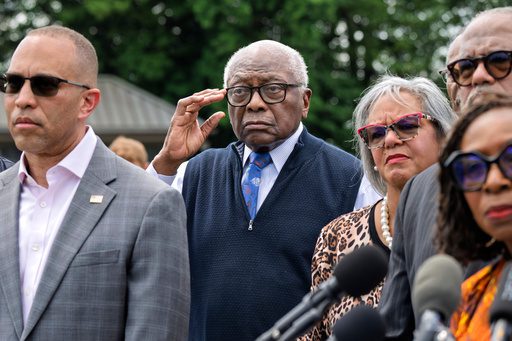
U.S. Rep. Jim Clyburn, a veteran South Carolina Democrat whose district was a specific target for Republican reconfiguration, minced no words. “I’m OK if it’s Trump plus 20,” he declared defiantly, asserting he’d run no matter what his district looked like. “I would be running where I live.” He went on to highlight how, after the 2020 census, state lawmakers spent months, not weeks, consulting the public on maps, leading to a plan even the Supreme Court signed off on. This time? It’s different. “This White House says, to hell with the process, to hell with the Constitution, just do what we want done,” Clyburn scoffed. A stark rebuke, no?
What This Means
This saga reveals more than just typical political machinations; it exposes a deeper fracture in America’s commitment to electoral norms. The judiciary, though often partisan, occasionally asserts its role as a backstop against overreach, as seen in Alabama. The mixed bag of outcomes suggests that while some brazen power grabs may succeed, there’s no guaranteed walkover, especially when timing or legality are particularly egregious. Economically, prolonged electoral instability, even in subtle forms like relentless redistricting, can deter investment and fuel social unrest—subtly chipping away at civic confidence. For a nation like the United States, so often preaching democratic principles across the globe, this internal struggle undermines its soft power, making arguments for good governance and fair play abroad sound a tad hollow. As early in-person voting launched in South Carolina, an election official confirmed over 55,000 ballots were cast on the first day, a fraction of the 125,000 total early votes from the entire 2022 midterm period. It’s a tiny window into the stakes of these political battles; voters are clearly engaging, even as the architects of power try to bend the playing field. Ultimately, these are not just legislative tussles; they’re pitched battles over the fundamental legitimacy of America’s representational democracy itself.