


Canada’s Viral Chill: Border Curtains Drop on African Nations Amid Ebola Scare
POLICY WIRE — TORONTO, Canada — A faint, unsettling chill now hangs over Pearson International for anyone arriving from specific corners of Africa. It’s not just the autumn air; it’s the...

POLICY WIRE — TORONTO, Canada — A faint, unsettling chill now hangs over Pearson International for anyone arriving from specific corners of Africa. It’s not just the autumn air; it’s the invisible wall of bureaucracy and disease fear that Canada’s put up, abruptly redefining ‘hospitality’ at its borders. Imagine packing up your life, applying for a fresh start, only to have Ottawa effectively hit the pause button on your dreams—not because of paperwork, but because of a virus running rampant thousands of miles away.
It’s a stark, almost dispassionate decision, but then again, that’s how governments often operate when public health rears its head. Canada announced that travelers from Ebola-affected regions will be required to self-isolate for 21 days. it’s temporarily suspending decisions on applications from Congo , South Sudan and Uganda.
The Public Health Agency of Canada, via Luc Brisebois, its director-general for the Centre for Border and Travel Health, couched this move in the ever-comforting phrase abundance of caution.
But you can bet your last loonie this isn’t just about ‘caution’; it’s about control, optics, and an increasingly anxious populace. [QUOTE_PLACEHOLDER]
And let’s be honest, 21 days. That’s a long time. People landing here are gonna need a place to crash, to stay clear of others. Don’t sweat it too much, though; the feds have it covered. The government stated those who don’t have somewhere to isolate will be provided with a place.
Starts Saturday, apparently. It’s all supposed to wrap up until Aug. 29.
A fixed date, then? Or maybe just an arbitrary marker in the sand, you know, subject to change.
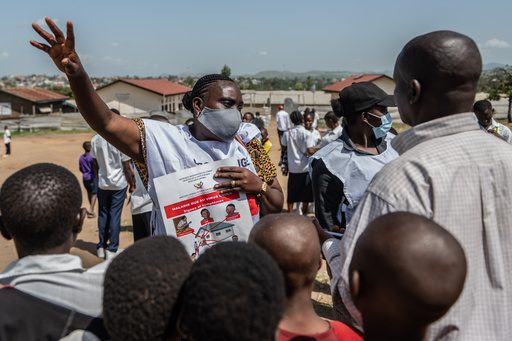
This isn’t some rogue flu strain we’re talking about, either. The World Health Organization (WHO) has highlighted the severity. This outbreak is centered around northeastern Congo and is of a rare type of Ebola that’s outpacing response efforts.
It’s a genuine monster, already racking up more than 900 suspected cases and more than 220 deaths.
(WHO, current figures). That’s a grim toll. But because the virus is moving so fast, outstripping current humanitarian and medical responses, Canada—like many nations—is pulling up the drawbridge. It’s the kind of move that triggers whispers in health ministries globally, wondering if they should follow suit. Or perhaps, what their own tipping point might be.
The policy extends to a rather sensitive area: immigration. Starting Wednesday, Canada is pausing final decisions on immigration applications for people from affected countries for 90 days, though that could be extended or lifted based on the evolution of the outbreak.
Ninety days can feel like forever when your entire life hangs in the balance, doesn’t it? It affects families, students, — and professionals hoping to join Canada’s diverse fabric.
It also sends a rather frosty signal across continents. Consider for a moment the vibrant, mobile populations of South Asia or the Muslim world. Nations like Pakistan, with significant diaspora and intricate global travel networks, watch these kinds of moves with a particular interest. Their own health infrastructures, while constantly striving, often face challenges that could, under extreme circumstances, warrant similar draconian border measures. The specter of imported disease isn’t unique to North America; it’s a global lottery. But because a nation like Canada can afford the luxury of strict containment, others can only look on, or fret about being next on the travel restriction list. It’s a harsh reality that global connectivity sometimes means global vulnerability, and every border agent becomes a sentinel against an invisible, molecular enemy.
But what if such stringent measures become commonplace? What about aid workers, doctors, or researchers—many of whom are essential in battling these outbreaks at their source—who might hesitate to return home knowing they face isolation or outright travel bans? It’s a tricky ethical tightrope, pitting national health security against global humanitarian duty.
What This Means
This isn’t just a health policy; it’s a geopolitical tremor. Politically, Canada’s decision is a clear signal that national health security will, for the foreseeable future, supersede almost any other consideration. It puts pressure on other Western nations to justify why they *haven’t* taken similar measures, especially as Aid efforts have intensified
in the affected regions. Economically, while the direct impact on Canadian trade from these specific African nations might seem small, the ripple effect on global travel and commerce, particularly if more nations adopt similar blanket restrictions, could be significant. It fuels a broader climate of uncertainty for international students — and immigrants. Think of the psychological toll on communities from affected regions already residing in Canada, or those planning to, suddenly deemed a potential risk by default. And what about the message it sends to the WHO? It implies that international coordination is one thing, but national self-preservation is quite another when push comes to shove. This kind of hardline response also highlights the fragile nature of global mobility, revealing how quickly a public health crisis in one corner of the world can redraw the lines for everyone else. It’s a grim reminder that when health emergencies escalate, ground-level action and proactive diplomacy, rather than reactive isolation, are always the smarter long-term plays.
We’re talking about an entire world grappling with invisible threats. And every border policy like this? It’s not just about a virus. It’s about defining who gets in, who stays out, — and at what human cost.