


Asia’s Quiet Quiver: Border Sentinels Stand Guard Against Unseen African Echoes
POLICY WIRE — Singapore, Asia — You know, sometimes the loudest alarms aren’t the ones blaring, but the silent, systematic tightening of institutional gears. While the spotlight remains on...

POLICY WIRE — Singapore, Asia — You know, sometimes the loudest alarms aren’t the ones blaring, but the silent, systematic tightening of institutional gears. While the spotlight remains on Central Africa and its latest, ugly dance with Ebola, an equally compelling—and certainly less publicized—drama unfolds across Asia. We’re watching nations like Singapore, Japan, and South Korea, usually models of organized calm, subtly but intensely beef up their border defenses. It’s a quiet quiver, really; an almost imperceptible flexing of bureaucratic muscle against a phantom enemy that’s not yet even arrived on their shores.
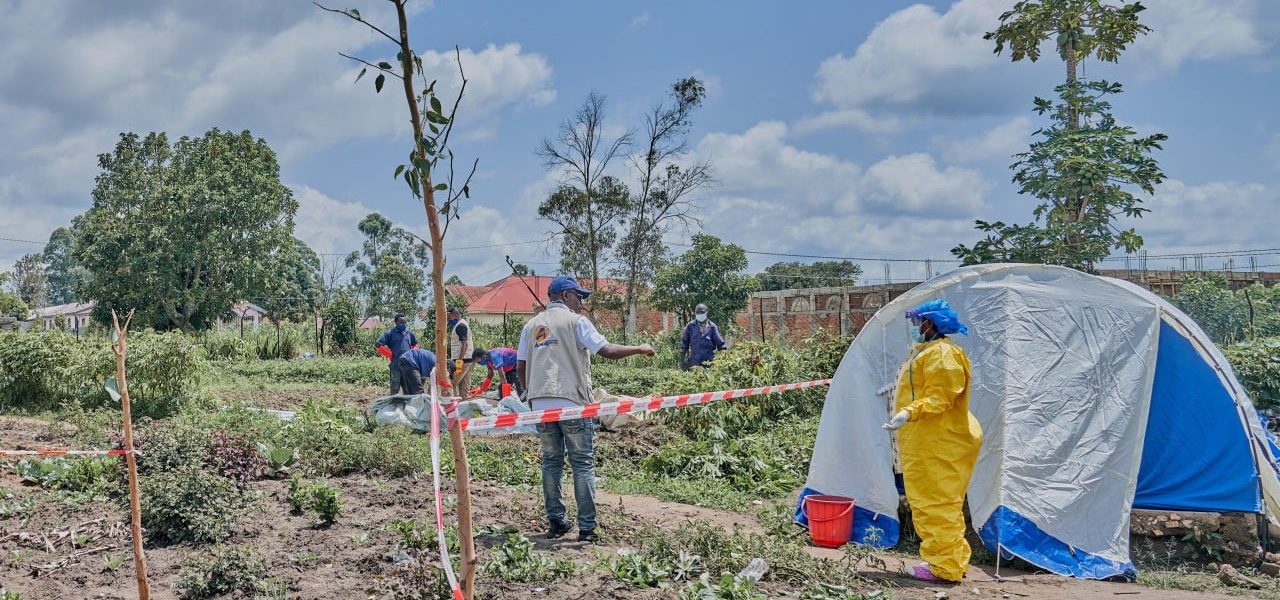
It isn’t a rush to panic, no grandstanding speeches on the evening news—not yet, anyway. Instead, it’s a methodical recalibration of control points, a bureaucratic choreography honed over decades of other unseen pathogens, the ones that jump continents on jet streams faster than anyone can track. Governments across Asia are tightening border screening and quarantine preparedness as health authorities work to contain a growing Ebola outbreak in Central Africa. It’s the kind of phrase that sounds clinical, doesn’t it? But behind that staid prose, there’s a whole lot of human worry, a remembering of SARS, a ghost of Covid-19. [QUOTE_PLACEHOLDER]
And these folks aren’t messing around. Look, Several governments have expanded screening and reporting requirements for travellers arriving from affected countries. They’re getting ahead of it, trying to catch whispers before they become shouts. It’s smart, really, despite the general, official refrain that the likelihood of local transmission remains low and no cases have been publicly confirmed in Asia. That low likelihood is precisely why you implement these measures. They’re buying time. That’s what it all boils down to—just a little more time to understand the enemy, to erect invisible walls.
But the logistics? Imagine Hong Kong dusting off that Lantau Island isolation facility used for quarantine during the Covid-19… You get the picture. They’re going through the motions. The drill is well-practiced. They’ve done this before. The memory of emptied streets — and overwhelmed hospitals isn’t so distant in this part of the world. And honestly, it makes you wonder what kind of calculus goes into these decisions, doesn’t it? How many flight delays, how much economic disruption is worth the peace of mind that a deadly pathogen isn’t silently infiltrating your population?
It’s an invisible tightrope act. Because while officials present a cool, calm front, they’re simultaneously prepping for worst-case scenarios. And frankly, this preparedness isn’t just about Hong Kong or Japan; it’s a global domino chain. Consider the bustling transit hubs in the Middle East — and South Asia. For instance, countries like Pakistan, with its millions of citizens working and traveling globally—including to various African nations—would face an unprecedented public health challenge if such a disease were to find its way there. The existing healthcare infrastructure in many parts of South Asia, still reeling from other infectious diseases and economic strain, could be stretched beyond its limits with even a handful of cases. They don’t have the same resources as, say, Singapore to lock down — and contain. This becomes a deeply unsettling vulnerability, making every border screen in Tokyo or Seoul an indirect defense for Lahore or Karachi, too. It’s all connected now, folks.
Global interconnectedness is the problem here. A 2017 study published in the journal PLoS Biology estimated that a quarter of the world’s population lives within four hours of a major international airport, a staggering figure underlining how rapidly diseases can spread from remote origins to population centers. That’s a stark, hard truth for anyone in public health, forcing them to always think a few steps—or a few continents—ahead. They can’t afford to be complacent, not with these kinds of odds.
📄 POLICY WIRE WHITEPAPER PUBLISHED: PAKISTAN'S NATIONAL SECURITY POLICY PRIORITIES
👉 READ BY CLICKING HEREThese responses aren’t just about protecting the population at home. They’re also about managing perception, reassuring an already skittish public that someone, somewhere, has a handle on things. They’re telling you, implicitly, that they’re not asleep at the switch. But that’s often a difficult narrative to maintain when the threat is amorphous, distant, and utterly terrifying in its potential. It’s a very particular kind of modern paranoia, isn’t it?
What This Means
The geopolitical tremors from a distant public health crisis always ripple outwards, affecting trade routes, international diplomacy, and trust in institutions. For Asia, a region that prides itself on stability and economic prowess, any perceived breach of its health defenses can dent investor confidence and sow domestic discontent. This latest push isn’t merely about stopping a virus; it’s a dry run, a test of a nation’s capacity for rapid, coordinated response in an increasingly unpredictable world. Governments are keenly aware that future epidemics—or pandemics—are less of an ‘if’ and more of a ‘when.’ So, the immediate economic implication for Asian airlines and tourism could be a hiccup, sure, as travel advisories proliferate. But the broader picture highlights a deepening strategic focus on biosafety as a national security issue, integrating health policy into the highest echelons of state planning. They’ve learned from past missteps, understanding that a strong health defense is now intrinsically tied to economic resilience. It forces leaders, from Jakarta to Riyadh, to balance individual freedoms against collective safety, often on a dime, often with incomplete information. And this constant state of readiness can breed efficiency—or, sometimes, just exhaustion. We’ll see which it’s, but it’s certainly not a problem that disappears, not with the global jostling for influence already heating up. The ability to manage such a threat, real or perceived, is becoming a litmus test for governmental competence, almost a measure of a nation’s stability in its own right.
This is what globalism brings, after all. No island is truly an island. So, as those protocols tighten in Singapore, remember they’re tightening in the minds of policymakers everywhere. They’re always just waiting for the next crisis. But honestly, aren’t we all?