


Wall Street Cheers, Main Street Weeps: American Consumers Hunker Down Amid Soaring Costs
POLICY WIRE — Washington, D.C. — Another month, another parade of jubilant headlines from Wall Street. But peel back the financial pages, and you’ll find a far grimmer story etched across America’s...

POLICY WIRE — Washington, D.C. — Another month, another parade of jubilant headlines from Wall Street. But peel back the financial pages, and you’ll find a far grimmer story etched across America’s kitchen tables and household budgets. While market indices flirt with new peaks— a bizarre disconnect, if you ask me—most American families aren’t uncorking champagne. Quite the opposite, really. They’re quietly tightening belts, wondering where all the prosperity has gone. It’s an economic two-step, you see: one part swagger, one part desperate penny-pinching.
It turns out that two out of three Americans are actively slashing their spending right now, battling an insidious inflation that eats away at their paychecks faster than you can say stock market rally. It’s a rough scene, not just a little bump in the road. And yes, gas prices are through the roof. Those grocery bills? They just keep climbing too, making yesterday’s staple a luxury tomorrow. Americans have soured on President Trump’s economic policies, polls show. That’s a significant indicator, wouldn’t you agree? [QUOTE_PLACEHOLDER]
The consumer confidence index from The Conference Board—a pretty decent pulse-check on the everyday American—slipped 0.7 points to 93.1 in May. Now, that doesn’t sound like much, but it’s the first dip after three months of gains, so it flags a subtle shift. The reading has been stuck at a low level since the pandemic, mind you. Before COVID-19, it regularly reached 130. Think about that for a second. We’re talking a consistent, gnawing anxiety that’s permeated folks’ financial lives for years now. The University of Michigan’s separate gauge of consumer sentiment, perhaps even more sobering, fell to a record-low 44.8 in May, its third straight decline.
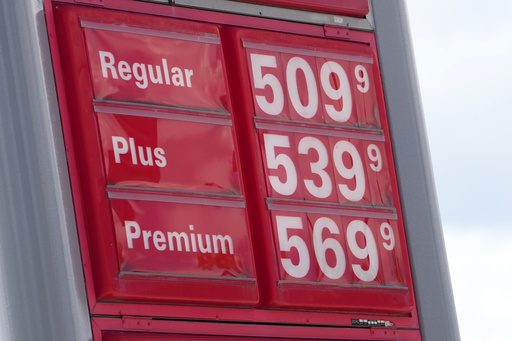
Many folks—most, actually—are reporting that rising prices are hurting their personal finances. Not pinching. Hurting. And it’s not hard to see why. The nationwide average for a gallon of gas? A blistering $4.49, up from $2.98 just before the Ukraine war began at the end of February. That’s a dollar — and a half jump in a blink, making every commute, every grocery run, a painful transaction. Imagine trying to run a business, or simply get to work, when your fuel bill just went through the ceiling. For many, it’s not sustainable.
Economists are muttering about a ‘K-shaped’ economy. Fancy term, stark reality. What it means is that higher-income Americans are doing just fine, perhaps even benefiting from rising stock prices and still spending. Meanwhile, lower-income households? They’re just trying to keep their heads above water, — and mostly failing. The consumer confidence survey showed just that: confidence grew among households with incomes at or above $100,000, while it fell for most others. And that’s a split that’s gonna tear us apart, eventually, if not managed.
Ben Ayers, a senior economist over at Nationwide, pointed out that, ‘The prospect of higher prices and faster inflation continues to loom over confidence readings with many households taking a more cautious approach to purchases this year.’ You don’t say. People are delaying big buys, cutting back on discretionary stuff—clothes, shoes, hobby items, toys and games. They’re effectively rationing their lives. Average hourly earnings, adjusted for price changes, shrank in April from a year earlier for the first time in three years. So people are earning less in real terms. It’s not a mystery why they’re upset.
📄 POLICY WIRE WHITEPAPER PUBLISHED: PAKISTAN'S NATIONAL SECURITY POLICY PRIORITIES
👉 READ BY CLICKING HEREBut the bad news doesn’t just stop at America’s shorelines. No, it rarely does. These escalating costs, particularly for energy and food, ripple out across the globe, slamming into already vulnerable economies with devastating force. Think about nations like Pakistan, which relies heavily on imported oil — and critical food staples. When global commodity prices skyrocket—driven by a war on the other side of Europe, no less—it’s not just a budget tweak. It’s an existential threat. Political stability hangs by a thread as fuel subsidies evaporate, — and the cost of daily bread becomes prohibitive. Those same inflationary pressures here are amplified there, sparking social unrest, widening trade deficits, and leaving governments scrambling for solutions. It’s the ‘K-shaped’ world, you could say, playing out on a geopolitical stage, where every domestic hiccup from a global superpower kicks off a cascade of consequences for less robust nations, hitting their population even harder.
Americans’ outlook on the job market worsened slightly, too. The proportion of respondents who said jobs are ‘plentiful’ dropped to 25.5%, the lowest in three years. So, that ‘low-hire, low-fire’ market means it’s tough to get a job if you’re out of work. You see the problem. It’s a tricky picture when financial success is limited to such a narrow slice of the population, and the general mood is, let’s be honest, pretty grim. But Hey, the Dow hit a new high today!
What This Means
This stark divergence between market exuberance and household austerity isn’t merely an economic curiosity; it’s a political minefield. As we look ahead to midterm elections, this sentiment—or lack thereof—is bound to shape voter behavior far more than any abstract GDP growth figures. Incumbent parties, whether Democrats or Republicans, generally catch hell when constituents can’t afford their gas or groceries. It’s just how the game works. This isn’t theoretical economics; it’s the very real experience of families choosing between putting food on the table and filling the tank, or worse, delaying medical appointments. That kind of pressure makes people irritable. And they remember. This phenomenon also highlights the increasing interconnectedness of global financial systems and political stability, echoing shifts that redefine geopolitical alliances, like the ongoing recalibration seen in Asian power dynamics.
For policymakers, it presents a cruel dilemma: how do you tame inflation without tipping a wobbly economy into a full-blown recession, especially when part of the populace is still—technically, on paper—doing well? It’s like trying to cool a soup where half is boiling hot — and the other half is already cold. What’s clear is that the old remedies just might not cut it anymore. A true solution would demand more than mere monetary policy; it’d require structural shifts addressing the deep inequality fueling this ‘K-shaped’ misery, both at home and abroad. Until then, most folks are just gonna keep on cutting back, hoping things change, but not really expecting them to.