


Everest’s Grim Ascent: Peak Profits, Vanishing Breath
POLICY WIRE — Kathmandu, Nepal — For two generations, the dream of touching the world’s apex has been sold piece by painstaking piece, permit by permit, guiding climbers higher. But lately,...

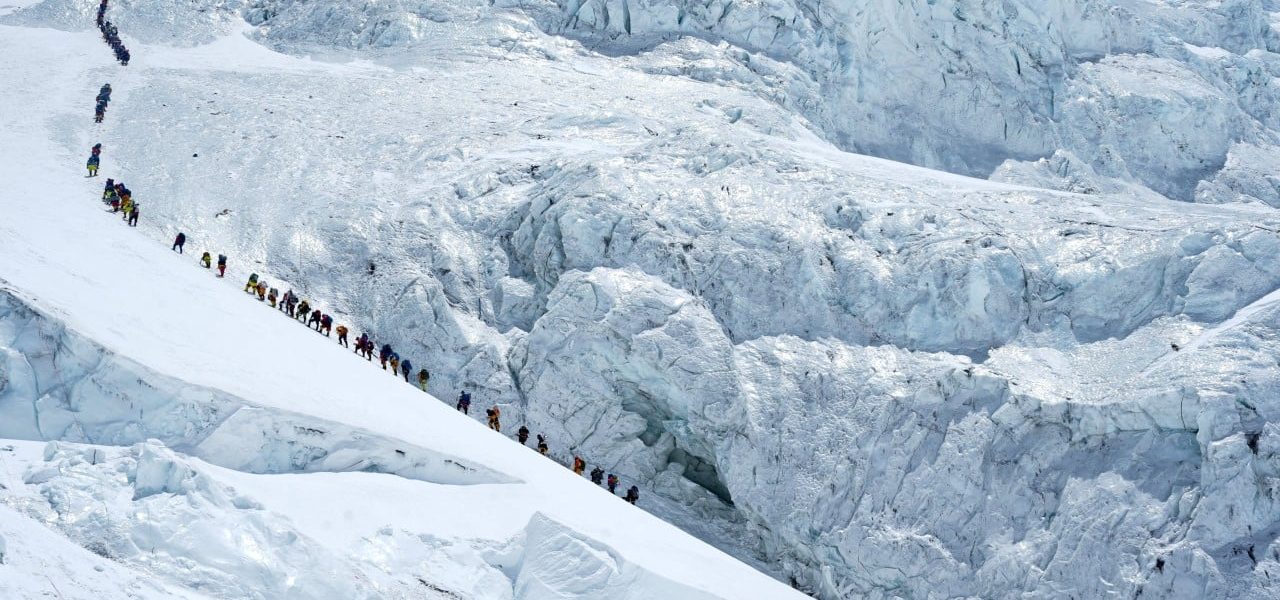
POLICY WIRE — Kathmandu, Nepal — For two generations, the dream of touching the world’s apex has been sold piece by painstaking piece, permit by permit, guiding climbers higher. But lately, Everest isn’t just about scaling altitudes; it’s about navigating a chaotic bottleneck of ambition—and then, a stark descent into tragedy.
Two Indian nationals, Sandeep Are — and Arun Kumar Tiwari, perished on the roof of the world last week. Their deaths, while horrific, aren’t isolated incidents. They simply underscore the cold, hard mathematics of an ever-busier climbing season. Are, having reached the summit Wednesday, and Tiwari, who made it Thursday, now form part of a grim statistic, vanishing amid the relentless pursuit of records and bragging rights. It’s a particularly cruel twist, isn’t it, when the highest point on Earth becomes a death trap? [QUOTE_PLACEHOLDER]
Nivesh Karki, a director at Pioneer Adventures, offered a chillingly clinical assessment. He stated, They fell ill while descending at high altitude. We’re working out how to retrieve the bodies
. Such an endeavor—retrieving bodies from the so-called death zone—is a logistical and financial nightmare, frequently deemed too risky for those still living. But that’s the raw deal of Everest, a mountain that offers no discounts, no refunds, — and certainly no pity.
Nepal, a nation of astonishing natural beauty, holds an often-fraught dominion over eight of the planet’s ten highest mountains. And this natural endowment has, for decades, translated into a major economic lifeline, particularly in regions where other opportunities are scarce. Everest climbing permits alone bring in millions of dollars each season, a sum eagerly chased by a government perpetually balancing its budget—and a host of local operators keen on their cut.
But the money comes at a steep price, both human — and environmental. This isn’t just about a few unlucky souls. The sheer volume of climbers has transformed once-pristine slopes into a refuse dump of discarded gear, oxygen cylinders, and—sometimes—unrecovered remains. It’s a perverse pilgrimage, with commercialization driving numbers to unprecedented highs. Consider this: in 2023, Nepal issued an unprecedented 478 permits to foreign climbers for Everest, according to figures released by its Department of Tourism. That’s a nearly 15% increase from the previous year, shoving more and more individuals onto a path designed for far fewer. This isn’t sustainable, not for the mountain, — and certainly not for the people daring to climb it.
The push for permits has also fostered an atmosphere of cutting corners. Smaller, less experienced expedition operators emerge, lured by the promise of big money, sometimes employing guides or sherpas with inadequate training or equipment. You’ve got an equation ripe for disaster when inexperienced climbers, underprepared operators, and a single, often congested route converge on the world’s most unforgiving landscape. It’s a lethal cocktail.
Neighboring countries across South Asia watch Nepal’s mountaineering industry with a mixture of awe — and apprehension. Pakistan, home to K2, the world’s second-highest peak, manages its own mountaineering tourism, often with stricter regulations—and perhaps, fewer grand ambitions for record numbers. They’ve seen what unfettered commercialization can do. But nations across the wider Muslim world, many with their own burgeoning adventure tourism sectors, recognize the allure and the peril. It’s a powerful narrative, conquering nature’s titans—a story that sells, no matter the implicit costs.
Because ultimately, these high-altitude fatalities ripple far beyond the immediate families. They dent a national image, strain local resources, and provoke difficult questions about ethical tourism and responsible governance. It’s a mess.
What This Means
The continuous saga of deaths on Everest isn’t merely a headline about extreme sports gone wrong; it’s a harsh reflection on development economics, regulatory laxity, and geopolitical positioning. For Nepal, Everest represents more than just a mountain; it’s an indispensable pillar of its national income. The temptation to maximize revenue by issuing ever-more climbing permits—even at the cost of safety and environmental integrity—is a constant pressure. This puts the government in an unenviable bind: curb permits and lose critical foreign currency, or maintain the flow and risk more lives, further tarnishing an already complicated image.
Economically, a sharp decline in Everest tourism due to increasing fatality rates or stricter regulations could send shockwaves through local economies that are heavily reliant on expedition logistics, guiding services, and associated businesses. But then again, the human cost might soon reach a point where public outcry, both international and domestic, forces a reckoning. There’s a balance to strike, a tightrope walk between sustaining an industry — and sacrificing lives. The current trend suggests Nepal isn’t walking that rope very gracefully.
Politically, the handling of Everest’s challenges impacts Nepal’s standing in the global arena. Its interactions with powerful nations whose citizens often undertake these perilous climbs—countries like India, China, and Western European states—are subtle but persistent. Each incident prompts renewed scrutiny. The regional implications are also tangible: other Himalayan nations, including Pakistan, which boast their own formidable peaks and nascent adventure tourism industries, closely observe Nepal’s regulatory successes and failures. How Nepal manages this lucrative yet deadly enterprise sets a precedent for sustainable, high-altitude tourism across South Asia, if not beyond. It’s not just about one mountain; it’s about a region’s relationship with its most profound natural asset, and with the very definition of risk itself.
And yes, for the brave, the ambitious, — and perhaps, the foolhardy, the mountain will always call. But at what point does the call become a grim siren song?