
Czech Folly or Geopolitical Flare-up? Orthodox Cleric’s White Powder Snafu
POLICY WIRE — Prague, Czech Republic — It’s often the quiet, bureaucratic hum of daily life—a routine traffic stop on a quiet stretch of road—that suddenly exposes the raw nerves of international...

POLICY WIRE — Prague, Czech Republic — It’s often the quiet, bureaucratic hum of daily life—a routine traffic stop on a quiet stretch of road—that suddenly exposes the raw nerves of international relations. Consider this: a respected religious figure, plucked from the unassuming routine of his journey, not for espionage, nor for overt defiance, but for a rather pedestrian discovery in his vehicle. A white, powdery substance, certainly not what you’d expect from a priest’s travel bag, prompted a minor diplomatic skirmish that, frankly, could’ve been ripped from the pages of a spy novel.
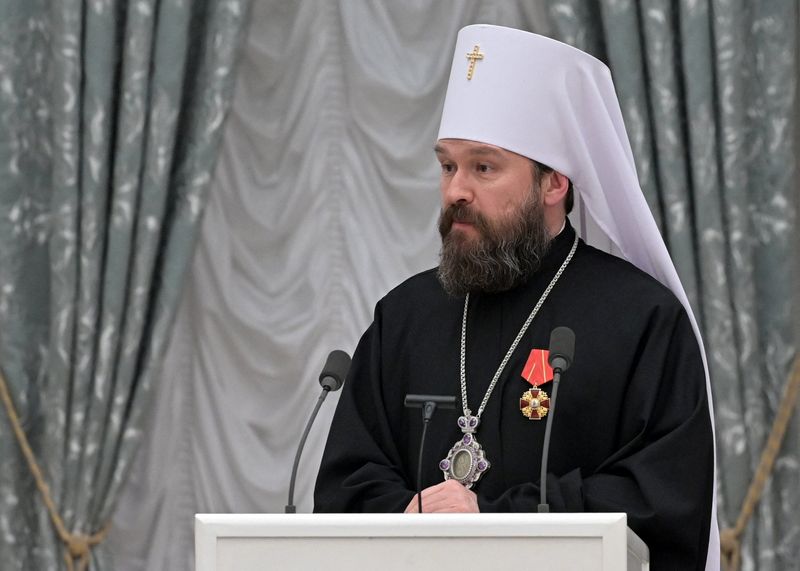
On a recent Friday, Czech authorities pulled over Father Vladimir Kuzmin, 45, a Russian Orthodox cleric with over a decade’s worth of pastoral work in the Czech Republic. The location, near the Polish border, offered a suitably cloak-and-dagger setting. And what was the offense? The discovery of an unlabeled, ambiguous white powder. For several hours, the man of God found himself ensnared in police bureaucracy, an object of intense scrutiny. The substance, later confirmed as something entirely innocuous—sources close to the investigation hinted at a form of religious incense (how fitting, right?)—sent ripples through Prague and beyond. Because, really, who’s not instantly suspicious of white powder in a car?
The immediate fallout, however, wasn’t about public safety but diplomatic dignity. The Russian embassy in Prague quickly [QUOTE_PLACEHOLDER]expressed concern over the detention, a swift, predictable reaction for a figure holding the delicate balance of spiritual and national identity. The detention of a Russian Orthodox leader, regardless of the trivial nature of the ‘offense,’ is never just about Czech law enforcement acting within their remit. It becomes, almost instantaneously, a coded message, a test of allegiances, — and a demonstration of sovereignty. But what it wasn’t, evidently, was a big-time drug bust. Police spokesperson Eva Markova stated that tests confirmed the substance was not illicit, pulling the curtain back on the momentary drama. Father Kuzmin was later released, leaving the station without making a statement—the quintessential ‘no comment’ that speaks volumes in its silence.
His lawyers quickly argued it was a misunderstanding — and an overzealous police reaction. And maybe it was. But one can’t help but ponder the subtext when faith, nationality, and an unexpected powdery substance collide in Central Europe. The Ministry of Interior stated that police acted within their protocols. This incident, while minor in isolation, doesn’t exist in a vacuum. It underscores the broader, frequently fraught relationship between Moscow and its European neighbors, particularly those with a history of Soviet influence. The Church, after all, isn’t always just about prayer; it often serves as an unofficial arm of state soft power.
You see, this isn’t just about a Czech policeman, a Russian priest, — and some misidentified religious accouterment. It’s about perception. And in the high-stakes game of international relations, perception is often everything. An average of 1,200 traffic stops occur daily in the Czech Republic, yet few capture the attention of a foreign embassy. This particular stop, however, landed on that short list. Some have criticized the incident as profiling, — and it’s easy to see why such accusations would arise. It casts a long shadow, suggesting that specific identities—Russian, and by extension, Russian Orthodox—might be under particular scrutiny, even for mundane infractions.
And what does this subtle geopolitical dance mean for broader regions, places far from the quiet Czech countryside? Imagine this incident transplanted to a different continent, say, South Asia or the Muslim world, where ethnic and religious minorities often navigate an even more complex web of state surveillance and international politics. Consider the delicate balance within countries like Pakistan, where accusations of religious profiling, often for even less substantial reasons, can quickly escalate into full-blown international incidents, like those chronicled in Quiet Purge Echoes: Pakistani Lives Upended in Gulf’s Shadow Play. Here, a traffic stop, a white powder, and an embassy’s call could easily spiral into a communal outcry, with far more volatile implications. There’s a certain grim universality to how state suspicion operates, even if the stakes and consequences shift dramatically across borders.
What This Means
This episode, though it concluded with a polite release, speaks volumes about the enduring tensions bubbling beneath Europe’s placid surface. Economically, such minor diplomatic dust-ups can, in aggregate, impact bilateral trade or investment if allowed to fester, creating an environment of mistrust that disincentivizes deeper collaboration. While no immediate economic sanctions or trade barriers will emerge from this specific incident, it’s these myriad small frictions that accumulate, contributing to an overall chilling effect on broader diplomatic and economic relationships between Moscow and the West. Politically, the narrative from Prague—police acted within their protocols—clashes sharply with Moscow’s implicit narrative of potential harassment, widening the rhetorical chasm that already separates them.
The human element here is significant: a spiritual leader, briefly stripped of his stature — and subjected to suspicion. This isn’t merely an administrative hiccup; it’s a stark reminder of how political agendas can subtly, almost invisibly, extend their tendrils into the most ordinary aspects of civilian life, particularly for those connected, however tangentially, to an opposing geopolitical power. But for Russia, it’s also a public relations problem; how they portray the treatment of their nationals abroad shapes internal public opinion and foreign policy alike. Conversely, for the Czech Republic, upholding the rule of law while navigating these diplomatic sensitivities is a balancing act that requires a fine touch. This wasn’t some grand international conspiracy, no. It was merely a clergyman, his car, and some powder—but the resulting echoes, they weren’t so simple. And they’re still out there, reverberating softly.