

Silent Implosion, Global Echo: When Industrial Calamity Strikes Home
POLICY WIRE — Longview, Washington — They went to work expecting another Tuesday. Instead, the raw thrum of machinery—the usual soundtrack to making America’s tissues and paperboard—was brutally...

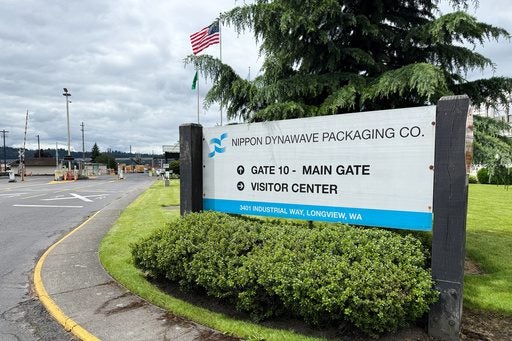
POLICY WIRE — Longview, Washington — They went to work expecting another Tuesday. Instead, the raw thrum of machinery—the usual soundtrack to making America’s tissues and paperboard—was brutally interrupted by something much older: the sheer, indiscriminate power of industrial calamity. A chemical tank, a silent titan in the sprawling complex of Nippon Dynawave Packaging Co., simply imploded, shattering not just steel but the morning peace. The immediate aftermath was gruesome. This wasn’t just a structural failure; it was a scene described by Mike Gorsuch, battalion chief with the fire department in Longview, Washington, as a “mass casualty scene.”
It’s a peculiar thing, the way these sorts of stories emerge. First, the vague hints of an emergency. Then, the grim confirmation. Local authorities and company officials confirmed the event: a tank’s rupture causing “multiple critical injuries” as well as fatalities. And just like that, lives were irrevocably altered—some ended—inside a facility that turns wood pulp into the prosaic necessities of modern life. Things like materials for tissues, printing paper, cups, plates, cartons — and other goods. You don’t think about chemical tanks — and [QUOTE_PLACEHOLDER] when you reach for a coffee cup or a box of cereal. You just don’t.
The incident was reported at 7:19 a.m. Early morning, when shifts are changing, when everyone’s a bit less alert than midday, but when work grinds on. First responders—about 40 firefighters and paramedics, along with a regional hazmat team—were on scene fast. They’ve seen things, sure, but a chemical tank implosion isn’t everyday. Their first job: making sure the survivors weren’t poisoned further. Responders decontaminated patients — and took them to hospitals in Longview and Vancouver, Washington. It’s a testament to rapid reaction, but also to the severity of the initial blast.
The company, Nippon Dynawave Packaging Co., which employs about 1,000 people, didn’t immediately respond to a request for comment. It’s the playbook, isn’t it? Assess, contain, and only then, comment. The full scope of the tragedy will unfold over days — and weeks. How many? Who? The public gets told there was no immediate threat, but what about the slow-burn threat of the chemical processes themselves? Or the sudden, explosive threat? It leaves you thinking.
But Longview isn’t alone in this sudden burst of industrial unease. In a slightly ironic turn, thousands of residents of southern California remained evacuated Tuesday due to a damaged chemical tank at an aerospace plant. Two significant, almost synchronized industrial scares across the West Coast—it’s hardly coincidental, is it? Perhaps it’s a whisper of the brittle infrastructure underlying much of our consumer economy, a system pushed to its limits by efficiency demands and aging components.
When you look beyond the immediate shock, incidents like these serve as stark reminders of the often-unseen hazards that underpin our daily conveniences. Paper mills, for instance, are notoriously dangerous places globally. For example, according to data from the U.S. Occupational Safety and Health Administration (OSHA), pulp, paper, and paperboard mills have an average injury and illness rate often exceeding the general manufacturing average. This Washington state event, tragic as it’s, fits into a larger pattern of high-risk environments where the push for productivity often brushes against the need for ironclad safety protocols. And we’ve seen these issues echo in much more severe forms in countries with looser regulations and less robust labor protections.
Consider, for a moment, the vast supply chains for these exact materials — papers, boards, pulps. Much of the world’s packaging — and consumer paper products depend on mills not just in America, but everywhere. Pakistan, for instance, imports significant amounts of wood pulp and paper products to sustain its burgeoning manufacturing sector and consumer markets. Companies operate there with varying levels of oversight. A similar chemical tank implosion in a bustling industrial area of Karachi, say, could wreak exponentially more havoc, given denser populations and often less sophisticated emergency response systems. The Longview incident isn’t just local; it’s a blaring siren for global industrial vigilance. It’s a reminder that regardless of geography, be it the Pacific Northwest or Punjab, the cost of lax oversight is always paid in human lives.
What This Means
This localized catastrophe holds several threads of broader implications, both economic — and political. For Nippon Dynawave, the immediate aftermath involves extensive investigations, likely regulatory fines, and certainly, a profound impact on its workforce and operational capacity. This could translate into production shortfalls, which, for a supplier of basic materials, could ripple through various sectors reliant on their output—from the packaging industry to printing presses. Economically, even a temporary shutdown can dent local economies dependent on large industrial employers. The psychological toll on a thousand-person workforce — and a small community cannot be overstated, either. And you know litigation is coming.
Politically, incidents like this often ignite calls for enhanced safety regulations and oversight, potentially spurring legislative action. Think about the political leverage it gives labor unions — and safety advocates. Regulators will be scrutinizing other similar facilities—both within the state and nationally—which could lead to more stringent enforcement and capital expenditures for upgrades across the industry. From a broader lens, it underlines the tension between industrial output and worker protection in advanced economies, drawing parallels, however stark, with developing nations. As supply chains globalize, such incidents invariably draw attention to industrial safety as a global standard, rather than just a domestic one. This tragic morning in Longview, sadly, has implications far beyond its city limits. It’s a wake-up call, really, to an enduring fragility in our interconnected world.