


Rotterdam’s Shadow Scrubber: Plague Ship Silence Echoes Policy Peril
POLICY WIRE — Rotterdam, Netherlands — Eight days after docking, and well past its initially forecast deep-clean schedule, the m/v Hondius, an expedition cruise ship synonymous with Arctic ventures,...

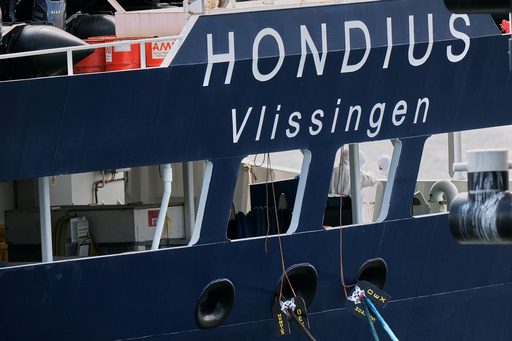
POLICY WIRE — Rotterdam, Netherlands — Eight days after docking, and well past its initially forecast deep-clean schedule, the m/v Hondius, an expedition cruise ship synonymous with Arctic ventures, remains moored in Rotterdam. It isn’t setting off on some grand adventure just yet. Nope. This vessel—the very same that played host to a deadly hantavirus outbreak—is still stuck in a sort of epidemiological purgatory, subjected to, get this, additional cleaning.
It’s a peculiar dance, this bureaucratic two-step. The GGD, Rotterdam’s local health authority, apparently saw something during its inspection that warranted an unscheduled second scrub. The operating company, Oceanwide Expeditions, dutifully relayed: Based on their inspection findings, GGD has advised additional cleaning,
adding with a precision bordering on the hopeful, Following completion of this work, GGD will conduct a final inspection before the vessel can depart from Rotterdam.
What exactly prompted this — and why it wasn’t caught or foreseen in the first round of cleaning plans— is anyone’s guess, since the company didn’t elaborate. And the health authority? Mum’s the word; it [QUOTE_PLACEHOLDER]
didn’t immediately have a comment on the reason it asked for the additional measures.
This isn’t just some fender bender at sea; it’s a global public health snafu playing out in plain sight, albeit with a remarkable lack of official detail. A pathogen, typically content to jump from rodents to humans via droppings, managed to find a luxury liner its new temporary home. We’re not talking about your run-of-the-mill norovirus here; this is hantavirus, and specifically, the Andes variant, which the medical establishment admits [QUOTE_PLACEHOLDER]
may be able to spread between people in rare cases. That last bit—that very human transmission potential—it’s the chilling underscore, isn’t it?
The World Health Organization Director-General Tedros Adhanom Ghebreyesus, in a missive posted Sunday on X (formerly known as Twitter), revealed the toll. So far, [QUOTE_PLACEHOLDER]
12 hantavirus cases and three deaths have been reported to the organization, with no deaths reported since May 2. That’s a stark statistic, courtesy of one of the world’s preeminent health bodies. It’s also a sobering reminder that our increasingly interconnected world makes no concessions for national borders or maritime law when a bug decides to hitch a ride.
And those unlucky souls who were aboard? All passengers — and crew remain in quarantine and under close monitoring to ensure they receive care if needed. The situation is stable for now. We continue to remain vigilant — and in close contact with all relevant governments,
Ghebreyesus stated. Sounds reassuring, perhaps, to those not cooped up on a pathogen-kissed cruise liner, but you’d think the general public’s perception of risk might be slightly less [QUOTE_PLACEHOLDER]
low than officials claim.
Initially, Oceanwide Expeditions had suggested operations wouldn’t even flinch. Their ship had an Arctic cruise slated for May 29, out of Keflavik, Iceland. Yet, here we’re, days later, — and the May 29 departure is certainly off the table. Now the company assures us that all voyages from 13 June onwards will proceed as scheduled. No further disruption to the sailing schedule of m/v Hondius is expected.
Optimism, one supposes, or just plain old business speak trying to project normalcy onto a distinctly abnormal situation.
📄 POLICY WIRE WHITEPAPER PUBLISHED: PAKISTAN'S NATIONAL SECURITY POLICY PRIORITIES
👉 READ BY CLICKING HEREThis silent saga out of the Netherlands ought to give any globe-trotter a momentary pause. Because while the GGD and Oceanwide Expeditions trade hushed advisories and terse reassurances, the bigger picture—the readiness of our global health infrastructure to cope with seemingly isolated outbreaks on commercial conveyances—remains hazy. Consider countries like Pakistan, a key nexus for international travel and trade in South Asia and the broader Muslim world. Such an event, even if geographically distant, reverberates. It can trigger travel restrictions, increase health screenings at ports, and stoke public anxiety, particularly in regions where health information dissemination can be slower and public trust in institutions more fragile. It’s not just about a few sick tourists; it’s about the underlying vulnerabilities of global commerce when contagion calls.
What This Means
The Hondius episode, for all its specific maritime flavor, functions as a chilling microcosm of broader geopolitical anxieties concerning global health. On one hand, you’ve got a commercial entity trying to protect its schedule — and its bottom line. Fair enough. On the other, you have public health officials, shrouded in a strange, uncommunicative silence, issuing decrees for additional cleaning
without articulating why. This lack of transparency, even if intended to prevent panic, only serves to chip away at public trust—and that’s a political commodity in scarce supply these days. When a pathogen can turn a cruise into a contagion hub, it poses immediate questions about international health regulations and their enforcement. Are the health checks rigorous enough? Is contact tracing truly global in its reach?
Economically, the ripple effects are clear: interrupted schedules mean lost revenue, tarnished reputations, and increased insurance premiums—all ultimately borne by the consumer. for developing nations and emerging economies, particularly in regions like South Asia, an incident like this fuels the perception of vulnerability, which can deter tourism and foreign investment, hampering vital economic lifelines. Travel advisories, real or perceived, are a blunt instrument, yet effective. This isn’t just about disinfecting a ship; it’s about polishing the tarnished veneer of confidence in global travel itself, a confidence which, once lost, isn’t easily regained. For Policy Wire readers keeping tabs on the delicate balance of power, commerce, and contagion, this seemingly isolated incident reveals how easily modern policy frameworks can be exposed as surprisingly brittle when confronted by biological reality. Just as we analyze shifts in geopolitical landscapes or market trends, so too must we monitor how the quiet bureaucratic churn in a Rotterdam port can signal deeper anxieties about our interconnected, yet fragile, world.