

Summer’s Subtle Battle: Albuquerque’s Shaded Splash Pads and the Broader Public Realm
POLICY WIRE — ALBUQUERQUE, N.M. — It’s often the small, mundane updates that reveal the most about civic priorities—or, perhaps more accurately, civic blind spots. Think about it. We’re not talking...

POLICY WIRE — ALBUQUERQUE, N.M. — It’s often the small, mundane updates that reveal the most about civic priorities—or, perhaps more accurately, civic blind spots. Think about it. We’re not talking about a groundbreaking cure or a new, fancy weapon system here. We’re talking about umbrellas. Plain, simple shade umbrellas. Their deployment at a children’s play area shouldn’t necessitate a four-day public works closure, especially not when summer’s hammer is about to drop. Yet, here we’re.
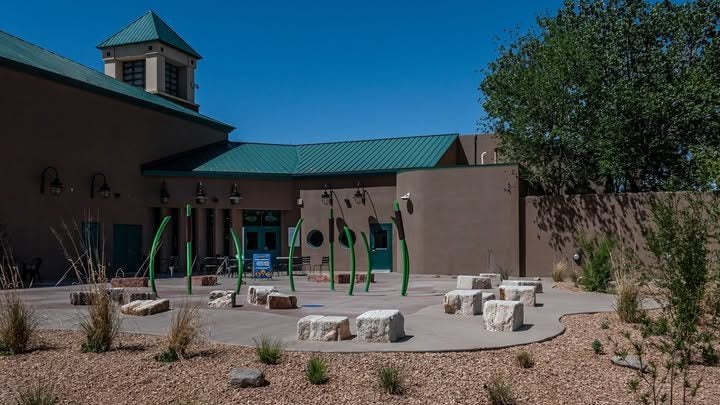
The Tadpole Springs splash pad, a popular watery refuge nestled precariously outside the Shark Reef Cafe at the Albuquerque BioPark’s aquarium, is undergoing what officials are terming ‘improvements’ until Friday. Work began Tuesday. This, conveniently, allows for a weekend reopening, just in time for the BioPark’s eagerly anticipated ‘Night in Asia’ cultural showcase. Because nothing says seamless public amenity management like shutting down essential cooling infrastructure just as the mercury begins its seasonal ascent, only to bring it back online for an exotic themed party. There’s a subtle irony in this particular dance, isn’t there?
“We’ve been monitoring visitor feedback, and the need for enhanced shade at the splash pad was unequivocally clear,” explained Dr. Evelyn Vance, the BioPark’s Director of Public Engagement, in a statement that probably took a committee a week to draft. She added, rather pointedly, “Ensuring our guests, especially families with young children, can enjoy the BioPark comfortably and safely remains our utmost concern.” Comfort and safety—fine words, but ones that feel like a retroactive justification rather than proactive foresight. One might wonder why, in a sun-baked desert city where the average June high kisses 90 degrees Fahrenheit (32°C), according to the National Weather Service, such basic provisions weren’t built into the initial design. This isn’t groundbreaking stuff; it’s practically desert-dwelling common sense.
And it’s not just Albuquerque wrestling with these kinds of rudimentary adjustments. Cities across the globe, from the sun-drenched avenues of Karachi to the bustling markets of Lahore—places where public spaces are often battlegrounds against relentless heat—grapple with providing adequate, accessible, and often overlooked, respite. Their municipal budgets are usually thinner, the climate often harsher, and the public demand for shade arguably far more desperate. But they don’t always get a clean four-day window to bolt on some umbrellas. In many such places, getting public works done sometimes requires an almost Machiavellian political dance, as seen in the broader geo-economic dynamics of regions seeking critical infrastructure investment, for example, from external powers. One might consider the quiet negotiations in places where Beijing’s iron grip meets Islamabad’s deep pockets, where fundamental utilities are part of larger strategic plays, not just local leisure improvements.
The city’s political arm is, predictably, trying to put a positive spin on the situation. “This immediate action reflects our commitment to maintaining world-class public facilities,” said Councilman Tariq Sharif, who oversees the city’s parks committee. “It’s about responsiveness. We heard the public, and we acted. Period.” But is ‘responsiveness’ really the goal, or just a belated course correction after an initial oversight? One can’t help but detect a slight whiff of scrambling rather than strategic planning. It isn’t difficult, you’d think, to factor ‘shade’ into a design spec in New Mexico.
📄 POLICY WIRE WHITEPAPER PUBLISHED: PAKISTAN'S NATIONAL SECURITY POLICY PRIORITIES
👉 READ BY CLICKING HEREThe ‘Night in Asia’ event, featuring exotic creatures like orangutans, snow leopards, and Malayan tigers alongside Asian elephants, will be capped off by live music. It’s a wonderful juxtaposition, celebrating the grand scale of global biodiversity and culture while, on a far smaller — almost ridiculously local — scale, correcting a foundational flaw in community leisure. The Big K Duo — and Eddie 9V are set to perform. Sounds fun, doesn’t it? Just make sure you can stay out of the sun while you enjoy it, won’t you?
What This Means
This seemingly trivial closure of a splash pad actually reveals a larger fault line in municipal planning and adaptation to climate realities. It’s not just about one park or one city. This ad-hoc fixing of public spaces speaks volumes about how infrastructure decisions are often made—reactive, rather than foresightful. Politically, it presents an opportunity for local officials to tout ‘responsiveness,’ even when the issue itself might stem from a lack of proactive design thinking or insufficient initial budgeting for basic public welfare needs. The economic implication is that even minor infrastructure upgrades, when they require sudden shutdowns and dedicated workforces, come at an indirect cost to the public. Missed opportunities for leisure, direct labor costs, and the reputational cost of perceived oversight—it all adds up. And as global temperatures continue their relentless climb, the demand for simple amenities like shade will become less a luxury and more a non-negotiable public right. Cities worldwide, like those scorching locales in South Asia, can attest to this basic truth. It isn’t just about umbrellas; it’s about acknowledging the heat, literally and figuratively, that public servants face in trying to make their urban landscapes livable and equitable, often under tight fiscal scrutiny. Sometimes, a tiny detail—like where the sun hits—reflects a much bigger problem.