


The Brutal Calculus of Youth Talent: How a Linebacker’s Choice Reflects Global Economic Strain
POLICY WIRE — Washington, D.C. — Somewhere, a spreadsheet glitters. Not with the promise of geopolitical triumphs or stock market windfalls, but with the projected statistics of a seventeen-year-old...

POLICY WIRE — Washington, D.C. — Somewhere, a spreadsheet glitters. Not with the promise of geopolitical triumphs or stock market windfalls, but with the projected statistics of a seventeen-year-old athlete. Young Prince Goldsby, a linebacker of considerable repute from the suburban plains of Kansas City, publicly pledged his allegiance to Ohio State University on May 25. And just like that, another domino falls in the billion-dollar chess match that’s American collegiate athletics.
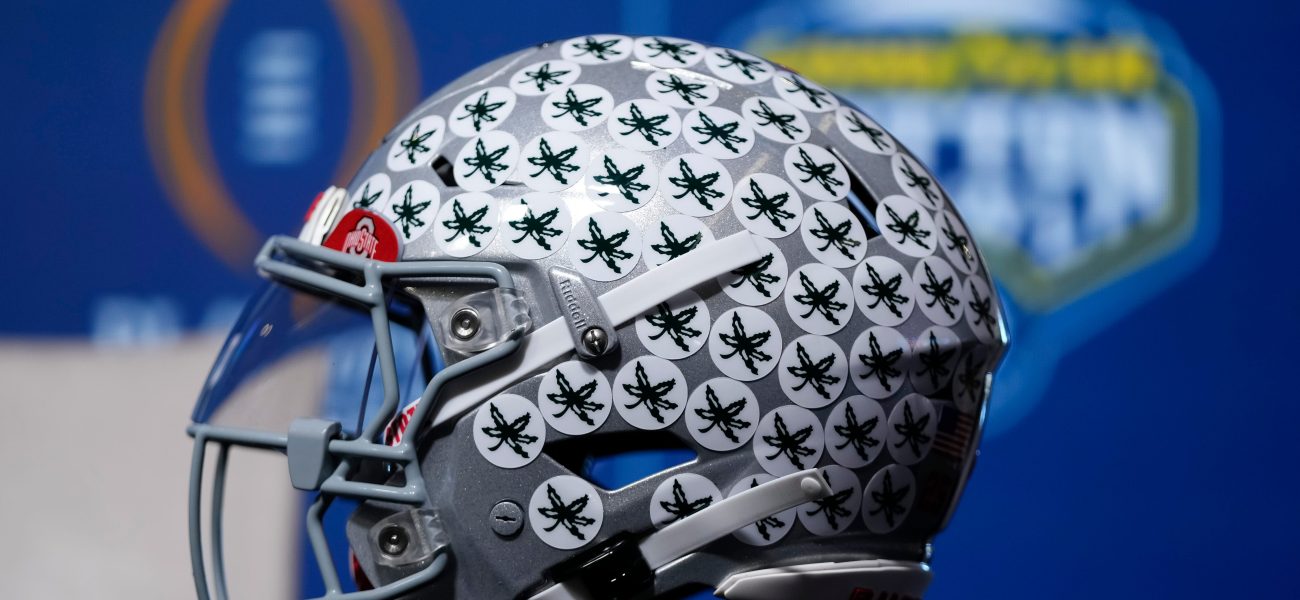
It wasn’t a sudden, impassioned decision born purely of school spirit. Nothing is in this high-stakes game. Goldsby, a four-star recruit, was already on the radar—a very long, very expensive radar—of programs like Alabama and Indiana. His commitment to the Buckeyes marks the second in as many weeks for the vaunted institution, following defensive end Wyatt Smith. For Goldsby, it’s a commitment to an empire. “I can’t wait to be apart of this unbelievable program with great coaches who teach you, great players who push you and the best fan base in college football who expect nothing less than excellence,” he posted, undoubtedly having meticulously vetted every word, on platform X.
Because, make no mistake, this isn’t just about football. It’s about futures. It’s about economic pipelines and the industrial-scale harvesting of human potential, often before that potential has even fully ripened. The raw numbers from his junior year—83 tackles, 22.5 for loss, 13.5 sacks—aren’t merely stats; they’re commodities. They’re line items on a balance sheet for an athletic department that pulls in eye-watering sums, operating as a distinct economic entity within the larger university ecosystem. Consider this: the National Collegiate Athletic Association (NCAA) alone reported roughly $1.3 billion in revenue in 2022, much of it funneled through flagship programs like Ohio State.
This commitment, by a player ranked No. 101 nationally for the 2027 class — and the No. 7 linebacker according to 247Sports, represents more than a sporting achievement. It’s an investment decision for the institution. A calculation. For the individual, it’s an opportunity – a glittering, rare one. But the pathways for this kind of advancement are narrow, fiercely competitive. The pressure is immense.
Dr. Ananya Sharma, a sociologist at the University of Karachi specializing in global talent migration, points to similar, albeit geographically disparate, phenomena. “While the specifics of American college sports might seem niche to, say, Pakistan, the underlying dynamics are universally understood,” Sharma told Policy Wire. “Identifying, nurturing, and then aggressively competing for prime talent – be it in tech, engineering, or yes, even sport – that’s the global game. But it also creates immense societal pressure on young individuals to perform, to become ‘products’ rather than merely developing in a holistic way.” Her observation cuts to the heart of the modern talent marketplace.
Gene Smith, Ohio State’s athletic director (speaking broadly about their recruitment philosophy), sees it as a positive engine for both individuals and the community. “Our commitment to these young men isn’t just about championships,” Smith is known to articulate to prospective recruits and their families. “It’s about offering unparalleled opportunity, mentorship, and a platform for success, whether that’s in professional sports or becoming leaders in their chosen fields. We’re building men of character, grounded in excellence.” Smith’s statements typically underscore a carefully curated vision of aspirational development.
📄 POLICY WIRE WHITEPAPER PUBLISHED: PAKISTAN'S NATIONAL SECURITY POLICY PRIORITIES
👉 READ BY CLICKING HEREBut the glittering promise comes with a cost. What about the majority who don’t ‘make it’? And the thousands who commit to less prominent programs, less glamorous paths? It’s a system designed for a select few to succeed wildly, while a vast infrastructure of support, hope, and deferred dreams undergirds the entire enterprise. It’s America, after all: meritocracy, sure, but also hyper-capitalism wrapped in academic regalia.
What This Means
This isn’t merely sports news; it’s a policy blueprint in miniature. The constant search for athletic superiority reflects broader national strategies for competitive advantage. The aggressive recruitment of a player like Goldsby highlights the quasi-professionalization of collegiate sports, morphing universities into de facto farm systems for the pros, blurring the lines between education and pure commerce. It signals a continued, almost desperate, investment in cultural exports—athletic spectacle, narratives of overcoming adversity—even as traditional academic metrics face increasing scrutiny. It’s a dynamic with echoes in places like the cricketing academies of Lahore, where a similar high-pressure, early identification system drives dreams and crushes others. The economic model, though different, taps into the same aspirational current, fostering hope in the face of stark odds. But it also underscores a global trend: a ruthless focus on measurable outcomes for exceptional individuals, often at the expense of a broader, more equitable development strategy. That’s a policy choice, whether explicit or implied. And it’s one with global ramifications, even for those watching the highlight reels thousands of miles away.
For more on how global markets influence local realities, consider Beijing’s Iron Grip, Islamabad’s Deep Pockets: The ‘Consensus’ That Shakes South Asia. Or for a different perspective on elite competition, see The Brutal Arbitrage of Brawn: When Gridiron Dreams Shift to Olympic Lifts.