


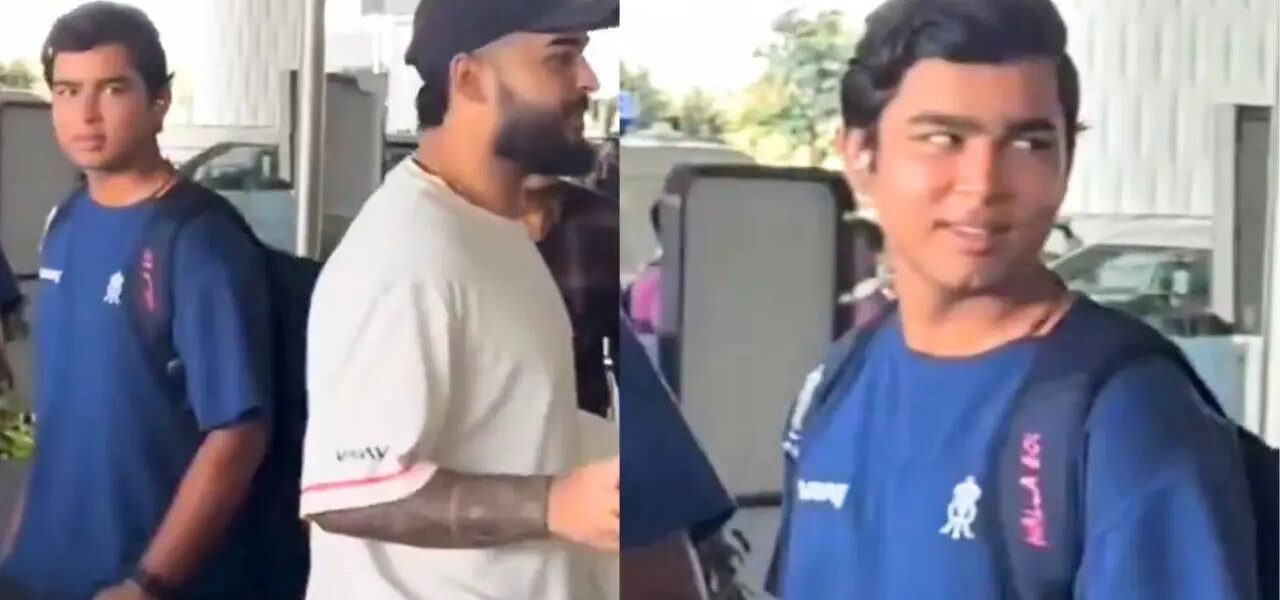
Beyond the Boundary: A Teen’s Stare Unmasks IPL’s Unforgiving Crucible
POLICY WIRE — New Delhi, India — In the glittering, high-stakes theater of the Indian Premier League, where fortunes are made and reputations shattered faster than a quick single, a fleeting, almost...

POLICY WIRE — New Delhi, India — In the glittering, high-stakes theater of the Indian Premier League, where fortunes are made and reputations shattered faster than a quick single, a fleeting, almost imperceptible glance can sometimes speak volumes. It wasn’t the thwack of leather on willow or a boundary-line stunner that recently captured India’s fickle public imagination. Nope. Instead, it was the raw, unvarnished expression on a teenager’s face – an ‘awkward’ stare, as some dubbed it—that sliced through the carefully curated narratives of IPL 2026, laying bare the brutal truths of modern cricketing fame.
Because, honestly, this league isn’t just sport anymore. It’s an economic powerhouse, a cultural phenomenon, a grinding machine built on hero worship and instant, brutal critique. Captain Riyan Parag, 24, a man well acquainted with both sides of that coin, offered a casual dismissal to a horde of paparazzi at an airport recently, muttering, “Hum nahi hai film star.” ‘We’re not film stars,’ he’d said. A world-weary sentiment, sure, from someone who’s weathered seasons of online abuse, all eyes constantly on him.
But the true policy implication wasn’t in Parag’s words, but in the immediate, unguarded reaction of Vaibhav Sooryavanshi, 15, standing right beside him. The young prodigy, barely out of school uniforms, responded with a look — part disbelief, part defiance, and maybe, just maybe, a sliver of unadulterated ambition that belied his tender years. It wasn’t merely an ‘awkward stare;’ it was a generational clash compressed into a blink, a silent debate on the very nature of stardom and success in a nation obsessed.
The viral moment, of course, broke right after Parag’s Rajasthan Royals clawed their way into a playoff spot, beating Mumbai Indians by a comfortable 30 runs. And Parag? He’d endured his fair share of public flogging this season, facing heavy criticism after the team’s mid-season slump, fans dissecting his every strategic decision. Some wanted him gone. But the Royals’ head coach, the astute Kumar Sangakkara, has remained his staunch defender, always. “When we decided to offer Riyan the captaincy, he’s the absolute right guy to lead this franchise,” Sangakkara emphatically stated to reporters just last week, dismissing the noise. And he’s right to. The veteran Sri Lankan coach understands this game – the long haul, the mental grit it demands – better than most. He’s seen players crucified — and resurrected. It’s a cruel game, a fact that’s certainly not lost on him.
But for a 15-year-old like Sooryavanshi, criticism remains a theoretical concept, an abstract future problem. He’s currently living the dream, smashing records — and headlines. On Kevin Pietersen’s widely-viewed YouTube show, the young batter—all boundless energy and nascent swagger—made his intentions crystal clear. “I want to score 200 in T20s. I want to break Gayle’s record,” he declared, referring to Chris Gayle’s monumental 175. It’s audacious, but it’s the kind of hungry ambition that fuels the league. With over 580 runs scored this season at an explosive strike rate, he’s undeniably been one of IPL 2026’s biggest revelations, a statistical testament to raw, youthful power.
The stark difference between the jaded captain and the soaring debutante encapsulates the enduring appeal—and sometimes, the danger—of this format. For young, aspiring cricketers across South Asia—from the dusty pitches of Karachi to the manicured grounds of Colombo and the teeming bylanes of Dhaka—the IPL represents not just a game, but a tangible pathway to fame and immense wealth. Many have seen their careers warped by the brutal scrutiny that follows.
📄 POLICY WIRE WHITEPAPER PUBLISHED: PAKISTAN'S NATIONAL SECURITY POLICY PRIORITIES
👉 READ BY CLICKING HERE“Look, when you’re out there, every run counts, every decision gets replayed a thousand times,” a former Pakistani international, now a respected commentator for a Dubai-based sports network, privately admitted. “It’s easy for us on the sidelines to forget what it feels like under that immense, unforgiving spotlight. Especially now, with the phones. Everything goes viral. Instantly. What a young kid like Vaibhav doesn’t quite get yet, what Riyan is living every single day, is that sometimes, being ‘just a player’ is a defense mechanism. It’s about preserving a shred of normalcy in a truly insane environment.”
What This Means
This viral exchange, seemingly innocuous, peels back the layers on several interconnected issues within modern South Asian sport, with implications extending beyond the cricket pitch. First, it highlights the intense economic pressure exerted by the IPL. The league isn’t just about cricket; it’s a multi-billion dollar enterprise, where player valuations can skyrocket or plummet overnight. A breakout season like Vaibhav’s means potential endorsement deals, higher auction bids, and a generational shift in family finances. His aspiration to ‘break Gayle’s record’ isn’t just a sporting goal; it’s an economic one, a declaration of intent in a market that rewards performance with stratospheric earnings. He sees opportunity. Parag, conversely, seems to see an inevitable public boxing match.
And then there’s the psychological toll. Kumar Sangakkara, reflecting on Parag’s perennial criticism, described him as a “lovely, soft, gentle, really determined, smart young man” who’s “misunderstood publicly.” This isn’t an isolated sentiment. It reflects a pervasive problem across the sub-continent: the blurring lines between player, celebrity, and punching bag. The adulation is extreme, but so is the vitriol. Young players—and it’s getting younger every cycle, like a similar dynamic in global football—are thrust into hyper-visibility without the tools to manage it. This environment creates mental health challenges, impacting performance — and personal lives. Parag’s remark isn’t just cynicism; it’s a defensive posture against an often toxic digital landscape. It’s also an unspoken nod to the fact that the film stars, at least, usually have handlers to control their public narrative. Cricketers often don’t, or can’t, in the face of rabid fandom.
Ultimately, the episode serves as a micro-drama encapsulating the broader macro-narrative of South Asian sport: immense talent, stratospheric dreams, dizzying financial rewards, and the grinding, relentless, public pressure that often accompanies it all. It’s a stage where a teenager’s ambitious glance and a captain’s weary dismissal offer a far more compelling narrative than any scorecard ever could.