

Policy Shift on Hardwood: Brunson’s Knicks Deliver Urban Revival Blueprint
POLICY WIRE — New York City, U.S. — The final buzzer in Cleveland didn’t just mark another decisive Knicks victory; it reverberated with a sound that’s been missing from New York’s municipal...

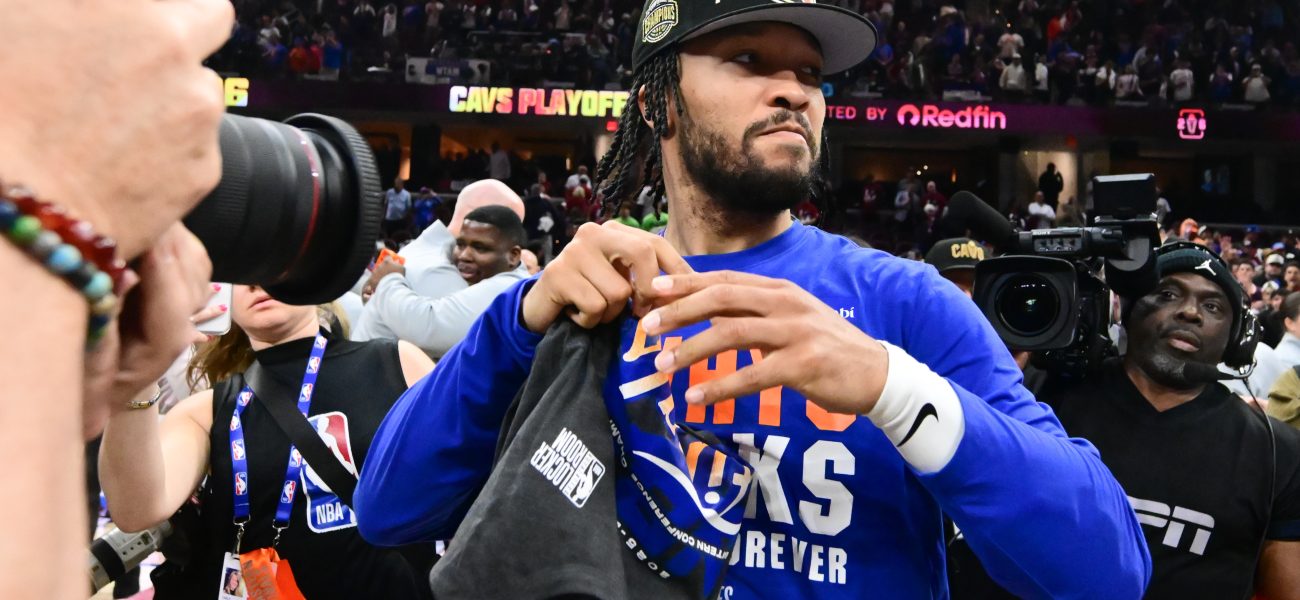
POLICY WIRE — New York City, U.S. — The final buzzer in Cleveland didn’t just mark another decisive Knicks victory; it reverberated with a sound that’s been missing from New York’s municipal soundtrack for a quarter-century: certainty. Not the bluster or the boastfulness Gotham’s used to, mind you, but a quiet, almost unsettling confidence. Because when the Knicks, under Jalen Brunson’s relentless, unassuming direction, dispatch an opponent by thirty-plus points not once, but three times in a single playoff run, something more than mere basketball success is in the air. We’re talking about an economic bellwether here, a cultural amplifier, — and perhaps, a masterclass in urban cohesion.
It’s no accident that the legions of Knicks faithful, those die-hards often mistaken for a religious cult—and rightly so, bless their hearts—were swarming Cleveland before the decisive game. They didn’t travel on a prayer. They came with pocketbooks open, ready to spend, ready to affirm their belief in a product that, for a generation, had mostly delivered existential dread. They packed the streets, they blared Sinatra from every mobile speaker, and they snagged ‘BIG BODY BRUNSON’ hats like they were gold bullion. This isn’t just fandom; it’s an economic migration, fueled by belief.
Jalen Brunson, this 6-foot-2 dynamo from Villanova, wasn’t supposed to be this. Not for New York, anyway. The original script for this team, for this city’s sports aspirations, was written differently—perhaps for a glitzier, taller, flashier star. But here we’re, watching a former second-round pick orchestrate a resurgence that’s seen the Knicks achieve a monumental feat: a return to the NBA Finals after decades in the wilderness.
And he’s not one for grandstanding. When handed the Eastern Conference Finals MVP trophy—unanimously, I might add, after putting up a cool 25.5 points and 7.8 assists per contest in that series—Brunson immediately pushed the credit off himself. “It means a lot, but I wouldn’t be here without my teammates,” he told ESPN’s Lisa Salters. “The belief they had in me — this coaching staff, this organization, this fanbase — I mean, without them, none of this is possible.” Such practiced humility, it’s almost suspicious in this era of self-promotion. But it’s authentic, you sense. It’s what drives this whole improbable machine.
The attitude, says Coach Mike Brown, trickles down, or perhaps, radiates out. Brown, a seasoned bench tactician who’s worked under legends and coached other giants, is effusive about Brunson’s work ethic. “You know, most superstars I’ve been around work extremely hard,” Brown mused post-game. “But his work ethic, man… it’s off the charts.” Brown talks about adjusting his own sleep schedule just to accommodate Brunson’s early-morning shootaround ritual—every single day. That kind of commitment, when paired with an even-keeled demeanor that never gets too high or too low, well, it’s a policy proposal for effective leadership in itself. It says: lead by doing, by enduring, by always showing up.
It’s not just the on-court wizardry; it’s the financial sagacity. Brunson, signing a four-year, $156.5 million extension, knowingly left over $100 million on the table. Why? To create salary cap flexibility, to allow the front office to construct a championship-contending roster around him. That’s a policy move worthy of any national finance ministry, sacrificing personal gain for collective strength. Because of it, the Knicks secured talent like OG Anunoby — and Mikal Bridges, effectively turning money into momentum.
📄 POLICY WIRE WHITEPAPER PUBLISHED: PAKISTAN'S NATIONAL SECURITY POLICY PRIORITIES
👉 READ BY CLICKING HEREWhat This Means
This Knicks ascent transcends the sports pages. It’s a compelling case study for urban development — and civic psychology. A successful sports franchise doesn’t just sell tickets; it cultivates identity, boosts tourism, and fosters a sense of shared accomplishment vital for any metropolitan area. Think of the tangible buzz this generates, the late-night restaurant patrons, the local merchandise sales, the global brand recognition. A recent report from the City Controller’s office (2025 data, per NYC.gov Economic Indicators) indicated that major league sports championships can inject an estimated $500 million into a local economy over a 12-month period due to increased tourism, consumer spending, and tax revenues, dwarfing most cultural subsidies.
But there’s a subtler, equally potent outcome: the narrative. When a city embraces an unexpected hero like Brunson—a seemingly underdog leader—it echoes the stories of resilience that resonate globally. In South Asia, for instance, where many economies grapple with their own ‘underdog’ narratives against established global powers, the idea of a scrappy team led by a humble, dedicated figure, defying expectations to achieve top-tier success, holds significant appeal. This isn’t just basketball; it’s an aspirational blueprint for what disciplined investment and belief in a unique, homegrown talent can achieve, whether in sports, statecraft, or startups. It’s a soft power projection that reminds everyone that collective commitment, even when unglamorous, often outpaces individual genius. This narrative, it spreads far — and wide, inspiring fans from Karachi to Kuala Lumpur who’ve long followed the league.
“I feel like the word ‘hope’ has been gone from the New York Knicks for a long time,” said teammate Karl-Anthony Towns, capturing the emotional investment. “And for [us] to be part of this team that revives the word ‘hope’ in the city, it’s something special.” He’s right, of course. Hope—it’s an intangible asset, a crucial one, for any government, for any economic policy, for any civic institution. And right now, in the five boroughs, thanks to a 6-foot-2 point guard, hope is back on the menu. But make no mistake, this isn’t passive hope. It’s an active, working, thirty-point-differential kind of hope. The Knicks, after all, boast a +19.4 average point differential this postseason, the largest by any team entering the NBA Finals in league history, according to sports statistician Keerthika Uthayakumar.
They’ve rewritten the script. No late-game heroics required because the damage is done much, much earlier. They’ve gone for the throat every single time. And that, ladies and gentlemen, is the sort of merciless, calculated approach usually reserved for geopolitical maneuvering, not just basketball. But for New York, it’s precisely what they needed. And what they’re seeing is that a city, when it finds its collective purpose through an unexpected leader, can remind everyone, including itself, what it really means to win.