


Rubio’s Delhi Gambit: Mend, Muddle, or Manifest Destiny in the Indo-Pacific?
POLICY WIRE — New Delhi, India — The ceremonial salutes and brisk handshakes scarcely disguised the low hum of realpolitik hanging heavy over India’s capital this week. Secretary of State Marco...

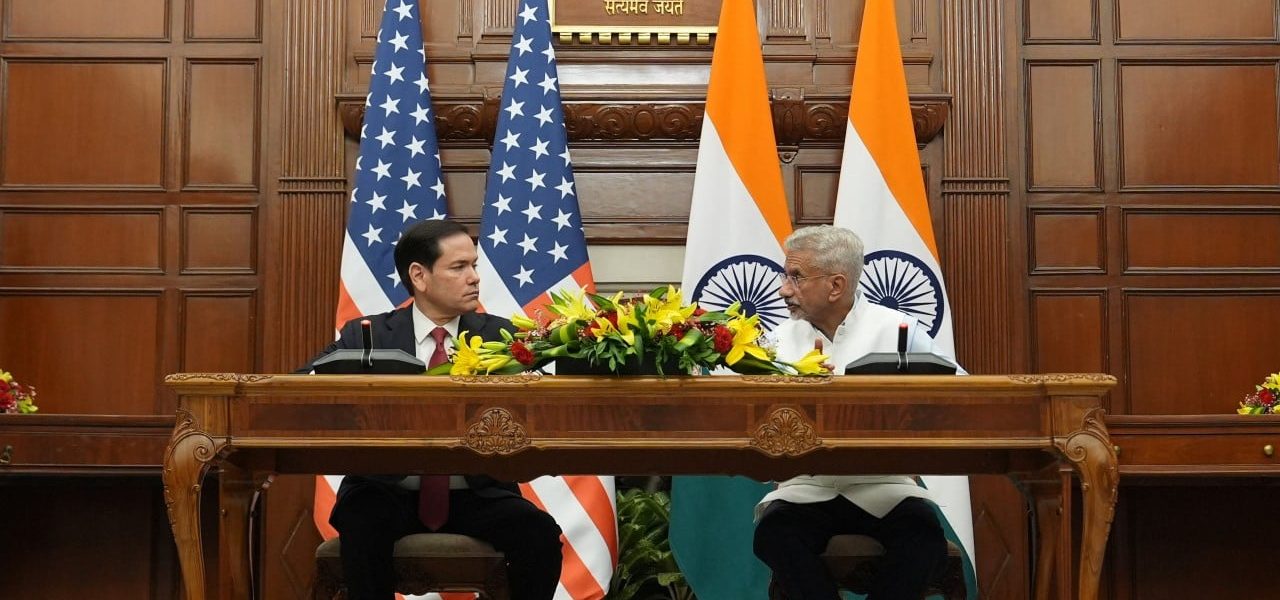
POLICY WIRE — New Delhi, India — The ceremonial salutes and brisk handshakes scarcely disguised the low hum of realpolitik hanging heavy over India’s capital this week. Secretary of State Marco Rubio’s latest diplomatic sortie to New Delhi wasn’t merely about ironing out lingering trade squabbles—oh no, not entirely—but rather a more delicate operation. He’s in town, folks, not just to talk energy deals and defense tech, but to gently, perhaps forcefully, reset Washington’s perceived trajectory in a region teeming with its own agendas. After years of the Biden administration’s Indo-Pacific strategy playing a bit like a broken record—all about China, all the time—there’s a growing sense, especially here in India, that Washington needs to broaden its focus.
It’s no secret America’s relationship with India, long championed as a counterweight, has hit a few snags lately. Trade irritants, varying approaches to sanctions (looking at you, Russia), and that gnawing feeling in Delhi that Washington often presumes, rather than partners. Rubio, it seems, got the memo. His primary directive, it appears, was less about delivering diktats — and more about demonstrating genuine respect. You don’t just roll into Delhi, tell the world’s largest democracy what’s what, — and expect warm fuzzies. It just doesn’t work that way. Especially not here. These folks remember history, and they’ve learned a thing or two about playing their own long game. They’ve seen empires rise and fall, after all.
His Sunday rendezvous with Prime Minister Narendra Modi and External Affairs Minister Subrahmanyam Jaishankar touched upon everything from maritime security to the ever-present Quad dialogues. But the talk of ‘optics’—as some State Department aides not so subtly put it—felt particularly telling. They weren’t just polishing the old strategic partnership; they were attempting a full-blown buff and shine on an occasionally tarnished narrative. Rubio, ever the statesman with an eye on the bigger geopolitical chessboard, stated publicly, “We’re not just selling hardware; we’re building a foundation of shared strategic intent, despite—or perhaps because of—the rough patches. Our democracies, messy as they’re, need each other to navigate these choppy global waters.” And honestly, that sounds like a fair assessment from where I’m sitting.
Jaishankar, characteristically articulate — and shrewd, offered his own nuanced take. He’s a master of the understated dig, a practitioner of diplomatic Judo. He reminded everyone present (and anyone listening halfway across the globe) that, “India navigates its interests with sovereign clarity. Friendships aren’t about monolithic consensus, but about respecting diverging national paths toward common objectives.” See what he did there? It’s a polite nod to partnership, a wink to autonomy, and a quiet reassurance that India won’t be just another pawn in someone else’s game.
Because let’s be real: India has plenty of dance partners, thank you very much. From purchasing discounted oil from Russia, much to Washington’s chagrin, to expanding defense ties with France, India’s foreign policy spreadsheet looks less like an exclusive club and more like an open-plan office. Its economic engine, famously humming even through global turbulence—bilateral trade with the U.S. alone reached over $120 billion in goods and services in 2023, according to the U.S. Census Bureau—demands a foreign policy that prioritizes its own burgeoning aspirations. And this makes for a more complex, often frustrating, but ultimately more resilient partnership.
📄 POLICY WIRE WHITEPAPER PUBLISHED: PAKISTAN'S NATIONAL SECURITY POLICY PRIORITIES
👉 READ BY CLICKING HEREBut how does all this diplomatic maneuvering land elsewhere in the subcontinent? Picture Pakistan, for instance, a long-standing, if often rocky, U.S. ally now observing this deepening embrace. It’s an uneasy watch, no doubt. The narrative of India as a rising global player, and a critical component of the West’s Indo-Pacific calculus, inevitably frames its immediate neighbors differently. For Pakistan, it can feel like a further erosion of its own geopolitical leverage, pushing Islamabad deeper into Beijing’s economic and strategic orbit—a global supply chain dynamic that touches everything from energy to strategic minerals. It’s not a zero-sum game, Washington insists, but try telling that to regional strategists with long memories.
What This Means
This isn’t just about good vibes. The diplomatic charade between Rubio — and his Indian counterparts points to a more fundamental recalibration in U.S. foreign policy: a grudging acknowledgement that allies aren’t always replicas. The expectation of ideological purity has taken a backseat to pragmatic alignment on strategic goals, specifically countering China’s burgeoning regional influence. For India, it’s a delicate dance, allowing it to reap the benefits of Western technology and investment—a global green gambit, if you will—while fiercely guarding its strategic autonomy. The underlying tension remains: Washington wants India as a firm bulwark; India wants to be India, thank you very much, standing on its own two feet. The challenge for future U.S. administrations will be to leverage this often-uncomfortable convergence of interests without appearing to dictate terms. Anything less, — and these carefully mended ‘optics’ will quickly fracture again. It’s a relationship defined as much by its disagreements as its aspirations, and that, my friends, is exactly why it matters.