

The Silent Reckoning: How Policy Triumphed Over a Dynasty’s Endless Prime
POLICY WIRE — Los Angeles, United States — For twenty-one years, basketball’s reigning colossus, LeBron James, carved out a career that defied actuarial tables and sports physiologists alike. It...

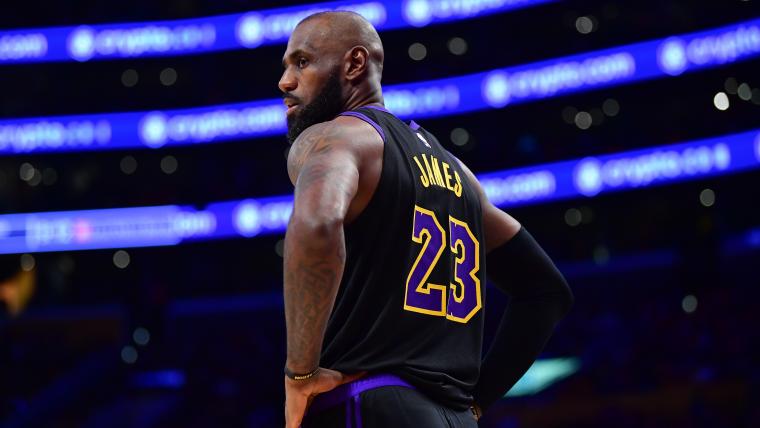
POLICY WIRE — Los Angeles, United States — For twenty-one years, basketball’s reigning colossus, LeBron James, carved out a career that defied actuarial tables and sports physiologists alike. It wasn’t just his skill, you see, but this impossible consistency—an almost irritating refusal to age out, to show the slightest crack in the marble edifice. And then, without much fanfare, a clipboard, an email chain, — and a rulebook caught up to him. The era of the perpetual All-NBA selection for King James—a streak that stretched across generations of fans and rival players—is officially, and rather prosaically, over.
It wasn’t a ruptured Achilles, not a torn ACL that stopped him. It was simple arithmetic. That damned 65-game requirement for All-NBA eligibility, implemented to protect the league’s product and, frankly, player health. James, battling a persistent sciatica early in the 2025-26 season, missed a full 14 games. He pushed hard, he always does. But because of those initial absences, the mathematics just wouldn’t bend, leaving him five games short of the threshold, even after a remarkable comeback.
Many a player would consider Year 23 (that’s twenty-three years, if you’re counting, which I assure you, we’re) with averages of 20.9 points, 7.2 assists, and 6.1 rebounds, while shooting 51.5% from the field, a Hall of Fame career high point. But for James, it marks the end of something presumed immortal. It’s a testament to the man’s relentless expectation management—or lack thereof—that missing an All-NBA spot due to an arbitrary, albeit logical, game count feels like news. For everyone else? That’s just Tuesday.
“We institute these rules to protect the integrity of the game and, frankly, the investment in our stars,” commented NBA Commissioner Adam Silver, a few seasons back, reflecting on the rationale behind player availability mandates. “It’s never about targeting individuals, but about ensuring our fans get to see the best on the court, consistently. No player is bigger than the league—or its rules, eventually.” He’s not wrong, of course. The NBA has a product to sell, spectacles to stage.
This isn’t just about one aging marvel. It reflects a league grappling with a changing demographic of fan expectations, where access and reliability are increasingly paramount. But there’s a wider implication, a subtle political tremor across the landscape of global sport. For nations like Pakistan, where NBA broadcasts command a cult following, this kind of bureaucratic intrusion on a living legend’s narrative — regardless of the reason — lands with a different resonance. Here, sporting narratives often intertwine with national pride — and resilience. An ‘unbreakable’ streak broken not by an opponent or physical decline but by policy could, however subtly, be interpreted as an unnerving triumph of administrative power over pure, raw human greatness. It hints at a future where even the grandest athletes are subject to the same strictures applied to all others, irrespective of their iconic status.
Because, really, what’s an idol if not impervious to the everyday? This quiet procedural ending cuts across the fabric of the hero worship endemic in global sports culture, much like the enduring struggles of national infrastructure can overshadow individual acts of progress. The business of basketball, it appears, demands its pound of flesh, even from those who seem to own the scales. And who can fault them? When billion-dollar broadcasting deals are on the line, sentiment takes a backseat.
📄 POLICY WIRE WHITEPAPER PUBLISHED: PAKISTAN'S NATIONAL SECURITY POLICY PRIORITIES
👉 READ BY CLICKING HERE“We’ve always operated with the understanding that player longevity is a blessing, not a right,” offered an unnamed Western Conference General Manager in a private conversation earlier this week. “But you sign up for the league, you sign up for the rules. And with the money these guys are making now, you’d better show up for work. Period. Fans—and owners—demand it.” It’s a harsh truth, delivered with the practiced pragmatism of someone whose job hinges on win-loss columns and balance sheets, not heartfelt eulogies to faded glory. And in professional sports, where multi-million dollar contracts often hinge on abstract performance clauses, a small, cold calculation can eclipse a legendary career.
What This Means
The technical end of LeBron James’ All-NBA streak isn’t merely a statistic; it’s a telling political and economic harbinger for the league and professional sports at large. Politically, it cements the primacy of league governance over individual star power. For years, the NBA, like many sports entities, walked a tightrope, balancing player autonomy and marketability with rule enforcement. This outcome demonstrates a decisive shift: the ‘league comes first’ mentality is now rigorously applied, even to its most recognizable face. This precedent could embolden commissioners in other sports to enforce similar availability clauses, potentially sparking new labor disputes as player unions push back against perceived overreach.
Economically, this scenario reinforces the league’s focus on revenue protection — and brand consistency. When global fan bases, from Manila to Mumbai, are paying top dollar for subscriptions and merchandise, the expectation is that marquee players will be visible. By enforcing game minimums, the NBA hedges against investment risk—fans buying season tickets or premium packages are assured their superstars will generally be present. It’s a calculated decision, recognizing that the aggregate health of the brand, reliant on reliable star appearances, outweighs the emotional appeal of granting an exemption to a single, albeit unparalleled, icon. The short-term hit to LeBron’s personal narrative is a small price for the long-term message: the product’s integrity is non-negotiable. This outcome provides a fascinating study in power dynamics, player leverage, and the cold hard economics of athletic excellence. It means, in essence, that even kings must bow to the ledger, eventually.
The list for the 2025-26 All-NBA teams—featuring the likes of Shai Gilgeous-Alexander, Nikola Jokic, and Victor Wembanyama on the first team, according to ESPN’s Shams Charania—represents a passing of the torch, a ceremonial shift, but also a stark reminder: even the most magnificent flames can be snuffed out by a rulebook. He played like a god. But even gods, it seems, have to punch a time card.
📖 GET YOUR FREE COPY NOW OF POLICY WIRE DIGITAL MAGAZINE JULY 2026 EDITION
👉 READ & DOWNLOAD FREE MAGAZINE