

Concussion Quagmire: When Athlete Safety Clashes With Commercial Urgency in the WNBA
POLICY WIRE — Dallas, USA — It wasn’t the audible gasp from the crowd, nor the sickening thud of bone on hardwood that really set tongues wagging. No, the real spectacle arrived when Dallas...

POLICY WIRE — Dallas, USA — It wasn’t the audible gasp from the crowd, nor the sickening thud of bone on hardwood that really set tongues wagging. No, the real spectacle arrived when Dallas Wings’ luminary, Paige Bueckers, stumbled back onto the court just moments after a tumble so nasty it could make a veteran rugby player wince. That’s where the conversation shifted, moving well past mere physical injury to something more corrosive: a cold, hard look at player welfare in the high-stakes theater of professional sports.
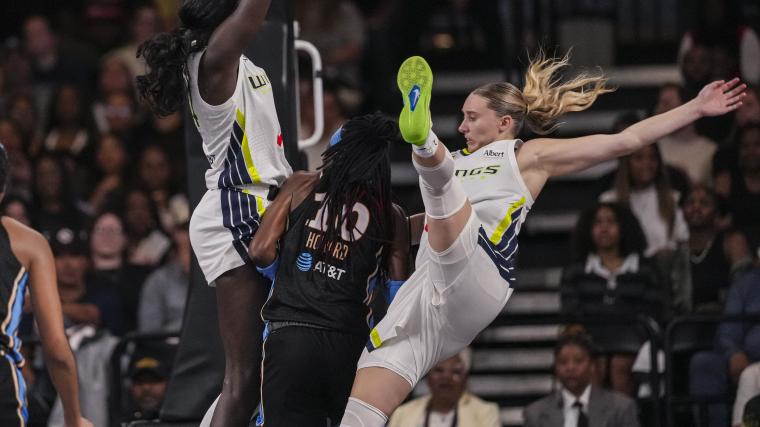
Fans — and pundits alike weren’t just speculating; they were incandescent. You see, the young guard went down trying to contest a shot from Rhyne Howard. But she got tangled, got airborne, then came crashing earthward at a wholly unnatural angle. She lay there, crumpled, a scene so unsettling the air practically crackled with concern. And everyone saw it. She was clearly shaken, escorted off the court looking more like someone who’d just lost a debate than an athlete resting for a moment.
So when she re-emerged from the tunnel, surprisingly quick, surprisingly ready to lace ‘em up again, a collective, digital groan swept across social media. Because we’re not talking about a twisted ankle here, are we? This wasn’t a bumped knee. We’re talking about a potential concussion. And it’s not as if Bueckers is some newcomer to the concussion narrative; she sat out a chunk of her rookie season under protocol, meaning she’s got history here. Her brain, frankly, has been through the wringer before.
It raises ugly questions. It doesn’t take a neuroscientist to understand that head injuries aren’t like a sprained thumb—they don’t ‘get better’ in five minutes because a trainer says so. Medical staff on the sidelines, bless their hearts, face an impossible dance: assess, decide, protect. All in the blinding glare of live television, with coaches breathing down their necks, players desperate to get back in, and franchise valuations tied directly to stars like Bueckers. That’s a tightrope, not a clear path.
“Player welfare is and always will be our guiding principle,” offered Commissioner Cathy Engelbert (via a league statement released Saturday morning). “But this isn’t simply a matter of black — and white. It’s a high-intensity sport, and medical decisions are made in complex, evolving environments, often under immense pressure. We’re always reviewing our protocols.” A perfectly crafted, non-committal statement, that one. But, the athletes? They often feel like they’re navigating an entirely different reality.
“We’ve got to protect our athletes, full stop,” insisted Layshia Clarendon, a veteran WNBA player and executive board member for the WNBPA. “The short-term win can never outweigh the long-term health of our players. What happened Friday night… it warrants a deeper dive, especially with a known concussion history. Our players are worth more than one game, no matter how important it feels in the moment.” Her sentiment, unsurprisingly, echoed across locker rooms. Because it isn’t just about this one player.
This isn’t just an American problem, mind you. The global south, too, battles similar dilemmas, though often with fewer resources — and less public scrutiny. In places like Pakistan, for instance, fledgling sports leagues in disciplines ranging from kabaddi to football are just beginning to grapple with formalizing robust medical safety standards. While the WNBA enjoys state-of-the-art facilities, the fundamental tension between a player’s raw athletic worth and their basic human fragility is a shared, deeply unsettling universal concern.
📄 POLICY WIRE WHITEPAPER PUBLISHED: PAKISTAN'S NATIONAL SECURITY POLICY PRIORITIES
👉 READ BY CLICKING HEREThis situation also arrives as athlete advocacy reaches new heights. Over the last decade, professional athletes—across various leagues—have increasingly used their platforms to demand better care and fairer treatment, pushing back against what’s often perceived as ownership’s purely commercial agenda. And that’s a good thing. A truly professional sports league—anywhere in the world—ought to champion athlete well-being not as an obligation, but as an integral component of its commercial viability. Otherwise, who’s left to perform? Or even more cynically, who’s left to market?
What This Means
The Bueckers incident isn’t just a blip on the WNBA’s radar; it’s a flashing red light about systemic pressures and the ethical tightrope walk teams, medical staff, and leagues find themselves on. Economically, a player like Bueckers isn’t just a person; she’s a marquee attraction, a marketing engine, a substantial investment. Her brand brings eyeballs, ticket sales, — and merchandise revenue. Therefore, the pressure to get such an asset back on court, particularly during a crucial phase of the season, can be immense and insidious.
Consider the raw numbers: according to a 2022 study published in the journal Sports Medicine, the average financial cost (direct medical expenses, lost wages, and rehabilitation) of a single concussion for a professional athlete in major North American leagues exceeds $25,000. That’s just the *direct* cost, ignoring the invaluable loss of future earnings or marketability due to chronic issues. For organizations like the Dallas Wings, that value exponentially increases when you talk about a talent like Bueckers, an economic engine in and of herself.
This incident also sparks crucial policy debates within sports governing bodies. Will it lead to more stringent, independent concussion protocols, potentially taking the decision out of immediate team medical staff’s hands? Will player unions push for collective bargaining agreements that explicitly detail more conservative return-to-play guidelines, similar to discussions around player contracts as explored in articles like The Golden Grind: Fernandes Takes Top Billing in Premier League’s Economic Theatre? And will franchises begin to view long-term player health not just as an ethical imperative but as a shrewd, necessary business strategy to protect their most valuable assets?
Because ultimately, the reputation of the league, and its ability to attract top talent—especially a league striving for growth and broader acceptance—hinges on whether it can be trusted to protect its players, not just profit from them. And sometimes, trust takes a harder hit than a player on the court.