

Garza’s International Gambit: Identity, Ambition, and Bosnia’s Global Court
POLICY WIRE — Boston, USA — When an NBA talent chooses to represent a nation beyond his birthplace, it’s never just about the game. It’s about bloodlines, yes, but also opportunity,...

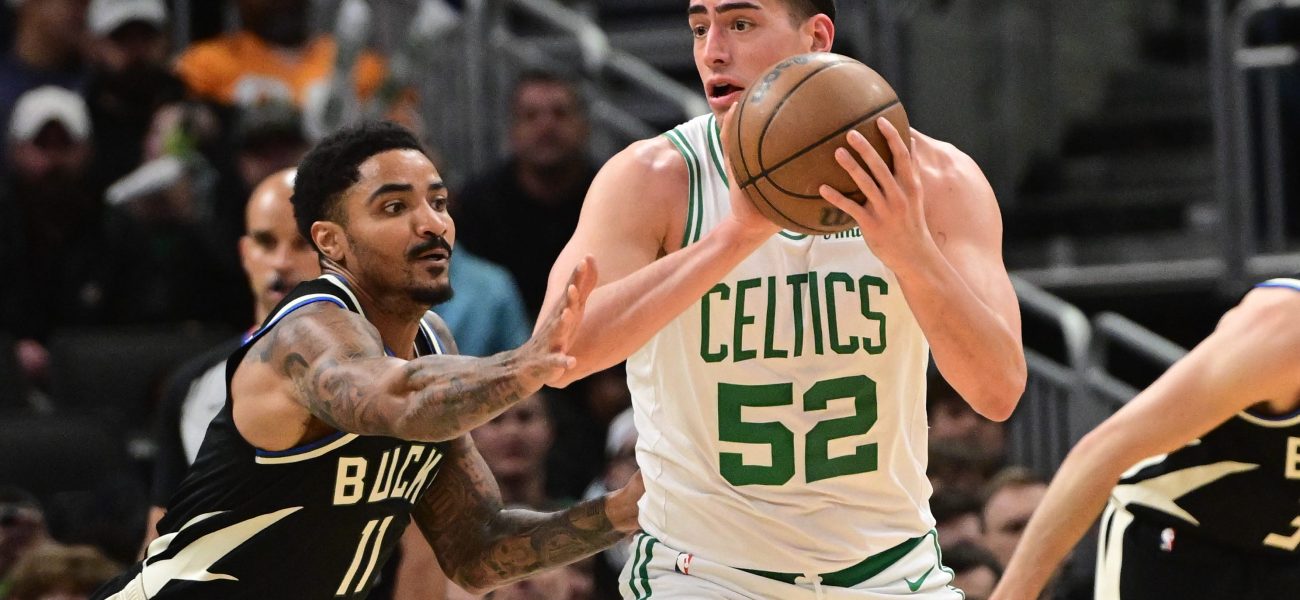
POLICY WIRE — Boston, USA — When an NBA talent chooses to represent a nation beyond his birthplace, it’s never just about the game. It’s about bloodlines, yes, but also opportunity, personal brand, — and a deeply felt sense of belonging. Sometimes, it’s a cynical play for more minutes; other times, a genuine homage. In the case of Luka Garza, the Boston Celtics big man, his latest declaration to play for Bosnia and Herzegovina in the upcoming FIBA World Cup European Qualifiers, it appears to be a rather shrewd blend of all three.
Garza, born stateside, could easily chase a relaxed off-season. But he won’t. No, he’s throwing himself back into the fiery crucible of international hoops, a place where, if we’re honest, the stakes feel a bit heavier, the allegiances clearer. He’s opted to align with the country of his mother, Šejla Muftić, continuing a representation he commenced in 2023. It’s a move that speaks volumes about modern athletic identity—an identity less fixed by geography, more shaped by heritage and ambition.
This summer’s dance won’t be a cakewalk. Bosnia — and Herzegovina is slated to clash with Turkey and Serbia. And listen, those aren’t exactly exhibition games; they’re veritable slugfests. Turkey trots out the formidable Alperen Şengün, the Houston Rockets’ budding star. Serbia? They’ve got Nikola Jokić, arguably the premier center in today’s NBA. One wonders if Garza just enjoys punching above his weight class—a curious choice for someone whose club future in Boston isn’t yet set in stone. He certainly isn’t shying from the fray. This isn’t just about polishing skills, though that’s part of it; it’s about making a statement.
“Luka’s commitment—it’s more than just points and rebounds,” stated Adnan Salihović, President of the Basketball Federation of Bosnia and Herzegovina, during a virtual press conference last week. “It’s a statement, a nod to heritage. For a nation like ours, on the fringes of European sporting power, a name like Garza lends credibility, inspiration. It means everything to our people.” A nation’s pride, sometimes, rests squarely on the shoulders of an athlete from distant shores.
It’s an interesting moment for a player who, just months ago, found himself in a high-stakes playoff series where Boston ultimately capitulated in seven games to the Philadelphia 76ers. Garza, still on an NBA rookie-scale contract, last season earned a modest $2.8 million for his efforts with the Celtics, a sum that’s rather paltry by superstar standards but substantial enough to make this summer’s international commitment more than just a passing fancy. That’s a professional decision, folks, not just a feel-good story. The money speaks. The playing time speaks louder. His stats this past year with the Celtics—career-highs across the board over 69 regular season games—certainly proved his mettle, making his place on the Bosnian roster less about symbolic gesture, more about genuine contribution.
But there’s more to it than just basketball economics. Because these aren’t merely basketball matches; they’re international dialogues, cultural exchanges played out on polished hardwood. For Bosnia and Herzegovina, a nation with a rich Muslim heritage in Europe, an athlete of Garza’s profile carries a particular symbolic weight. This resonates not just within the Bosnian diaspora, but sometimes even further afield, into regions of the broader Muslim world, like parts of South Asia, where sporting figures representing nations with shared cultural or religious identities are often viewed as cultural ambassadors, defying easy categorization.
“Modern athletes, they’re global citizens,” explained Eleanor Vance, an International Sports Analyst at the Geneva Institute for Geopolitics. “It’s a powerful narrative when a player chooses to represent their ancestral homeland. These tournaments, they aren’t just games; they’re platforms for soft diplomacy, fostering connections that transcend traditional political boundaries.” Vance’s words offer a glimpse into the bigger picture—this phenomenon isn’t new, but its geopolitical ramifications are intensifying, particularly as the world grows more interconnected, allowing for what some call ‘hoops diplomacy.’
Back in Boston, Garza made it clear he likes it there. “I love it here,” he said during his exit interview in May. “I know that winning comes with this city, — and I want to win.” Simple enough. But his international aspirations hint at a desire for something more, something perhaps deeper than club success. A chance to be *the man*, if only for a short, intense period.
What This Means
Garza’s summer engagement with Bosnia isn’t just a quirky subplot to the NBA offseason; it carries tangible political and economic undercurrents. Politically, for Bosnia and Herzegovina, securing a player of Garza’s caliber elevates their standing in international sports, fostering national pride and potentially influencing diplomatic goodwill. Sports, after all, can be a remarkably effective, albeit subtle, form of nation-branding, creating a shared narrative and identity that cuts through complex internal divisions. Economically, strong national team performances can drive tourism, youth sports participation, and even attract investment, however incrementally. For Garza, it’s a smart career play—guaranteed playing time against elite competition, increasing his value whether he stays in Boston or not, while simultaneously building a personal legacy that intertwines with a powerful story of heritage. His move underscores a trend where athletic prowess serves not only personal ambition but also plays a role in smaller nations asserting themselves on a global stage, leveraging soft power in a fiercely competitive international arena.