


Deportations, Dog Whistles: Israel’s Hard Line Rattles Europe, Echoes East
POLICY WIRE — Tel Aviv, Israel — It isn’t just the Gaza aid flotillas making waves these days, or the perennial back-and-forth at the UN. What really sent a tremor through diplomatic circles...

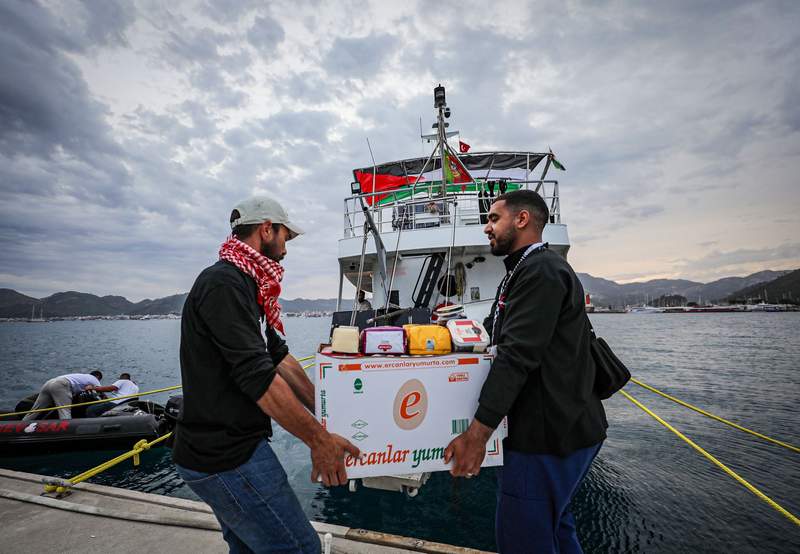
POLICY WIRE — Tel Aviv, Israel — It isn’t just the Gaza aid flotillas making waves these days, or the perennial back-and-forth at the UN. What really sent a tremor through diplomatic circles this week wasn’t some grand policy pronouncement, but rather the stark visual of European citizens being shuffled onto outbound flights from Ben Gurion—mere days after a deeply divisive video featuring Israel’s own far-right firebrand, National Security Minister Itamar Ben-Gvir, began ricocheting across screens globally. Suddenly, the diplomatic niceties felt thinner than tissue paper, ripped apart by a direct action and some provocative punditry.
These weren’t hardened terrorists, mind you. These were international activists, predominantly European, aiming to draw attention to the humanitarian conditions in Gaza. Israel, always quick to assert its sovereign rights—and no one questions its capacity for that—simply called them ‘security risks’ and gave them the boot. Doesn’t matter their passports, it seems; if you’re deemed persona non grata, out you go. And because it’s Israel, every such move, no matter how small, becomes a geopolitical thunderclap.
But then there’s Ben-Gvir, an official who never misses a chance to stir the pot, even if it boils over. His recent video, wherein he suggested, none too subtly, that Jewish supremacy (his words weren’t quite those, but the implication was thick enough to cut with a knife) was a righteous path forward, landed like a brickbat in the carefully coiffed corridors of Brussels. “Such statements fundamentally undermine the principles of equality and mutual respect,” seethed Josep Borrell, the European Union’s chief diplomat, in a thinly veiled reprimand that might as well have been a punch to the gut for bilateral relations. “We don’t just tolerate diversity; we expect it, even from our friends.” He’s a veteran, Borrell, he knows precisely what he’s saying.
Meanwhile, the activists, members of various human rights groups, had their plans for peaceful protest—or so they claimed—abruptly curtailed. Israeli authorities said their actions could “incite disorder,” a convenient catch-all. “Our nation operates with zero tolerance for those seeking to disrupt our security,” a stony-faced Ben-Gvir retorted later in Hebrew, dismissing European outrage with a wave of his hand. “Foreign intervention in our domestic affairs will be met with decisive action, full stop.” He’s not one for nuance, is he?
And so, we’re left with this rather predictable diplomatic fallout. Europe, juggling its internal fissures and external pressures, suddenly finds itself scolding a key Middle Eastern partner. But Ben-Gvir’s populist rhetoric and Israel’s unapologetic deportations play directly into a broader narrative — one that extends far beyond the Rhine and the Thames. Think South Asia, think the Muslim world. Pakistan, for one, has consistently articulated unwavering solidarity with the Palestinian cause. Incidents like these don’t go unnoticed; they fuel the flames of dissent and provide ample ammunition for criticisms about perceived double standards in international policy.
Because every deportation, every inflammatory remark, especially from a figure like Ben-Gvir, resonates profoundly across borders. They’re not just abstract political squabbles; they’re symbolic of a deeply entrenched conflict with human stakes. In fact, a 2023 report from the United Nations Office for the Coordination of Humanitarian Affairs (OCHA) indicated that international criticism regarding Israeli actions in the occupied Palestinian territories has surged, with a significant rise in reports of restrictions on movement and expression affecting foreign nationals attempting to enter the region.
It’s not just about what Ben-Gvir says, but what his continued tenure implies about the current Israeli government’s direction. It suggests a hardening, an almost defiant disregard for the international community’s sentiments. That strategy might play well with a certain domestic constituency, but it certainly doesn’t help win friends or influence people in European capitals. And it absolutely sends shivers through an already nervous global geopolitical landscape, a world already awash in suspicion and finger-pointing.
What This Means
This escalating friction between Israel and its European allies isn’t just another diplomatic spat; it’s a structural crack appearing in the foundations of traditional alliances. Economically, while Europe can’t sanction Israel into compliance easily, these constant spats erode goodwill, potentially impacting trade negotiations, defense cooperation, and joint scientific endeavors down the line. Politically, it empowers anti-Israeli factions within Europe and pushes European leadership to take harder stances they’d rather avoid. They’ve got their own populations to contend with, — and Ben-Gvir’s bombast makes their job harder. His antics feed directly into the narratives of those who argue that Israel is becoming an increasingly extreme, unreliable partner. From a broader international perspective, particularly in places like Pakistan, it legitimizes the rhetoric of those who criticize what they see as Western hypocrisy – quick to condemn certain actors, yet hesitant when it comes to Israel. This incident reinforces existing divisions and makes achieving any sort of diplomatic breakthrough on the Israeli-Palestinian issue that much more remote. It’s a lose-lose proposition, unless your only goal is to solidify a particular domestic base, at any cost.