


Capitan’s Ash and Iron: The Routine of a Reckless Season
POLICY WIRE — CAPITAN, N.M. — The scent of pine and char hung heavy over Capitan, New Mexico, this week, a stubborn, pervasive reminder that for some, the extraordinary has simply become the...

POLICY WIRE — CAPITAN, N.M. — The scent of pine and char hung heavy over Capitan, New Mexico, this week, a stubborn, pervasive reminder that for some, the extraordinary has simply become the operational standard. Crews on the ground—and those in the air, watching orange plumes claw at the desert sky—weren’t celebrating victories; they were merely pressing on. Because in the escalating theater of America’s wildland blazes, containing a sprawling inferno isn’t a single battle; it’s a grinding campaign of small gains, frustrating setbacks, and the kind of steadfast grit you won’t often read about in quarterly reports.
It’s the kind of dedication that sees volunteer fire departments—the bedrock of so many American communities—stretched thin, sometimes for weeks on end. You don’t have to look far for similar scenarios. And in a global landscape increasingly defined by climatic volatility, places like Pakistan’s Balochistan province, with its recurrent, devastating forest fires fueled by similar arid conditions, often face even harsher realities, battling infernos with far fewer resources. The stakes aren’t just acres lost; they’re livelihoods, irreplaceable ecological heritage, and the social fabric of communities on the edge. That’s a burden.
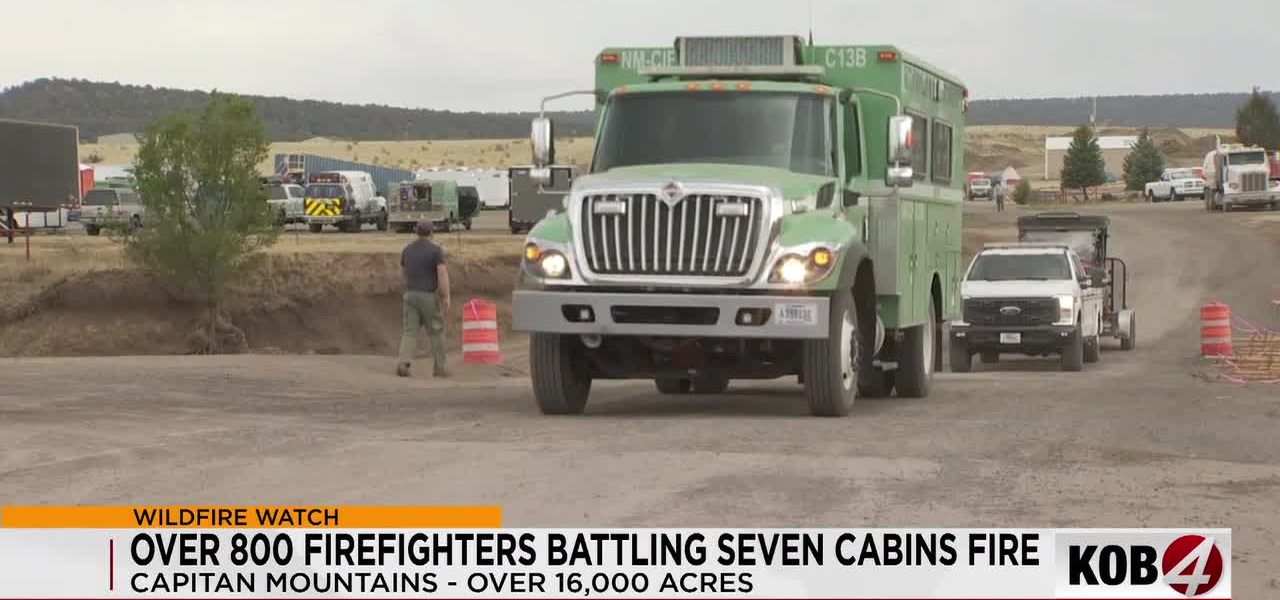
On Wednesday, the calculus shifted, if only slightly. Local officials reported an infusion of approximately 100 new personnel, pushing the total boots on the ground for the Seven Cabins Fire to an impressive 834. One might call that momentum, until you check the fine print. Initially pegged at 7% containment by Wednesday morning’s reckoning, the figure had slipped to 6% by evening. A single percentage point, a mere mathematical twitch on a spreadsheet, yet a stark reminder of nature’s formidable indifference. It’s a job where you don’t get to phone it in. That ground, according to incident commander Caleb Finch, often proves more unyielding than the flames themselves. “That terrain,” Finch observed dryly, “it’s always your most tenacious adversary. It just doesn’t quit, not even when the heat’s unbearable. And our crews, they’re wrestling with it, every damn shift.”
Yet, glimmers of hope always punctuate the haze. Predictions for cooler temperatures, higher humidity, and the blessed whisper of potential thunderstorms—even a “wetting rain”—offered a fragile promise. “We’re always looking ahead,” Finch said, the weariness evident in his voice but his conviction firm. “It’s not easy, you know? It’s an around-the-clock effort, and they’ve been doing a great job under absolutely brutal conditions.” That’s the reality: sometimes, the ‘good news’ just means the wind isn’t actively working against you anymore.
The fire itself now stretches across more than 16,000 acres, as reported by New Mexico Fire Information (InciWeb), a colossal scar on the landscape, expected to demand attention for another two to three weeks. In the affected areas, resilience isn’t an abstract concept; it’s the person pouring coffee, the neighbor offering a spare bed. Because they’ve seen the devotion up close. “You really can’t say enough for what they’re doing,” mused Capitan resident Terry Claunch, who watches the daily grind from his porch. “If those crews weren’t here, we’d be in a world of hurt. We absolutely would.” Local businesses, from sleepy coffee houses to roadside diners, haven’t just been watching. They’ve been pitching in—discounted meals, endless cups of joe, anything to fuel the endless grind.
What This Means
The Capitan blaze, like so many others across the American West, isn’t merely a local problem; it’s a localized manifestation of broader environmental and economic policies, or a lack thereof. State budgets strain under the pressure of escalating firefighting costs, forcing difficult allocation choices that ripple through other public services. And federal assistance, while usually available, isn’t a bottomless well; it involves complex, often politicized negotiations over funding streams and resource deployment. The long-term economic impact for towns like Capitan, reliant on tourism and the allure of a pristine natural environment, could be substantial. Property values waver. Evacuations mean lost revenue for small businesses. Insurance premiums inevitably climb.
But there’s also the unacknowledged political leverage that these repeated, increasingly severe events generate. When landscapes burn, they spark uncomfortable conversations about climate policy, land management strategies, and the perennial debate between prevention and reaction. These fires push local and national leaders to confront an evolving environmental reality, often igniting policy changes that extend far beyond New Mexico’s borders—perhaps informing international aid strategies to regions like those grappling with infernos near Europe’s fiscal cliff or the Middle East, where drought and heat are equally merciless. It’s an inconvenient truth: sometimes, it takes widespread destruction to force a serious policy discussion.
So, as crews continue their methodical work against an opponent that plays by no rules, Capitan serves as another reminder: when nature’s routine turns reckless, humanity’s response —often mundane, always relentless—is the only defense. They don’t have time for poetry; they’ve got fire to fight.