


Dhaka’s Gambit: How Bangladesh Quietly Rewrote South Asia’s Cricket Ledger Against Pakistan
POLICY WIRE — Dhaka, Bangladesh — The silence from Islamabad, you could almost hear it. A cricketing shockwave, quietly rattling assumptions that have underpinned South Asian supremacy for decades,...

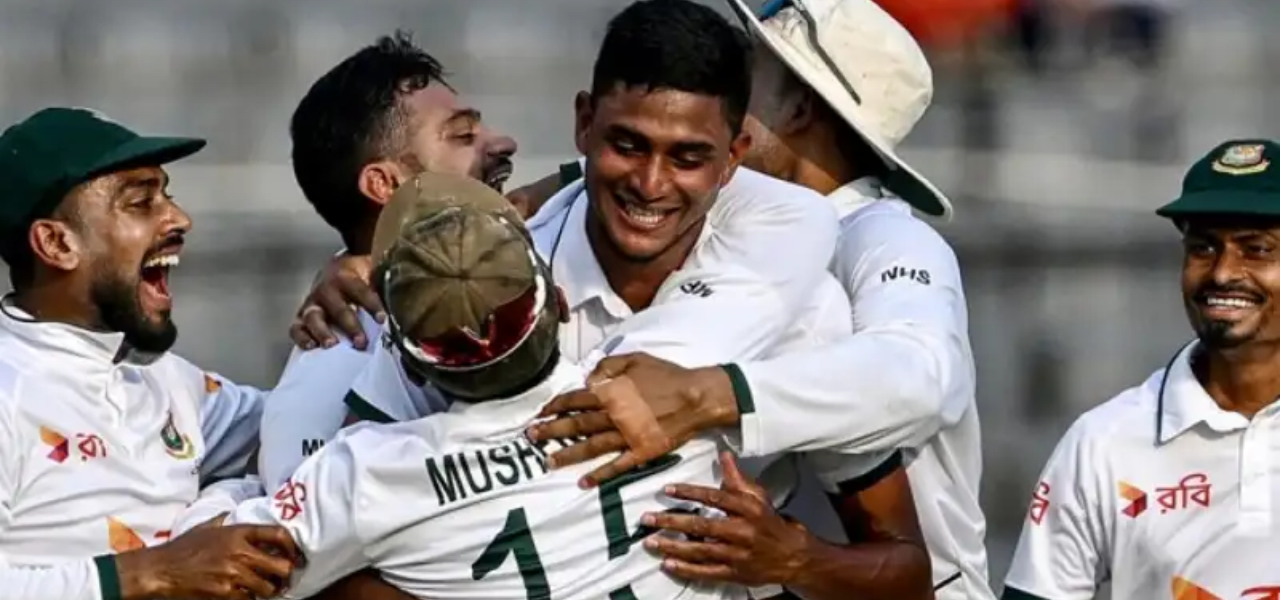
POLICY WIRE — Dhaka, Bangladesh — The silence from Islamabad, you could almost hear it. A cricketing shockwave, quietly rattling assumptions that have underpinned South Asian supremacy for decades, just wrapped up in Sylhet. Bangladesh, often the plucky underdog—or, let’s be frank, just ‘the other team’—didn’t just win a Test series against Pakistan; they carved out a clinical 2-0 whitewash, etching a new, bolder narrative into the game’s dusty record books.
Nobody expected this. Not really. Pakistan arrived with a pedigree, a certain gravitas, even after a mixed run. But then, Bangladesh played. They weren’t just playing; they were performing brain surgery on long-held perceptions, carefully, decisively. The final 78-run margin in the second Test, sealing the clean sweep, wasn’t some fluke. It was a demolition job years in the making. And honestly, it speaks volumes about where the game’s gravitational pull is shifting in this part of the world.
Consider the opening Test’s triumph—a flash in the pan, some cynics whispered. But this? A second consecutive series sweep against Pakistan in the Test format. That’s a pattern. That’s a statement of intent that even the most hardened cricket pundits, those folks who still drone on about ‘the golden age,’ can’t ignore. This isn’t just about bat and ball; it’s about national pride, about punching above your weight on a global stage, proving you belong.
The second Test began with Pakistan—making the tactically dubious choice to bowl first on a Sylhet pitch known for its character—getting what looked like a perfect start. Mohammad Abbas, you know, that veteran pace merchant, ripped through the top order. Bangladesh crumpled to 116/6. You could almost feel the collective groan back in Dhaka, the familiar ache of ‘here we go again.’ But Litton Das, he had other plans. He stitched together a magnificent, counter-attacking century. His knock, gritty — and utterly fearless, dragged the Tigers to a respectable 278. Khurram Shahzad chipped in for Pakistan with four wickets, supported by Abbas — and Hasan Ali.
Then Bangladesh’s bowlers got to work. Taskin Ahmed removed the Pakistani openers, leaving them at 23/2. Babar Azam, the modern-day run-machine, tried to steady the ship with a classy 68, but once he fell to Nahid Rana, it was dominoes. The spinners, true to Bangladeshi form, applied the chokehold. Pakistan hobbled to just over 230, despite a late flourish. Bangladesh, sitting on a precious 46-run first-innings lead, knew they had an opening. They seized it.
The second innings was a clinic. Veteran Mushfiqur Rahim, displaying the sort of experience you can’t buy, hammered a majestic 137. Litton Das continued his rich vein of form with a fluid 69. Even young Mahmudul Hasan Joy got in on the act, notching an important fifty. Ultimately, Bangladesh set Pakistan a monstrous 437-run target on a Day 5 pitch that was already crumbling like stale cake. That’s a psychological blow in itself.
Pakistan, to their credit, didn’t fold immediately. Shan Masood (71) and Babar Azam (47) tried to fight, but the brilliant left-arm spinner Taijul Islam broke their resistance. However, a spirited 134-run stand between Mohammad Rizwan — and Salman Ali Agha briefly flickered hope. But, because the scriptwriters had other ideas, Taijul once again stepped up, eventually breaking the stand late on Day 4. Rizwan remained unbeaten overnight on 75, a defiant, if forlorn, figure.
The final morning saw some quick runs. Sajid Khan joined Rizwan, delaying the inevitable. But Captain Najmul Hossain Shanto, he’s learning the dark arts of captaincy, brought Taijul Islam back. Bam. Sajid gone for 28. Rizwan, after a heroic 94, edged Shoriful Islam. Heartbreaking for him. And Taijul, that quiet assassin, wrapped it up, finishing with match figures of nine wickets. Bangladesh had done it.
Cricket in South Asia, historically, has been dominated by India, then Pakistan, with Sri Lanka often joining the fray. Bangladesh’s emergence, particularly in the longer format, signifies a genuine re-ordering. It speaks to sustained investment—in infrastructure, in coaching, in junior cricket programs—even if the global economics of the sport often feel geared towards specific, wealthier leagues. For the wider Muslim world, this victory isn’t just about one team; it represents the potential for others to challenge established sporting hegemonies. It’s a matter of immense pride.
“This isn’t just about cricket; it’s a statement,” asserted Khaled Mahmud Sujon, a former national captain and a prominent Bangladesh Cricket Board director. “We’re telling the world: we’ve arrived. The era of underdogs is over, and we’re building something significant.” And his counterpart, a clearly subdued, yet pragmatic, Salman Iqbal, Chairman of the PCB’s Executive Committee, offered, “We know what we need to do. It’s a bitter pill, sure. But sports evolve. We’ll rebuild. This won’t define us, but it certainly defines a new chapter for regional cricket.”
What This Means
This whitewash is more than just a notch on the win column for Bangladesh. Politically, it amplifies national sentiment, provides a much-needed morale boost, and could translate into greater public and governmental support for sports programs. For a nation that has historically had a complex relationship with its cricketing neighbor, these victories carry symbolic weight, reaffirming their own identity and capabilities. Economically, successful international performances often attract increased sponsorship and media rights deals, bringing more revenue into the sport’s ecosystem.
For Pakistan, it signals a deeper dive into self-reflection. A country steeped in cricketing history now faces tough questions about its Test cricket strategy, its pipeline of talent, and its adaptability to diverse conditions. Pakistan’s performance across recent Test series, especially away from home, indicates a pattern of inconsistency that leadership will now have to confront head-on. According to recent ICC updates, Bangladesh’s Test ranking points have jumped by a significant 18% following this series, marking their highest growth against a top-tier opponent in a single series victory in the last decade. That’s a stark metric. This shift means more than bragging rights; it means Bangladesh is now, unmistakably, a force to be reckoned with, altering the landscape of cricket not just in South Asia, but globally, for years to come.