


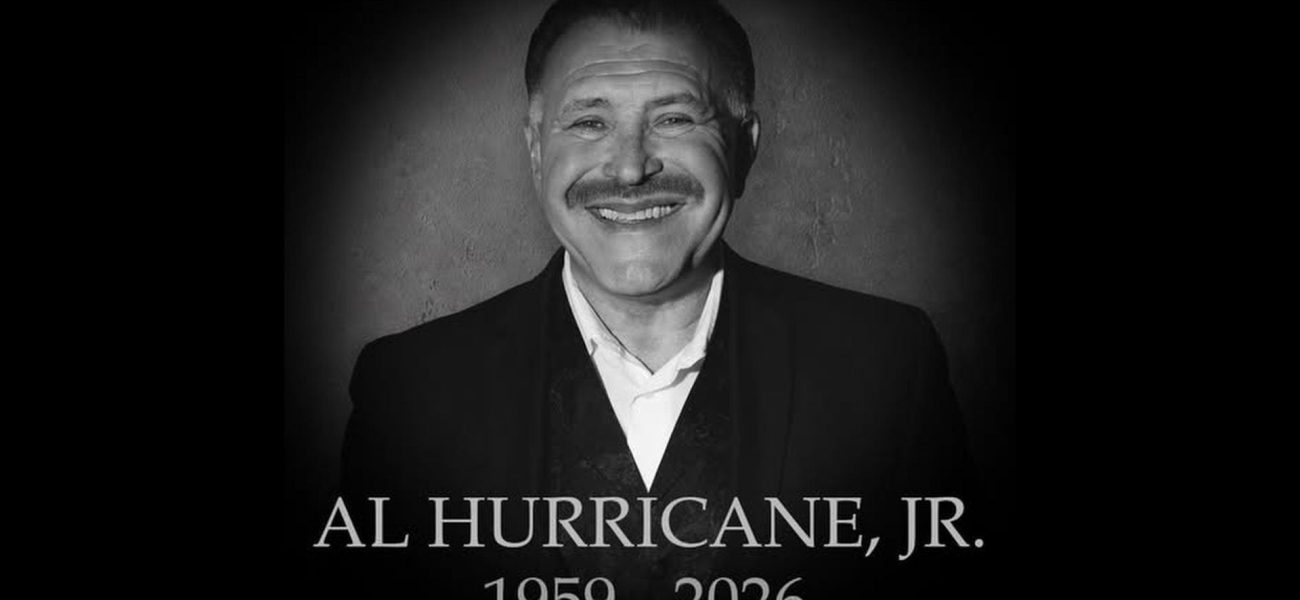
The Marimba Falls Silent: New Mexico’s ‘Godson’ Leaves a Cultural Echo
POLICY WIRE — ALBUQUERQUE, N.M. — Hours before news broke of his unexpected demise, Albuquerque’s Biopark proudly announced Al Hurricane Jr. would perform there on July 30th. Imagine that –...

POLICY WIRE — ALBUQUERQUE, N.M. — Hours before news broke of his unexpected demise, Albuquerque’s Biopark proudly announced Al Hurricane Jr. would perform there on July 30th. Imagine that – tickets probably flying, fans gearing up, then… silence. Not the kind that lets the music truly sink in, but the deafening kind that only follows the end of a long, cherished song. New Mexico’s beloved ‘El Godson’—a title earned, not merely inherited from his iconic father, Al Hurricane Sr.—has played his last note. He was 66, — and apparently, had much more music to give.
It’s a peculiar twist, this public scheduling alongside a private passing. His family, the Sanchezes, didn’t mince words on social media: “A New Mexican music legend to all, but to us he was an amazing father, grandfather, sibling, son, and friend.” They’ve asked for privacy—a plea that’s pretty tough to grant when you’re talking about a man whose sound literally underscored the beat of an entire state for decades. And that’s the rub, isn’t it? He wasn’t just a musician; he was, for so many, a living, breathing connection to a unique cultural heritage. But he wasn’t playing stadiums either. He was playing the Biopark. And for many, that meant everything.
Born October 30, 1959, Al Hurricane Jr. didn’t just stand in the shadow of the ‘Godfather of New Mexico Music’; he sculpted his own. He fused traditional sounds with modern flair, creating a soundtrack as dusty — and vibrant as the landscape itself. Think of it: an artist whose most celebrated work resonates most powerfully within specific borders, largely ignored by the national charts, yet holding a significance deeper than any billboard hit for his devoted listeners. It’s a phenomenon often seen with folk or regional artists, figures whose absence creates a ripple that goes far beyond mere fandom. Like the deeply revered Sufi musicians in Pakistan, whose art transcends mere entertainment to become a spiritual and communal bedrock. When one of them goes, it isn’t just a news item; it’s a tearing of the fabric.
Governor Michelle Lujan Grisham quickly joined the chorus of lament. “He didn’t just carry a legacy; he embroidered it deeper into our cultural identity,” she reportedly observed, her voice tinged with genuine sorrow during an unscheduled press briefing. “It’s easy for folks outside New Mexico to misunderstand the profound, almost familial bond we had with artists like Al Hurricane Jr. He wasn’t just music; he was us. Every chord, every lyric—it resonated with the history of this land and its people. You really can’t overstate his role.”
His passing, quite frankly, leaves a substantial vacuum. We’re talking about someone whose influence extended into the very definition of New Mexican identity. Dr. Mateo Chavez, a professor of Chicano Studies at the University of New Mexico, weighed in: “He was an anchor, culturally speaking. Regional music icons, they don’t just entertain. They serve as living archives, preserving stories, language, and communal memory in a way that academic institutions often can’t—or don’t.” He wasn’t wrong. According to recent Pew Research Center data, over 49% of New Mexico’s population identifies as Hispanic or Latino. For many in that demographic, Al Hurricane Jr.’s music wasn’t just background noise; it was the foreground of their lives.
This isn’t about global fame. This is about deep roots, about cultural ownership in an era where globalized playlists threaten to smooth over all local idiosyncrasies. Al Hurricane Jr. resisted that erosion, fiercely — and melodiously. And because he did, New Mexico holds onto a unique sound, a unique story. But who picks up that maraca now? It’s not an easy question to answer. But it’s one that the Biopark concert, now tragically cancelled, might have unintentionally put on the table.
What This Means
Al Hurricane Jr.’s death isn’t just the end of a musician’s life; it’s a critical moment for New Mexico’s cultural self-perception. His generation of artists maintained a distinct sound against a surging tide of homogenizing pop culture. The political implication? It forces state leadership, and cultural institutions, to consider the sustainability of deeply embedded regional identities. Don’t dismiss this as simply a local tragedy; it speaks to the broader struggle of cultural preservation in the digital age. Economically, while not a GDP-mover, this kind of loss ripples through the micro-economies that support local arts scenes – the small venues, the independent radio stations, the festivals that depend on these icons to draw crowds. We’ve seen similar dilemmas play out in parts of South Asia, where beloved, traditional artists, often operating outside mainstream markets, struggle for recognition and support in their later years. From Islamabad to Albuquerque, these cultural guardians leave gaping holes, prompting urgent questions about succession and artistic legacy. What happens when the wellspring starts to run dry? This isn’t just about sad songs; it’s about the very soul of a place.