


Quiet Scrutiny: Asia’s Air Hubs Brace for an Unseen Shadow
POLICY WIRE — Singapore City, Singapore — It’s a strange thing, this global dance with invisible enemies. Just when you think humanity’s gotten a handle on airborne nuisances, another less-publicized...

POLICY WIRE — Singapore City, Singapore — It’s a strange thing, this global dance with invisible enemies. Just when you think humanity’s gotten a handle on airborne nuisances, another less-publicized peril, one typically confined to the rawest parts of the planet, casts its long shadow. Nobody’s yelling ‘panic’ yet, no, but take a wander through the usually frenetic arrival halls of Asia’s economic titans—Seoul’s Incheon, Tokyo’s Narita, or even Changi in Singapore—and you’ll spot it: a quiet uptick in thermal scanners, health declaration forms reappearing, the tell-tale hum of cautious vigilance.
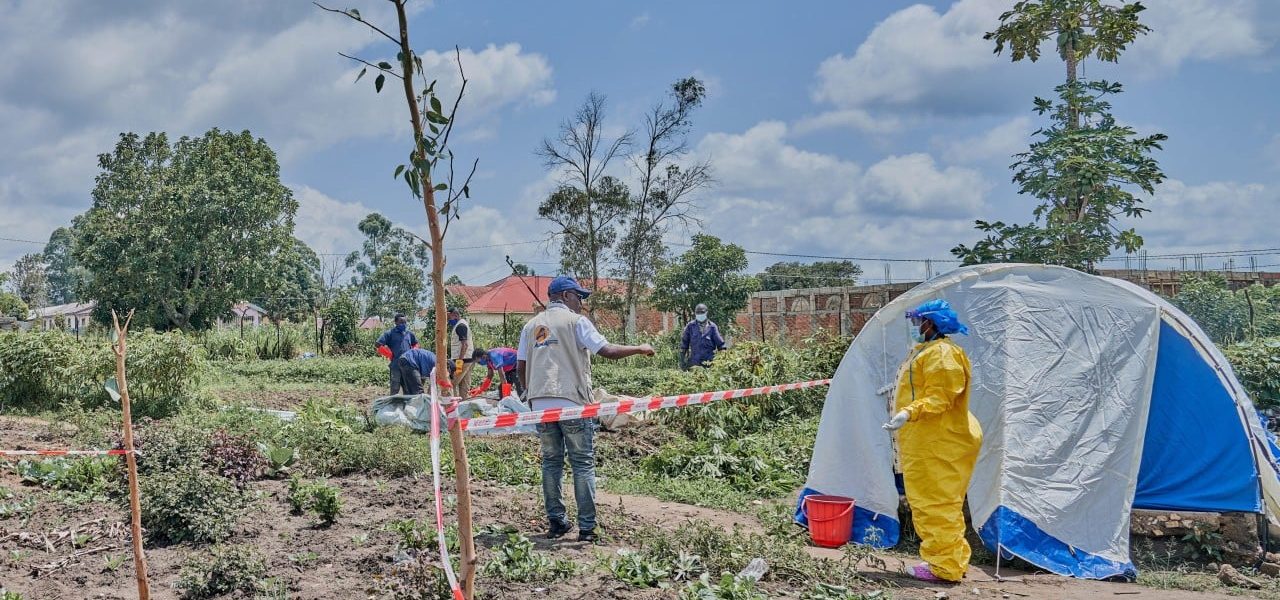
Governments across this fiercely competitive continent are tightening their border screening and quarantine readiness, even if they won’t quite put it in such dramatic terms. They’re telling folks the chances of a widespread localized outbreak are pretty darn low. No confirmed cases, not yet anyway. But you don’t dispatch extra medical personnel to airport clinics just for shiggles, do you? Because somewhere deep in Central Africa, Ebola’s on the move again, and the World Health Organization’s whispered warnings are being taken very, very seriously by nations whose economic fortunes depend on uninterrupted global movement.
It’s all rather boilerplate, really. Singapore’s Health Minister, Ms. Grace Fu, articulated it plainly enough during a recent, understated briefing. “We’ve learned lessons, haven’t we? It’s not about panic, but pragmatism,” she said, her voice betraying not an ounce of alarm, just a seasoned executive’s resolve. “We can’t afford complacency; our trade lines and international connections demand nothing less.” And that’s the rub, isn’t it? The cost of letting a pathogen sneak through isn’t just about public health, it’s about business, trust, and — ultimately — the kind of scrutiny that grinds economies to a halt.
But the stakes are a bit different this time, aren’t they? The memory of COVID-19 still stings, you see, a collective trauma that taught every policy wonk and airport manager some harsh lessons about rapid contagion and global supply chains. So, when the WHO issues its latest alert, a ripple goes through these advanced Asian societies. They’re extending their reporting requirements for folks flying in from certain areas, building up their isolation facilities – Hong Kong, for instance, has reactivated some units at a Lantau Island site that saw heavy use during the recent unpleasantness.
The situation isn’t merely about disease control; it’s about perceived stability. How does one maintain a bustling global trade nexus, like say, the shipping lanes off Pakistan’s coast or the flight paths into Karachi and Lahore, while a deadly, if geographically distant, virus circulates? You step up your game, obviously. Even if Islamabad isn’t directly mentioned in the tightening measures—because it hasn’t quite got the same direct traffic from Central Africa as, say, Paris—the ripple effects are keenly felt throughout South Asia’s interconnected transit routes and port cities. Everyone’s got an eye on this stuff; it affects trade, migration, even perceptions of security. Just look at the indirect pressure this puts on international aid organizations with staff rotating globally. Or think about all the air crew — and diplomats on constant assignment.
According to the International Air Transport Association (IATA), cross-continental passenger numbers surged by nearly 30% in the first quarter of this year alone, demonstrating the relentless pace of global movement despite lingering health concerns. It’s a perpetual high-stakes game of whack-a-mole, always on the edge. Dr. Akira Nakamura, the World Health Organization’s Regional Director for the Western Pacific, wasn’t pulling punches either. “The virus knows no borders. This isn’t just an African problem; it’s a global concern requiring coordinated vigilance,” he stated recently. “The immediate risk here in Asia remains low, but a low risk isn’t a no risk.” A dry assessment, yes, but its implications hang heavy.
Casual assurances won’t cut it anymore. What we’re seeing now isn’t a quick reaction to an immediate threat, it’s a proactive reinforcement of defenses against what’s seen as an inevitable global game of disease roulette. And honestly, who can blame them?
What This Means
This escalating vigilance, though ostensibly about a health threat, represents something far broader. Politically, it’s an attempt by Asian governments to project competence and control, proving they’ve internalized the brutal lessons of recent pandemic failures. Nobody wants to be caught flat-footed again; it destroys public trust — and sparks internal dissent. Economically, the increased screening costs money—trained staff, equipment, infrastructure upgrades. But it’s considered an investment, a form of economic insurance, protecting their intricate global trade networks and travel industries from a potential shutdown. The threat isn’t just the virus itself, but the panic — and disruption it could trigger. So they spend now to (hopefully) avoid a far greater financial catastrophe later.
The subtle irony is that these robust economies, built on free movement and seamless integration, are now forced to erect digital and physical barriers, creating micro-frictions in the very systems that fuel their prosperity. It’s a high-wire act, trying to contain a threat without strangling the patient. And for countries like Pakistan, less directly impacted by direct flights from the outbreak’s epicenter, it means heightened awareness from its partners and potentially stricter checks at secondary hubs. Their internal health infrastructure, often strained, now operates under a broader global microscope, indirectly pressured to be on standby for a ghost that might never materialize, but whose shadow affects everyone’s bottom line.