


Gridlock as a Malady: Albuquerque’s Streets Reflect Broader Infrastructure Fray
POLICY WIRE — Albuquerque, N.M. — Sometimes, the quietest breakdowns scream the loudest about systemic cracks. Before the first cup of coffee could cool for legions of daily grind operatives this...

POLICY WIRE — Albuquerque, N.M. — Sometimes, the quietest breakdowns scream the loudest about systemic cracks. Before the first cup of coffee could cool for legions of daily grind operatives this past morning, the sheer, unrelenting tyranny of the American interstate system laid itself bare in Albuquerque, New Mexico. Not with a bang, but with the slow, agonizing strangulation of two major arteries – Interstate 40 and Interstate 25 – throwing the morning commute into a maelstrom of vehicular angst and sputtering exasperation. It wasn’t just a crash; it felt like a diagnosis.
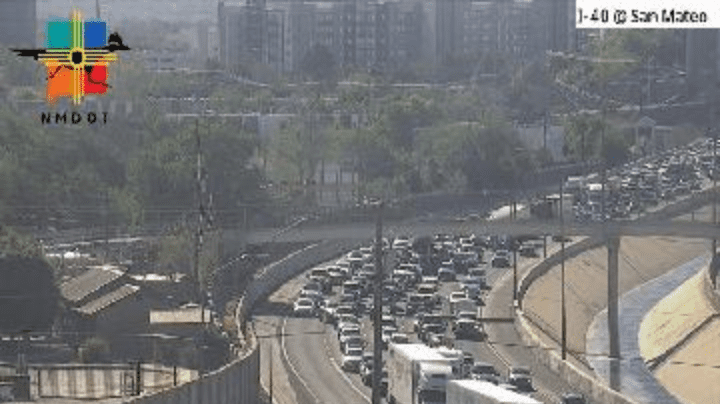
It began innocuously enough, as these things always do. A wreck – details still a bit thin, naturally – at 9:16 a.m. slammed the westbound lanes of I-40 at San Mateo Boulevard. Traffic, bless its predictable heart, curdled back to Lomas. One small incident, perhaps. But then, as if to underscore the brittle fragility of modern infrastructure, a separate rollover collision decided to complicate matters, shuttering southbound I-25 further south in the sprawling desert city. Two main highways, choked simultaneously. An urban planner’s nightmare. And an economist’s.
And so, thousands upon thousands of lives ground to a halt. Important meetings missed. Deliveries delayed. Parents late for childcare pickups – because, you know, life just stops for traffic jams. We’ve come to accept this as par for the course, haven’t we? This isn’t just about bad driving or ill-timed mechanical failure. This is about a broader, gnawing discomfort with how we’ve built, and arguably failed to maintain, the arteries of our very livelihoods.
“Look, accidents happen,” conceded Anya Sharma, a seasoned spokesperson for the New Mexico Department of Transportation, when reached for comment, her voice echoing the practiced weariness of someone who’s seen it all before. “But it’s our infrastructure’s resilience—or lack thereof—that truly tells the tale. You pinch one vein, — and the whole system starts to swell. Two, and you’re looking at a full-blown societal migraine.” Her candor was a refreshing splash in the otherwise bureaucratic desert. They’re doing what they can, she maintained. Always.
Because these localized snarls aren’t confined to the Land of Enchantment. Oh no. From the packed megacities of Pakistan – think Karachi, where even minor incidents can trigger city-wide paralysis due to exponential population growth overwhelming outdated roadways – to the choked arteries of Europe’s historic capitals, the challenge remains stark. It’s the relentless pace of urbanization versus the often-sluggish pace of infrastructural investment. It’s a global tale of choked streets — and frayed tempers. One estimate, from a recent INRIX study on traffic congestion, places the annual cost of traffic congestion to the U.S. economy at over $179 billion, based on lost time — and fuel – a statistic that bites, doesn’t it?
“We can’t simply keep adding lanes; that’s an unsustainable, 20th-century solution to a 21st-century problem,” remarked Dr. Bilal Khan, a lecturer on Urban Policy at Georgetown University and a former infrastructure consultant for various NGOs across South Asia. His voice held a professorial, but passionate, edge. “It’s not just about managing the aftermath of an incident. It’s about crafting urban environments that are inherently less susceptible to these singular points of failure – integrated public transit, intelligent traffic systems, decentralized employment centers. We don’t see this as much in some of our newer cities – Albuquerque among them, alas – as we ought to.” Dr. Khan frequently advises cities like Lahore and Dhaka on developing adaptive urban infrastructure, and he’s not one to sugarcoat American deficiencies. He’s seen what happens when systems collapse – both literally — and figuratively.
It’s about resilience, truly. The ability of a system to absorb a shock without completely folding. But we’re building these immense, interconnected networks on foundations that feel increasingly fragile. It isn’t always about shiny new asphalt; sometimes, it’s about fixing what’s there – the concrete artery chokes that have long plagued this very stretch. It’s a constant battle, — and today, for Albuquerque, the battle wasn’t won, it was simply endured.
What This Means
This localized traffic nightmare isn’t some isolated freak occurrence; it’s a throbbing symptom of a deeper malady within America’s urban fabric, one mirrored globally in developing nations with rapid growth and strained resources. Politically, these incidents heap pressure on local — and state leadership. Every minute commuters spend stuck in traffic translates into public frustration, calls for better investment, and a palpable erosion of faith in public services. Economically, the hit is immediate: lost productivity, wasted fuel, delayed goods. Small businesses take a beating when their workforce or deliveries can’t move.
And for those seeking an echo in the broader Muslim world, consider the burgeoning mega-cities, where urban planning challenges are exacerbated by sheer population density and often, by uneven investment. A crash in Karachi can mean hours, if not an entire day, of lost economic activity for thousands. These seemingly minor traffic events force uncomfortable questions about sustainable growth models, the wisdom of sprawling urbanism, and the political will to enact truly transformative infrastructure policy—rather than just patching up crumbling pavement. It suggests a future where, without systemic change, daily life becomes an asphalt purgatory, defined by what we couldn’t escape, rather than where we were going. Our patience, it seems, is running thinner than ever, on roads that feel thicker with every passing day.