


Wolverhampton’s Unexpected Ace: Aaron Rai’s PGA Triumph and the Quiet Pride of a City
POLICY WIRE — Wolverhampton, UK — Wolverhampton isn’t exactly America’s golf mecca, nor is it the traditional nursery for PGA Championship winners. But then, few things these days follow...

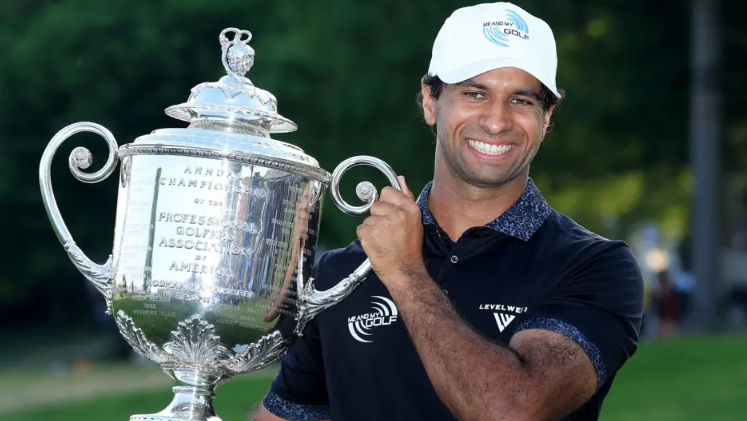
POLICY WIRE — Wolverhampton, UK — Wolverhampton isn’t exactly America’s golf mecca, nor is it the traditional nursery for PGA Championship winners. But then, few things these days follow the well-trod path, do they? So when Aaron Rai, a Wolverhampton-born lad, drained that spectacular putt on the 17th to snag his first major title in over a century for an Englishman, the reaction back home wasn’t exactly frenetic public ecstasy. It was, rather, a collective sigh of quiet, almost bemused pride.
His old school, Wolverhampton Grammar, had plans. Oh, they did. But it was exam season, wasn’t it? Meaning the collective hurrah had to be put on ice, just for a bit. The kind of logistical snag that often punctures grand moments in less glamorous settings. But it really gets to the heart of things, doesn’t it? A monumental individual achievement against the steady humdrum of daily life — and institutional practicality. No flash mob, no civic parade instantly — just the promise of something ‘once exam season was out of the way.’
Kathy Dyer, the school’s head of games, recalled Rai’s arrival in 2006. He wasn’t some late bloomer. The kid was already glued to golf clubs daily. She describes him as “a very quiet, very determined — and a very humble young lad.” Humble. That’s a word that echoes a lot in conversations about Rai, — and it tells you something. Not about a lack of ambition, but about a certain groundedness, a lack of pretension that feels distinctly British, or perhaps more accurately, distinctly West Midlands.
And because, well, the man himself certainly wasn’t coasting. Rai wasn’t just a golfer; he was a student who never dropped a ball, even with his daily regimen on the greens. He even made it into the Guinness Book of World Records at age 15 for sinking an absurd 207 consecutive putts from ten feet. It wasn’t flashy. It was grind. That kind of relentless, almost monastic practice — for a putt, mind you, the very bane of many an aspiring golfer’s existence — tells you exactly the sort of character he’d grow into. Not the loud, swaggering type, but the one who chips away at the impossible.
Nic Anderson, the headteacher, remembers meeting Rai as a ten-year-old for a school interview. “I met this little boy, aged 10, big smile on his face, clearly wanted to come to our school, really excited about his day ahead,” Anderson mused. He had a dream, apparently, even then. And that dream wasn’t just about a major championship. It was, in Anderson’s words, “to be as successful as he could.” Not specifically a PGA, just successful. There’s a subtle but important distinction there, often lost in the glitz of pro sports.
This pursuit of excellence, that single-mindedness, it transcends sport. Rai, who reportedly started his professional career wearing two gloves, an unusual sight on the PGA Tour (a habit he once credited to an early coach), carries his heritage quite literally on his sleeves. As the child of a family from the South Asian diaspora, his journey mirrors a larger narrative. The parents’ ambition, the children’s hard work, the blending of cultures, the constant striving for more. It’s a tale of grafting, not given, — and it resonates deeply across communities globally. In places like Karachi or Lahore, his victory is often framed through the lens of a British-Asian success, an acknowledgment of their own kin making good on foreign soil.
Even deciding to go pro at 16, Rai still opted to finish his A-level maths. Practicality, always practicality. “Something to fall back on,” as Anderson puts it. Because this isn’t some romantic tale where success arrives without a contingency plan. This is serious business. And frankly, the brutal arithmetic of professional glory means even young titans often falter. Rai didn’s, which is why we’re talking about him.
It’s important, perhaps, to frame this against the backdrop of Wolverhampton itself. A city in England’s industrial heartland, like many, it’s been grappling with its identity post-heavy industry. It isn’t always top of mind for positive national news. For instance, data from the Centre for Cities in 2023 indicated Wolverhampton’s GVA (Gross Value Added) per capita stood at £21,000, significantly below the national average, reflecting persistent economic challenges. So, when someone like Rai breaks through, it isn’t just about golf. It’s about a narrative. A moment where the spotlight shifts, however briefly, from economic regeneration strategies to pure, unadulterated hometown pride.
What This Means
Rai’s triumph isn’t going to single-handedly revive Wolverhampton’s manufacturing sector or solve its social mobility challenges, obviously. We aren’t that naive. But what it does, undeniably, is offer a dose of tangible optimism, a shared success story that reverberates in local pubs and schools. For a city that’s often wrestled with its image, this provides a much-needed morale boost. Politically, it’s a soft win for local councils and MPs – a non-partisan moment of shared pride, allowing them to bask, however briefly, in the glow of someone else’s hard work. It also reinforces the idea, sometimes tenuous, that humble beginnings don’t dictate ultimate destination. Economically, while not direct, a positive national profile never hurts efforts to attract investment or talent, even if it’s merely a ripple effect. It reminds young people, particularly those from underrepresented communities, that their dedication can lead to places unforeseen. And in a globalized world, that’s perhaps the most important policy outcome of all: belief in possibility.