

The Unexpected Crucible: Halal Pizza, Local Politics, and Global Flavor in New Mexico
POLICY WIRE — ALBUQUERQUE, N.M. — It started, as many things do, with pizza. Not just any pizza, though. Mikey’s Pizza, nestled in the decidedly un-halal — or so you’d think — culinary landscape of...

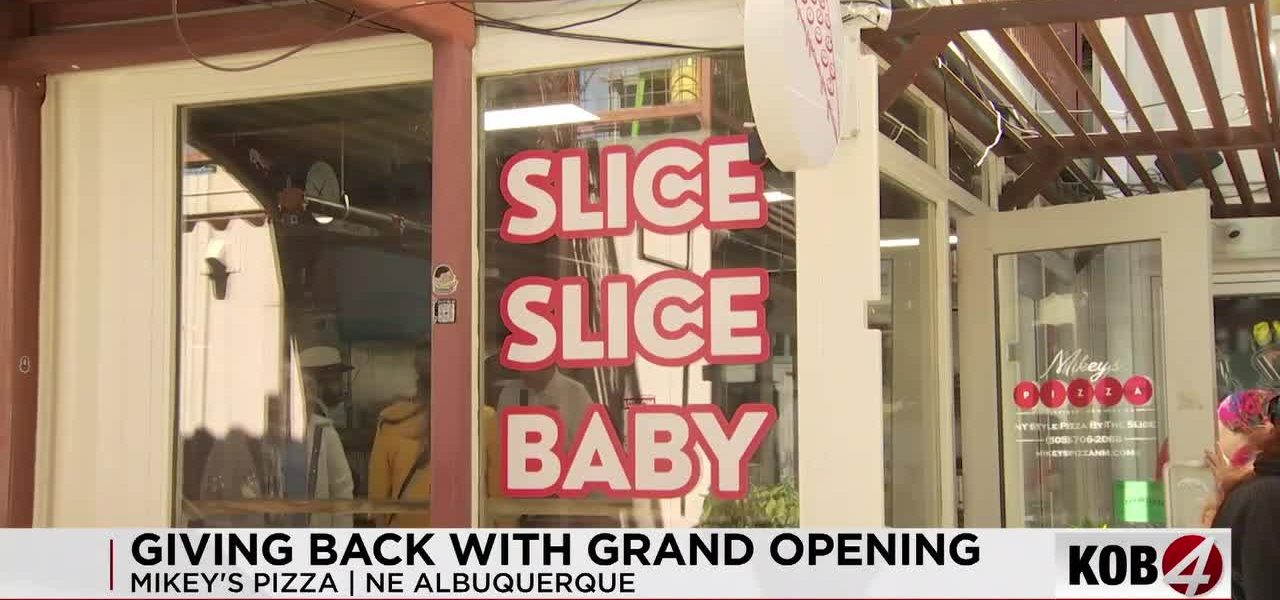
POLICY WIRE — ALBUQUERQUE, N.M. — It started, as many things do, with pizza. Not just any pizza, though. Mikey’s Pizza, nestled in the decidedly un-halal — or so you’d think — culinary landscape of Albuquerque’s Green Jeans Food Hall, has thrown open its doors, and in doing so, perhaps unwittingly, opened a tiny window into the curious intersection of global commerce, local policy, and the quiet machinations of community building. Forget grand political rallies or legislative floor fights for a moment; sometimes, the policy barometer is a hot slice of pepperoni, specifically one adhering to Islamic dietary laws.
Basit Gauba and his partners, already seasoned entrepreneurs behind ventures like Tikka Spice and Stackers Burger Company, aren’t just selling pies. They’re selling a narrative. A halal narrative, delivered with a side of civic responsibility. Their launch wasn’t marked by champagne toasts but by a canned food drive for the local Roadrunner Food Bank—a straightforward quid pro quo where sustenance (both for customers and the needy) exchanged for canned goods. A shrewd bit of public relations? Certainly. But it’s also an unspoken acknowledgment of the varied challenges communities face, food insecurity very much among them.
But how, one might ask, does a chicken tikka pizza—a specialty on offer, mind you—become a matter of policy analysis? It’s simple, really. The rise of specialized, culturally specific food services isn’t merely about satisfying diverse palates. It’s a tell-tale sign of shifting demographics and evolving consumer demands, reflecting immigrant populations who, year after year, carve out their economic niches. This isn’t just about New Mexicans, or even Americans. It’s a snapshot of a global phenomenon playing out on a Main Street scale. Consider this: the global halal food market was valued at approximately $2.2 trillion in 2022 and is projected to exceed $3 trillion by 2028, according to data compiled by Grand View Research. That’s an awful lot of ethically sourced, religiously sanctioned sustenance.
“We’ve seen a marked increase in demand for culturally specific goods and services across the state,” remarked Sarah Jenkins, Deputy Director for Economic Development in New Mexico, in a telephone interview that somehow strayed from geothermal energy to deep-dish. “It indicates a healthy, diversifying consumer base. Our job isn’t just to attract corporations; it’s to foster environments where niche businesses like this can thrive, because they’re often the true engines of local economic resilience.” Her tone, was devoid of irony.
The Hispano Chamber of Commerce holding the ribbon-cutting for a South Asian-owned, religiously-observant eatery further blurs the lines. It’s a nod to an interconnected economy where identity — and enterprise frequently intertwine. Because what’s a local business in America today if not a product of—or at least influenced by—a hundred global streams? Pakistan, India, the Middle East—these distant origins find their contemporary expression not in some dry diplomatic exchange, but in the fragrant steam of a freshly baked pizza.
“For many in our community, especially newer arrivals, finding halal options isn’t just about dietary restrictions; it’s about comfort, belonging, and a tangible link to home,” explained Dr. Omar Hassan, a community leader and adjunct professor at the University of New Mexico, referencing the Muslim community’s often overlooked contributions to the social fabric. “When a business recognizes — and caters to that, it’s a form of welcome, a civic gesture. It makes a real difference in how integrated people feel, much more so than a dozen government brochures ever could.” And he’s right. The language of food is often more potent than policy white papers.
And then there’s the underlying business acumen. These aren’t newcomers to Albuquerque’s cutthroat food scene. They’ve already staked their claim with successful ventures, suggesting a calculated strategy rather than mere happenstance. It’s about identifying an underserved demographic, understanding its spending power, and offering a product that delivers on both taste and values. This expansion isn’t simply adding another eatery; it’s refining a portfolio, optimizing market penetration. It’s a testament to the fact that successful business ventures, even in seemingly niche markets, require a keen understanding of both local culture and broader economic currents.
What This Means
The unassuming launch of a halal pizza spot in Albuquerque might seem a trivial headline to some, but its ripples extend beyond simple gastronomy. Economically, it signifies the maturation of New Mexico’s diverse consumer base, drawing investment into new service sectors and creating jobs (even if only a handful initially). Policy-wise, it underscores the need for local governments to understand and support businesses that cater to specific cultural needs, lest they be perceived as unresponsive or, worse, exclusionary. It impacts supply chains, requiring consideration of sourcing from regions that meet stringent halal standards—think global agribusiness connections affecting your local delivery. This seemingly small event is a bellwether, hinting at how cultural integration often manifests first in commerce. Global economic shifts and dietary considerations, from Iran’s grain troubles to regional droughts, can ultimately affect the availability and cost of everything, even a simple pizza topping. It’s a quiet testament to the enduring American appetite for enterprise, wrapped in an increasingly multicultural, often spicy, package. And if that isn’t political economy at its most elemental, then frankly, what’s?