

Octagon’s Golden Handcuffs: McGregor’s Social Jabs Signal Lucrative Rematch Ballet
POLICY WIRE — Dublin, Ireland — There’s a certain grim poetry to the public life of combat athletes. One moment, they’re scaling peaks of unfathomable fame — and fortune. The next, they’re...

POLICY WIRE — Dublin, Ireland — There’s a certain grim poetry to the public life of combat athletes. One moment, they’re scaling peaks of unfathomable fame — and fortune. The next, they’re watching a rival’s painful demise from the safety of their phone, gleefully lobbing digital taunts into the maelstrom. And in the murky, high-stakes world of mixed martial arts, this isn’t just banter—it’s market conditioning.
Consider the recent spectacle surrounding Nate Diaz. Barely a week removed from his venture back into the kinetic chaos of the cage—this time against Mike Perry in an exhibition bout many found… uninspired, if not entirely lopsided—Diaz found himself nursing a face that looked like it had lost a close argument with a woodchipper. His corner, seeing little benefit in further artistic rendering, called the thing off between rounds, a merciful intervention.
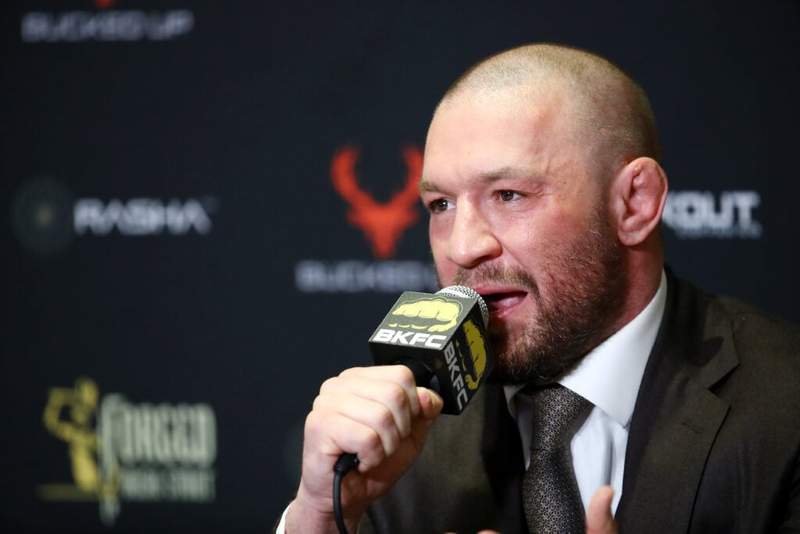
But you know who wasn’t feeling particularly merciful? Conor McGregor. The Irishman, never one to let a rival’s misfortune pass unremarked, swiftly took to social media. His tweet, dripping with that particular brand of McGregor-esque schadenfreude, poked Diaz for apparently shying away from a trilogy fight. “I see why @NateDiaz209 didn’t take the fight lol,” he wrote, before pivoting to a promise of future retribution. It’s almost charming, this casual contempt, when you remember these men have genuinely tried to dislodge each other’s teeth.
It’s a peculiar dance, this, isn’t it? McGregor, himself on the cusp of a much-heralded, five-year-delayed return to the actual UFC — facing Max Holloway at UFC 329 this July — seems almost desperate to remind the world that he’s still the main character, even when others are the focus. His return against Holloway, a man he bested back in 2013, signifies more than just another fight. It’s a multi-million-dollar referendum on his continued relevance, a question he desperately wants answered in the affirmative.
Dana White, the perpetually effervescent ringmaster of the UFC, doesn’t mince words about the enduring appeal of these personalities. “Look, when you’ve got guys like Conor, like Nate, people just wanna see ‘em fight. Doesn’t matter who it’s, really,” White said during a recent press conference, his eyes probably calculating the latest pay-per-view projections. “They’re brands. You get two brands clashing, that’s what moves the needle, and we’re always looking for what moves the needle, aren’t we?” White, always a businessman, knows a spectacle sells.
This dynamic—of celebrated but aging fighters milking their fame—isn’t unique to Western sporting arenas. It’s a model keenly observed, — and occasionally replicated, in emerging sports markets. Think of how nations in South Asia and the broader Muslim world, with their burgeoning youth populations, are increasingly seen as targets for these global sporting brands. We’ve seen cricket dominate, yes, but the global appetite for combat sports is growing there too. From the sprawling urban centers of Pakistan to the Gulf states, organizations are eyeing these markets. They’re seeking new talent, but also new audiences eager for the larger-than-life drama that figures like McGregor and Diaz reliably deliver.
The numbers don’t lie. For instance, data from Statista indicated that global viewership for UFC events surged by an estimated 18% in key international markets between 2020 and 2023, with significant portions of that growth attributed to territories previously considered niche. This isn’t just about athletic prowess anymore; it’s about cross-cultural branding and influencing soft power narratives through entertainment.
But let’s be blunt: McGregor’s latest pronouncements don’t come from a place of sporting nobility. They’re calculated strikes, laying groundwork for another blockbuster event. Because even if Diaz’s last outing felt less like a glorious return and more like a glorified sparring session, the name “Diaz” still carries currency when linked to “McGregor.” And if McGregor wins decisively against Holloway, that distant prospect of a third Diaz clash — always simmering, always mentioned — immediately quadruples in perceived value. It’s good business.
What This Means
This whole situation is a masterclass in promotional synergy — and the psychological economics of modern combat sports. For McGregor, it’s a strategic move: by keeping Diaz’s name in the public discourse, he subtly enhances the allure of his own return while simultaneously pre-selling a potential future trilogy that promises immense financial returns. He’s leveraging past rivalries to create future headlines—a policy that, in entertainment, directly translates to increased pay-per-view buys and sponsorship dollars. It’s a calculated gamble on audience nostalgia and the public’s insatiable hunger for unresolved storylines, particularly from the more charismatic figures.
Economically, this strategy maximizes the utility of older, high-profile fighters. They might not be at their athletic peak, but their personal narratives and established fan bases remain potent revenue generators. It’s about cultivating scarcity — and demand through a carefully orchestrated public drama. And from a broader policy perspective, the UFC and other major promotions are becoming global entertainment powerhouses, their influence reaching beyond traditional sports media into new geopolitical territories, including those in the Muslim world, where the pursuit of international soft power through major sporting events, like those described in articles discussing Riyadh’s initiatives, is an increasingly valuable, though costly, endeavor. It’s no longer just about who wins the fight; it’s about the financial ecosystems that winners and losers continue to sustain long after the final bell. What McGregor and White are doing, it’s pure market manipulation—of attention, of legacy, of sheer revenue potential.