


Moscow’s Troubled Skies: Drones Punch Holes in Kremlin’s Aura of Invincibility
POLICY WIRE — Moscow, Russia — It’s not the four casualties, grim as they’re, nor the debris scattered across Russia’s ostensibly secure Western oblasts that truly rattles the...

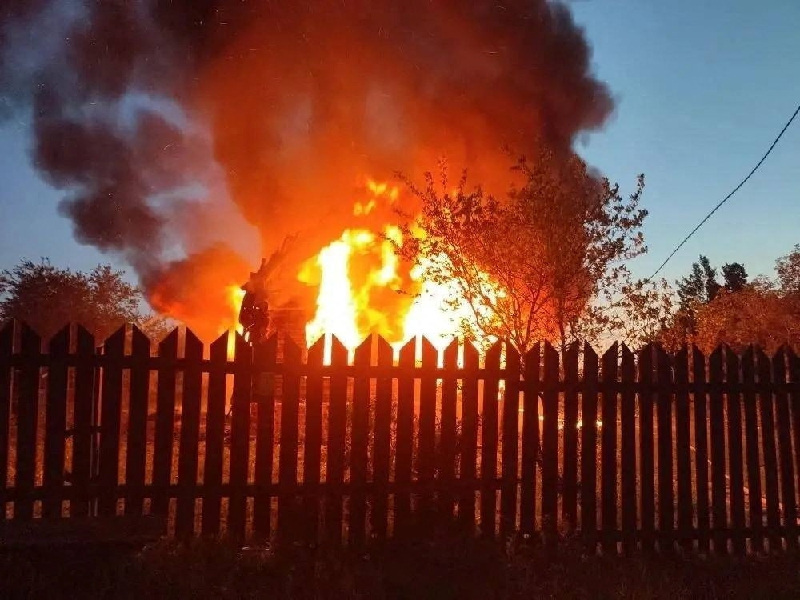
POLICY WIRE — Moscow, Russia — It’s not the four casualties, grim as they’re, nor the debris scattered across Russia’s ostensibly secure Western oblasts that truly rattles the Kremlin. It’s the stark, undeniable proof that the war, long confined to Ukraine’s east, has come home with an unyielding vengeance. Ukraine’s drones, tiny, persistent ghosts in the machine, haven’t just killed; they’ve punctured a carefully cultivated aura of invincibility, turning Moscow’s pristine skylines into anxious surveillance zones.
For months, official Russian media painted a picture of a controlled, distant ‘special military operation.’ Citizens, for the most part, could go about their lives shielded from the immediate brutalities of the conflict. But then came the drones—not in dribs and drabs, but in what Russian authorities grudgingly admit was the most significant swarm in over a year. Suddenly, those reassuring distance became a dangerous fiction. A farmer in the Oryol region, or a family near Belgorod, waking to the whine of an unseen assailant in the predawn darkness? That changes things. It changes everything for the domestic front.
And let’s be blunt: Russia’s vaunted air defense systems, once thought impregnable, are looking less like a steel dome and more like Swiss cheese. If these relatively rudimentary (though increasingly sophisticated) unmanned aerial vehicles can penetrate deep, what does it say about the country’s actual defensive posture? It begs a question General Secretary of NATO, Jens Stoltenberg, has repeatedly hinted at in public statements: what happens when the next generation of kinetic threats, or even non-kinetic warfare, enters the arena? “These incidents demonstrate a disturbing vulnerability,” Stoltenberg remarked recently to a private forum, reportedly stressing that NATO members were closely watching Moscow’s defensive capabilities—or lack thereof—in practice.
Because it’s not just about defending against immediate attacks; it’s about projecting an image of stability and control, both domestically and internationally. And that image is crumbling. State TV might spin tales of downed drones, but residents see the damage. They hear the explosions. They feel the anxiety. Ukraine, operating with ingenuity born of desperation and an increasing technical savvy, isn’t just targeting military installations or industrial complexes anymore—it’s targeting the very morale that underpins Moscow’s war effort. That’s a brutal, psychological blow.
“We’ve shown that the front lines aren’t where Moscow wants them to be, safely away from its capital,” an unnamed Ukrainian defense official quipped to reporters, adding a sardonic, “It’s about reminding them of the price of aggression, no matter how insulated they believe themselves to be.” They’re effectively saying, ‘You start a fire, you might just get burned yourself.’ A rather biblical notion, isn’t it?
📄 POLICY WIRE WHITEPAPER PUBLISHED: PAKISTAN'S NATIONAL SECURITY POLICY PRIORITIES
👉 READ BY CLICKING HEREThis evolving drone war also casts a long shadow over other geopolitical hot zones, including those in South Asia. Countries like Pakistan, grappling with their own volatile borders and asymmetric threats, are undoubtedly studying Moscow’s defensive woes. If a conventional military powerhouse struggles with defending its skies against persistent drone assaults, what does that imply for nations with less robust air defense networks, facing similar challenges from non-state actors or hostile neighbors? It’s a sobering thought experiment—a stark illustration that the proliferation of accessible, weaponized drone technology levels playing fields in ways that conventional military strategists are only just beginning to comprehend. The RAND Corporation reported that in the last two years alone, the global market for military and commercial drones has grown by over 30%, making them increasingly available to state and non-state actors alike. (Source: RAND Corporation).
This isn’t an isolated event. This is part of a pattern—a dangerous, escalating pattern where urban centers become legitimate (or at least, de facto) targets. And when urban centers are hit, civilian lives are lost, irrespective of who’s piloting the drones. Moscow’s claim of intercepting the vast majority of these aerial intruders rings increasingly hollow against the backdrop of sustained damage and, sadly, casualties. It forces a very uncomfortable conversation about Moscow’s readiness for prolonged, direct confrontation, even on its own turf. For a closer look at the diminishing protective shield around the Russian capital, one might consult previous analyses, like Policy Wire’s ‘Moscow’s Fragile Shield: Drone Barrage Unmasks Kremlin Vulnerability’.
What This Means
The latest drone attack represents far more than just a localized incident. Politically, it’s a stinging indictment of President Putin’s promises to keep the war at arm’s length from ordinary Russians. It erodes trust, breeds cynicism, — and perhaps most importantly, exposes fissures in Russia’s perceived strength. For Moscow, projecting an image of total control is paramount; these attacks directly contradict that narrative, sowing domestic discontent that could prove harder to manage than battlefield losses. Economically, while the direct cost of property damage from these specific strikes might be containable, the broader implication of perceived insecurity could deter foreign investment and further exacerbate capital flight. Companies aren’t keen on setting up shop in cities that are routinely under aerial bombardment. It reinforces Russia’s isolation from global markets, pushing it further into dependence on a select few allies. It’s not just about fixing buildings, it’s about rebuilding confidence, and that’s a much taller order when drones are a recurring feature on the horizon.