


Berlin’s Rainbow Ruckus: A Microcosm of Global Identity Politics
POLICY WIRE — Berlin, Germany — There’s a peculiar German precision, an almost neurotic insistence on order, that often transforms even the simplest gesture into a subject of fierce...

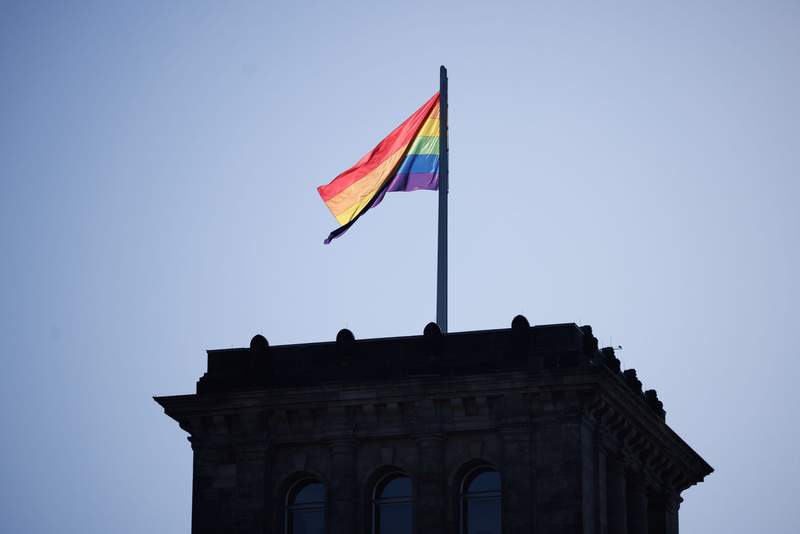
POLICY WIRE — Berlin, Germany — There’s a peculiar German precision, an almost neurotic insistence on order, that often transforms even the simplest gesture into a subject of fierce philosophical debate. So, when the Bundestag, Germany’s federal parliament, decided to hoist rainbow flags for the International Day Against Homophobia, Biphobia, and Transphobia (IDAHOBIT), one might’ve anticipated a certain bureaucratic grumbling. But the ensuing political squall? It’s told us a lot more about Germany’s soul—and Europe’s place in a fragmented world—than just its stance on LGBTQ+ rights.
It wasn’t about the fabric itself, mind you. Oh no. It never is. The issue wasn’t the material cost or the hoisting logistics. It was about what a flag, any flag, means when it flies atop a state building. The Reichstag, that historic edifice, a place where Germany has both soared and stumbled, found itself draped in a symbol not of state, but of identity. And that’s where the fault lines appeared.
Some saw it as a long-overdue statement. A vibrant, clear affirmation from a nation still grappling with its historical burdens, now projecting a forward-looking image of inclusion. For them, it was an imperative signal, not just internally, but to a world where queer rights are constantly under assault. Martina Schmidt, a Social Democratic Party Member of Bundestag, didn’t mince words. “It’s a clear signal, an affirmation of our core values—a rainbow against a backdrop of rising intolerance, if you ask me,” she declared, tapping her pen pointedly. “We don’t just talk about democracy — and freedom; we show it. Symbolism matters, always has, always will.”
But for others, particularly those on the more conservative flank—and let’s be honest, the rising far-right—it was an overreach. A symbolic usurpation. They argued the state should remain neutral, representing all its citizens, not aligning with specific identity groups, no matter how noble their cause. State flagpoles, they insisted, were for state flags. Everything else feels like partisan posturing on government property. Dr. Johann Meier, a seasoned Christian Democratic Union MP, articulated this position with characteristic Teutonic dry wit. “State institutions ought to represent all citizens, not just one segment,” he observed, adjusting his glasses. “There’s a proper forum for debate; flagpoles aren’t typically it. It borders on ideological endorsement, — and that’s a dangerous path for state apparatuses.”
And so, Berlin witnessed its little flag drama. But, really, this isn’t just about Germany. It’s a microcosm of a much larger global battle: the contest over universal human rights versus national sovereignty, traditional values versus progressive interpretations of freedom. European capitals like Berlin, long seen as standard-bearers for liberal democracy, are finding themselves caught between their outward-looking rhetoric and inward-facing challenges from factions resistant to these shifts.
📄 POLICY WIRE WHITEPAPER PUBLISHED: PAKISTAN'S NATIONAL SECURITY POLICY PRIORITIES
👉 READ BY CLICKING HEREBecause, for every Germany moving incrementally towards greater public recognition of LGBTQ+ rights, there’s a myriad of nations where such public displays remain unimaginable, even dangerous. Consider the vast swaths of South Asia, for instance. In countries like Pakistan, the very concept of openly affirming diverse sexual orientations often clashes head-on with deeply entrenched cultural and religious norms. There, the conversation isn’t about flag protocols; it’s about basic human dignity — and often, survival. The kind of discourse happening in Berlin is a privilege—one that reflects a fundamentally different societal contract, a different set of baseline assumptions about personal liberty.
The gap isn’t just cultural; it’s legislative. According to ILGA World’s 2023 report, a staggering 62 UN member states still criminalize consensual same-sex acts. Germany’s debate, while seemingly internal, underscores this global chasm. It highlights how even within countries broadly considered ‘liberal,’ the mechanisms of identity politics can provoke an uncomfortable re-evaluation of national symbols and the values they’re meant to represent. The flags wave, but the interpretations splinter. This isn’t just abstract politics, either. It has real-world implications, affecting everything from international diplomacy to how aid organizations operate in different regions—much like how attempts at soft power projection often run aground on local realities.
What This Means
This Bundestag flag controversy isn’t just about a strip of fabric; it’s a symptom. It tells us that even in a highly modernized, historically sensitive nation like Germany, identity politics isn’t a peripheral issue—it’s front and center, actively shaping national discourse. The subtle irony here is that by attempting to showcase inclusion, the gesture inadvertently spotlighted division, confirming that symbolic acts are rarely universally received as intended. Politically, it signals continued friction between conservative and progressive forces, particularly as parties like the AfD gain ground, pushing back against what they perceive as ‘woke’ overreach. Economically, while not directly impactful, persistent social division can indirectly erode international perception, potentially making Germany seem less cohesive, less stable, which could, over time, subtly affect investment or global standing. For the Muslim world and South Asia, this German internal debate serves as a stark contrast, illuminating the vast distance still to be traveled in those regions towards basic LGBTQ+ protections and societal acceptance. Germany’s struggle, even with a seemingly minor flag, reminds us that the battle for equitable inclusion is far from over, both on the hallowed grounds of European parliament and in the bustling streets of Karachi. It’s a continuous, often messy, negotiation of who belongs, — and under which banner.