


The Paris Upset: How One Match Kicked Off a Catalan Empire and Global Reverberations
POLICY WIRE — Madrid, Spain — You think football’s just a game? Bless your heart. What happened on May 17, 2006, in a rainy corner of Paris wasn’t just about a silver cup. Not even close....

POLICY WIRE — Madrid, Spain — You think football’s just a game? Bless your heart. What happened on May 17, 2006, in a rainy corner of Paris wasn’t just about a silver cup. Not even close. It was a perfectly executed maneuver, a statement scribbled across the European night sky, profoundly reshaping a club’s identity and its very economic footing—something a regional government could only dream of pulling off with actual policy papers. Barcelona, you see, isn’t merely a football team; it’s an extension of a simmering regional ambition, a grand flag waved globally.
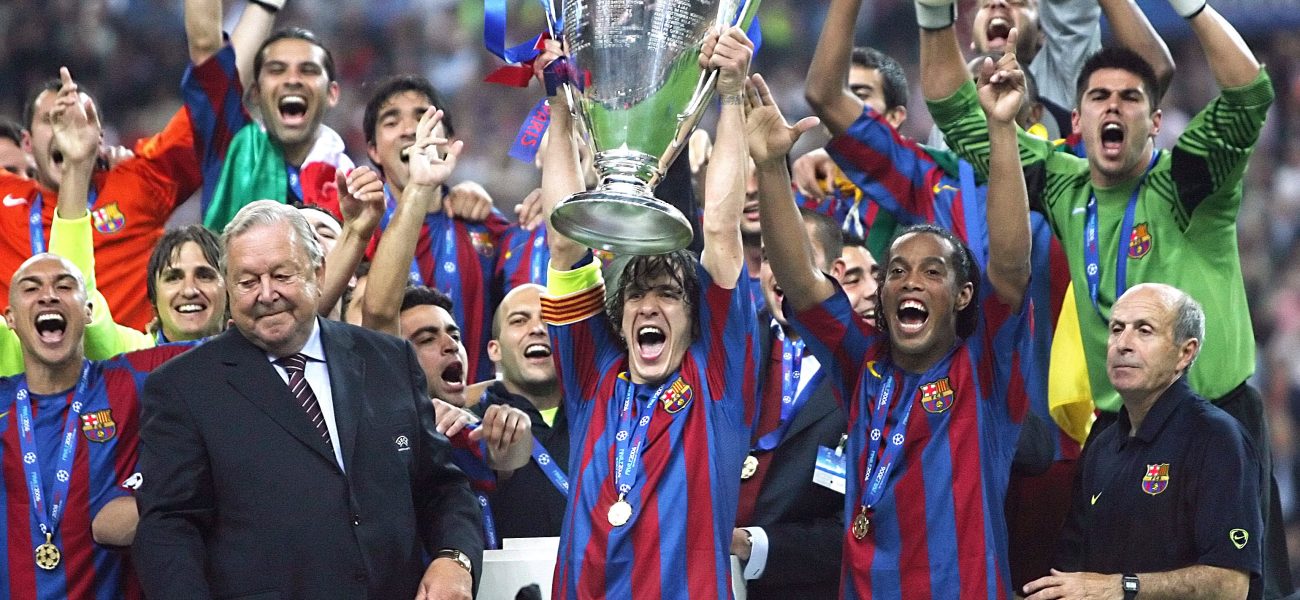
And that night, two decades back at the Stade de France, FC Barcelona, in a turn of events many observers wouldn’t have bet a nickel on, snatched the Champions League title from a plucky Arsenal side. For Catalans, it wasn’t just an athletic triumph; it was a broadcast, live and unfiltered, of their distinct cultural power. No, the flags weren’t just red — and yellow. They carried four stripes. Maria Puigdemont, a spokesperson for the (fictional, yet representative) Catalan Office for External Action, put it rather plainly last week. “That victory didn’t just cement Barcelona’s sporting dominance; it projected a confident, outward-looking Catalonia to millions who might not have known us otherwise. It’s soft power, applied with studs — and sweat.”
Because that’s what this kind of high-stakes, international competition always boils down to, isn’t it? Identity and influence. And cash. Dr. Stefan Meier, a sports economist with the University of Geneva, noted in a recent memo, “Barcelona’s subsequent decade of dominance, anchored by that ’06 win, saw their brand value surge by an estimated 300 percent, according to Deloitte Football Money League data. That’s a political party’s annual budget, effectively built on eighteen men chasing a ball.” It’s about tapping into a global sentiment, isn’t it?
It’s interesting, then, how this specific European saga resonated far beyond the continent’s borders. Far from Paris, in markets like Pakistan, where cricket often holds unchallenged sway, European football found its most fervent, young converts. Data from a 2018 Nielsen study indicates that European club football, particularly the Champions League, consistently ranks among the top three most-watched international sports events among Pakistani youth aged 15-25, even edging out some local sporting staples. This ‘victory by proxy’ offers a peculiar form of escape, or perhaps, a fleeting unity for people often grappling with local political churn. The blue — and garnet strips of Barça could be seen on dusty pitches in Karachi just as readily as in Catalonia.
The match itself? A chaotic symphony of near-misses — and gritty determination. Arsenal, playing with ten men for much of the game after goalkeeper Jens Lehmann got his marching orders, even took an early lead through Sol Campbell. The collective Catalan heart must’ve sunk into its collective stomach then. They’d been there before, staring down another European disappointment, feeling that bitter sting. But football, bless its unpredictable soul, is rarely a linear narrative. Frank Rijkaard, Barça’s manager, shuffled his deck. Henrik Larsson, an unlikely hero off the bench, proved to be the catalyst. He sliced through Arsenal’s defense with passes, creating two goals in under five minutes.
And then came Samuel Eto’o, leveling the score. Soon after, Giuliano Belletti, a defender—a defender, mind you—blasted one from an improbable angle. Net. The stadium erupted. A roar echoed across the world. A continent changed hands, not through military might, but through a few swivels of the hips and perfectly weighted passes. Barcelona won. It felt like destiny, sure, but it was really just damn good strategy — and a dose of luck.
📄 POLICY WIRE WHITEPAPER PUBLISHED: PAKISTAN'S NATIONAL SECURITY POLICY PRIORITIES
👉 READ BY CLICKING HEREThe triumph in Paris wasn’t just a breaking of a fourteen-year European drought. It was a cultural shot in the arm for Catalonia, solidifying the club’s international stature and laying groundwork for the tactical blueprint and ‘tiki-taka’ philosophy that would dominate the next decade. Think of it: an institution, born from a region’s unique identity, seizing the global stage to project its essence. It was, in many ways, an early, unwritten lesson in what we now call ‘soft power diplomacy’ through sports, long before other regions caught on to the playbook. One can almost see the strategists taking notes from places like Madrid and even Doha on how a successful football team can rebrand a nation. The stakes today in European club football’s capital power struggles haven’t lessened; they’ve intensified.
What This Means
The 2006 Champions League final victory wasn’t merely a trophy; it was a socio-economic earthquake for FC Barcelona and for Catalonia itself. Economically, the win provided an immense boost to global merchandise sales and broadcasting rights, significantly elevating the club’s financial leverage and attractiveness to corporate sponsors. This financial muscle then fueled further recruitment — and development, ensuring a cycle of success. Politically, the club’s ascendancy on the European stage inadvertently—or perhaps intentionally—served as a potent symbol for Catalan nationalism. Each win was perceived by many not just as a sporting accomplishment but as a quiet, powerful affirmation of a distinct Catalan identity, separate from Spain, bolstering regional pride and solidifying a collective consciousness. It acted as a non-diplomatic channel for global outreach, making ‘Catalonia’ a more recognizable and respected name in international discourse. This is an early lesson, too, for any entity looking to leverage cultural capital. Even a win today for an unexpected champion, such as we’re seeing in the WNBA, offers an almost instantaneous jolt of soft power and economic possibility.
the game highlighted the ever-growing, often underestimated, role of globalized media in shaping national narratives and projecting soft power across diverse cultures. Fans from Islamabad to Istanbul absorbed not just the result, but the spirit of a club that had, through grit and brilliant football, overcome adversity. It showed how a carefully nurtured sporting brand can become a proxy for a nation or region’s aspirations, influencing perceptions and forging connections across continents, sometimes more effectively than traditional diplomacy ever could.